



| HEADLINE |

|
Shishirer Buke Shish Diye (Whistling into the breast of the dew)
Alamgir Khan
Published : Saturday, 11 December, 2021 at 12:00 AM
Reviewed by Mahfuz Salam


Poems of intense social consciousness�
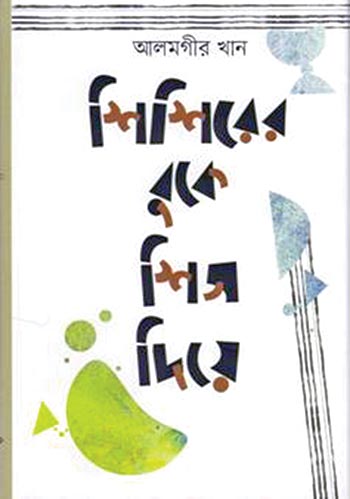 Shishirer Buke Shish Diye (Whistling into the breast of the dew) is Alamgir Khan's second book of poetry published by Prokriti in 2019 after his first book of poetry Jar Jar Banshi O Bonduk (Each one's own flute and rifle). With cover design by Artist Mostafiz Karigor, it contains 40 poems which reflect the present condition of society he lives in. The subject of Alamgir's writing is people, society and the contradictions within them.
Alamgir protests against injustice, inspires the suffering mass to rise against the existing structure and advocates for rights, humanity, morality, freedom and peace. So he covers local issues from a global perspective and easily crosses boundaries of nationality and other limiting factors of society and state. His poems therefore try to move people to the work of demolishing the present class structure and building a new society of equality, fairness and justice.
The poet is in pain seeing the world full of miseries, hunger and deprivation and his language emerges from this sad reality. Emergence of Trump and Modi on the world stage leading the earth into a burning state and the blowing away of the Paris climate agreement are reflected in his poem. Pollution of air is not separated from the global trend of leaning towards autocracy and trampling people's demands under authoritarian foot. (Ongaradi, carbon-di)
Poet Alamgir's heart is disturbed by cruelty, unemployment, drug addiction, social injustice and other unwanted aspects of life all round him. In Oboidho Sampadokio (illegal editorial), he therefore laments that having remained unemployed depending on his parents for a long time he has walked down the path of selling drugs, sex and guns into the packets of poetry just for survival. He doesn't believe in any so-called purity of arts and literature. All this is useless to him if it fails to bring any change good for humanity.
There have been some progresses in Bangladesh in the fields of women's education, rights, employment and participation in economic activities. Yet there is still a long way to go for women to have equal rights with men. Rape, torture, sexual harassment are regular against women. This makes the poet sad and angry and he calls the moon in the sky, on her way to a garment factory in Bangladesh in the eyes of the poet, to make the journey very cautiously to save herself from the predatory hands lurking by the way. He warns the moon:
"How far is the school or you are to go to a dress factory?
Don't stop on the way and never cast any look around �
Many vultures and hyenas are lying by the way
To tear you into pieces and gobble you up."
(Bhalo theko priyo chand, stay well dear moon)
His lines on Tonu, the girl who was barbarically murdered:
"I could not save you my sister
From the teeth of hyenas and hands of foxes
When the nails of vultures were tearing you into pieces
And while you were wrapped by the slippery rope of the snake
I was in a deep slumber like a fish in water."
(Kadbona bole dichchhi, will no more cry)
Corruption, misrule, murder, disappearance, death without justice and other inconsistencies in society put the heart of the poet into trouble. Thoter kone raktim surjo (The red sun at the corner of the lip) tells of the torture a revolutionary goes through in the hands of the law and order force while outright criminals are stalking in broad daylight. He says:
Three black masks raised me up from sleep
And took me into a secret cave of a hill.
There pushing the rifle against my back
And pipe of the gun against my heart
They said in blood red eyes
"Tell us all you know without fear."
Shaking in fear I say, "I know nothing, Sir."
Our future generation is growing up in a society where the poor are becoming poorer and the rich richer. The poet sees poverty, hunger and human sufferings all around him. In his vision: "The universe is entering into the human stomach where a fire of hunger is burning incessantly." (Shishirer Buke Shish Diye)
Yet he draws solace from the unstoppable struggle of the oppressed for equality for all. He is in search of the source of power for running that struggle. But the time we are living through makes the poet wary about hopefulness. There are people all around who are cheat, dishonest and insincere making their time unproductive. He laments thus:
Time of cheating and fruitlessness
Who knows what one keeps under one's sleeves!
Who loves and who does not
Hard to differentiate between friend and enemy
Advertisement is a trap made of erroneous trust
Hard to know who is a poet and who not.
(Keboli shondhya, Evening only)
The poet expresses his anger against politics:
Life spent calling for democracy
Yet neither a lover and nor a husband I have got.
(Bhatarer nam, name of the husband)
His poem expresses the truth of turning people into a commodity through the force of globalization. His rebellion and love are not traditional, quite different from what we are used to seeing. He proclaims:
Let us love
Be united
Beget children
In the way
People get together
Fire up in protest
Thrones turn into ashes
The way states turn into pieces
Like Radhuni pure masala powder
The way people make new states
Raise new suns in horizons
Let us love that way
Dear.
(Premer prarthona, prayer for love)
Essayist and Poet Saikat Habib has rightly commented on the flap of the book cover: "No formalistic poems, his poetry reveals the warm blood of life itself. The imprisoned time expresses itself in this way: 'What do you say, Sir?/ After you commanded me to stay well/ My body has begun to tremble/ And startling has become part of my life.' This way his poem has become the voice of our time, the inner language of our life of blood, tears, dream and fear."
Alamgir Khan fights with his pen. He has been throwing flowers of his feelings against the hard rock of reality with the deep desire of bringing about a change. Alamgir is in the mission of change without ever relinquishing the idealistic rudder from his injured sweaty hands.
Shishirer Buke Shish Diye (Whistling into the breast of the dew) is Alamgir Khan's second book of poetry published by Prokriti in 2019 after his first book of poetry Jar Jar Banshi O Bonduk (Each one's own flute and rifle). With cover design by Artist Mostafiz Karigor, it contains 40 poems which reflect the present condition of society he lives in. The subject of Alamgir's writing is people, society and the contradictions within them. Alamgir protests against injustice, inspires the suffering mass to rise against the existing structure and advocates for rights, humanity, morality, freedom and peace. So he covers local issues from a global perspective and easily crosses boundaries of nationality and other limiting factors of society and state. His poems therefore try to move people to the work of demolishing the present class structure and building a new society of equality, fairness and justice.
The poet is in pain seeing the world full of miseries, hunger and deprivation and his language emerges from this sad reality. Emergence of Trump and Modi on the world stage leading the earth into a burning state and the blowing away of the Paris climate agreement are reflected in his poem. Pollution of air is not separated from the global trend of leaning towards autocracy and trampling people's demands under authoritarian foot. (Ongaradi, carbon-di)
Poet Alamgir's heart is disturbed by cruelty, unemployment, drug addiction, social injustice and other unwanted aspects of life all round him. In Oboidho Sampadokio (illegal editorial), he therefore laments that having remained unemployed depending on his parents for a long time he has walked down the path of selling drugs, sex and guns into the packets of poetry just for survival. He doesn't believe in any so-called purity of arts and literature. All this is useless to him if it fails to bring any change good for humanity.
There have been some progresses in Bangladesh in the fields of women's education, rights, employment and participation in economic activities. Yet there is still a long way to go for women to have equal rights with men. Rape, torture, sexual harassment are regular against women. This makes the poet sad and angry and he calls the moon in the sky, on her way to a garment factory in Bangladesh in the eyes of the poet, to make the journey very cautiously to save herself from the predatory hands lurking by the way. He warns the moon:
"How far is the school or you are to go to a dress factory?
Don't stop on the way and never cast any look around �
Many vultures and hyenas are lying by the way
To tear you into pieces and gobble you up."
(Bhalo theko priyo chand, stay well dear moon)
His lines on Tonu, the girl who was barbarically murdered:
"I could not save you my sister
From the teeth of hyenas and hands of foxes
When the nails of vultures were tearing you into pieces
And while you were wrapped by the slippery rope of the snake
I was in a deep slumber like a fish in water."
(Kadbona bole dichchhi, will no more cry)
Corruption, misrule, murder, disappearance, death without justice and other inconsistencies in society put the heart of the poet into trouble. Thoter kone raktim surjo (The red sun at the corner of the lip) tells of the torture a revolutionary goes through in the hands of the law and order force while outright criminals are stalking in broad daylight. He says:
Three black masks raised me up from sleep
And took me into a secret cave of a hill.
There pushing the rifle against my back
And pipe of the gun against my heart
They said in blood red eyes
"Tell us all you know without fear."
Shaking in fear I say, "I know nothing, Sir."
Our future generation is growing up in a society where the poor are becoming poorer and the rich richer. The poet sees poverty, hunger and human sufferings all around him. In his vision: "The universe is entering into the human stomach where a fire of hunger is burning incessantly." (Shishirer Buke Shish Diye)
Yet he draws solace from the unstoppable struggle of the oppressed for equality for all. He is in search of the source of power for running that struggle. But the time we are living through makes the poet wary about hopefulness. There are people all around who are cheat, dishonest and insincere making their time unproductive. He laments thus:
Time of cheating and fruitlessness
Who knows what one keeps under one's sleeves!
Who loves and who does not
Hard to differentiate between friend and enemy
Advertisement is a trap made of erroneous trust
Hard to know who is a poet and who not.
(Keboli shondhya, Evening only)
The poet expresses his anger against politics:
Life spent calling for democracy
Yet neither a lover and nor a husband I have got.
(Bhatarer nam, name of the husband)
His poem expresses the truth of turning people into a commodity through the force of globalization. His rebellion and love are not traditional, quite different from what we are used to seeing. He proclaims:
Let us love
Be united
Beget children
In the way
People get together
Fire up in protest
Thrones turn into ashes
The way states turn into pieces
Like Radhuni pure masala powder
The way people make new states
Raise new suns in horizons
Let us love that way
Dear.
(Premer prarthona, prayer for love)
Essayist and Poet Saikat Habib has rightly commented on the flap of the book cover: "No formalistic poems, his poetry reveals the warm blood of life itself. The imprisoned time expresses itself in this way: 'What do you say, Sir?/ After you commanded me to stay well/ My body has begun to tremble/ And startling has become part of my life.' This way his poem has become the voice of our time, the inner language of our life of blood, tears, dream and fear."
Alamgir Khan fights with his pen. He has been throwing flowers of his feelings against the hard rock of reality with the deep desire of bringing about a change. Alamgir is in the mission of change without ever relinquishing the idealistic rudder from his injured sweaty hands.
Loading...
Loading...
Also read



Editor : Iqbal Sobhan Chowdhury
Published by the Editor on behalf of the Observer Ltd. from Globe Printers, 24/A, New Eskaton Road, Ramna, Dhaka.
Editorial, News and Commercial Offices : Aziz Bhaban (2nd floor), 93, Motijheel C/A, Dhaka-1000.
Phone: PABX- 41053001-06; Advertisement: 41053012; 01793317829, 01550707291, E-mail: [email protected], [email protected] Online: email: [email protected] 41053014; 01550707297 Advertisement: 01550707296
Published by the Editor on behalf of the Observer Ltd. from Globe Printers, 24/A, New Eskaton Road, Ramna, Dhaka.
Editorial, News and Commercial Offices : Aziz Bhaban (2nd floor), 93, Motijheel C/A, Dhaka-1000.
Phone: PABX- 41053001-06; Advertisement: 41053012; 01793317829, 01550707291, E-mail: [email protected], [email protected] Online: email: [email protected] 41053014; 01550707297 Advertisement: 01550707296


