



| HEADLINE |

|
Child labour must stop
Published : Sunday, 4 February, 2024 at 12:00 AM
Anika Fatima


 Bangladesh is the most densely populated country in South Asia but it has made progress in many areas. Among many challenges, theres a big problem that still makes it hard for the country to overcome, and thats taking care of its children. Just like many other countries in South Asia, Bangladesh has a problem with child labour.
Imagine when children should be going to school, playing games with friends - some poor children have to work to earn a living. Its not fair for them.
Economic distress stands as the primary catalyst behind the prevalence of child labour in Bangladesh. Many families in Bangladesh are very poor, and this makes children work instead of going to school. The cost of education is too much for their parents. So, instead of enjoying learning and playing, these children end up working to help their families survive. Its not fair because they lose their chance to be children and enjoy their childhood. The economic hardships that plague their families often push these children into a precarious world where their innocence is sacrificed at the altar of survival.
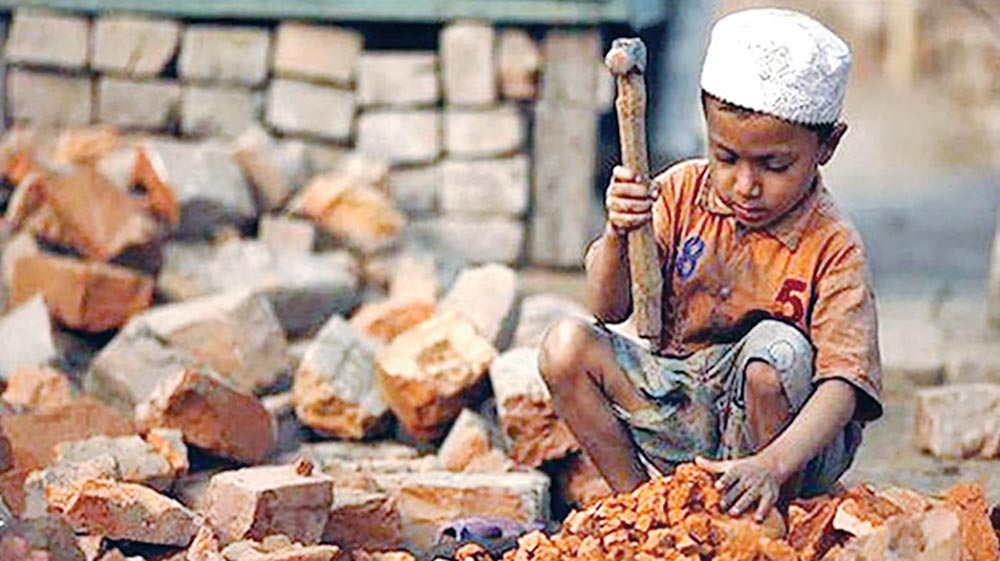
Compounding this issue is the fact that employers, driven by the allure of a pliable and cost-effective workforce, are incentivized to engage children for extended hours at meagre pay. The Bangladesh Labor Act of 2006 has outlined regulations, defining children and adolescents with a minimum age of 14 years and adolescents aged 14-18 years. Despite these regulations, enforcement remains a significant challenge, perpetuating the cycle of child exploitation.
Further exacerbating the problem is the burgeoning population of street children in Bangladesh. A reflection of extreme poverty, these children endure harsh challenges, including a lack of shelter, food, and education. Addressing this crisis requires collaborative efforts between public and private organizations. Institutions such as UNICEF play a pivotal role by providing essential services and rehabilitation programs, aiming to reintegrate these vulnerable children back into society. UNICEFs multifaceted approach encompasses everything from food assistance to medical treatment for the millions of boys and girls who call the streets their home.
Study conducted in Dhaka city delved into the lives of 125 street children aged 8 to 14. The findings underscore the harsh realities faced by these youngsters. Poverty emerged as the primary factor driving children onto the streets (41%), where they grapple not only with physical and sexual abuse (80.8%) but also a myriad of health issues. A staggering 87.2% of street children suffer from various diseases, ranging from accidental injuries to skin infections, hepatitis, sexually transmitted diseases, and heat-related illnesses.
The disconcerting rate of violence and torture against children continues to plague Bangladesh. Physical, sexual, and psychological abuse, coupled with issues like child marriage and trafficking, persist despite two decades of heightened awareness. The World Health Organization (WHO) has played a pivotal role in raising awareness, culminating in the establishment of UN Sustainable Development Goal 16.2, aimed at ending all forms of violence against children.
The shift from awareness to action is the need of the hour. The WHOs evidence-based approach, exemplified by the INSPIRE program launched in 2016, underscores the potential for well-designed local programs to reduce violence by 20-50%. Shocking statistics highlight the urgency of targeted action, with a child succumbing to violence every five minutes. Over one billion children, more than half of those aged 2-17, have experienced physical, sexual, or psychological violence in the past year alone. An alarming 75% of children aged 2-4 face repeated physical or emotional violence from parents or caregivers.
Governments and practitioners must heed the WHOs call to action, utilizing globally respected sources of practice to address the issue, monitor progress, and advocate for global change. The Child Health Research Foundation (CHRF) in Bangladesh emerges as a beacon of hope in the battle against infections and diseases that afflict children. CHRFs evidence-based research informs policy decisions, advocating for change in healthcare practices. Their work has facilitated the introduction of life-saving vaccines into Bangladeshs national immunization program, garnering accolades from national and international bodies, including the WHO, UNESCO, the Bill and Melinda Gates Foundation, and the American Society of Microbiology.
While the situation for children in Bangladesh is gradually improving, the persistent challenges underscore the need for sustained efforts. Stakeholders, including the government, civil society, and the international community, must collaborate to create a safe and promising future for Bangladeshs most valuable asset - its children. The multifaceted nature of the challenge requires comprehensive and coordinated strategies. Although progress has been made in some areas, much work remains to ensure that every child in Bangladesh enjoys their basic rights and is shielded from exploitation, abuse, and neglect.
The protection of children in Bangladesh is an intricate and pressing challenge that necessitates the combined efforts of various stakeholders. The journey towards a secure and bright future for Bangladeshs children is underway, but sustained commitment and collaboration are indispensable to overcome the hurdles that persist.
The writer is an Editorial Assistant, The Daily Observer
Loading...
Loading...
Also read





Editor : Iqbal Sobhan Chowdhury
Published by the Editor on behalf of the Observer Ltd. from Globe Printers, 24/A, New Eskaton Road, Ramna, Dhaka.
Editorial, News and Commercial Offices : Aziz Bhaban (2nd floor), 93, Motijheel C/A, Dhaka-1000.
Phone: PABX- 41053001-06; Advertisement: 41053012; 01793317829, 01550707291, E-mail: [email protected], [email protected] Online: email: [email protected] 41053014; 01550707297 Advertisement: 01550707296
Published by the Editor on behalf of the Observer Ltd. from Globe Printers, 24/A, New Eskaton Road, Ramna, Dhaka.
Editorial, News and Commercial Offices : Aziz Bhaban (2nd floor), 93, Motijheel C/A, Dhaka-1000.
Phone: PABX- 41053001-06; Advertisement: 41053012; 01793317829, 01550707291, E-mail: [email protected], [email protected] Online: email: [email protected] 41053014; 01550707297 Advertisement: 01550707296


