



| HEADLINE |

|
What corrodes our democracy?
Published : Sunday, 1 September, 2024 at 12:00 AM
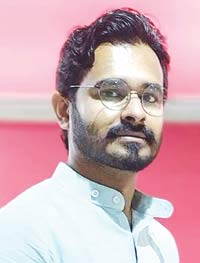
Ahasan Uddin Bhuiyan


 During my university years, one of my teachers humorously referred to 'democracy' in Bangladesh as 'democrazy,' means abrupt corruption and inherent flaws of democracy. Another professor cynically reinterpreted Abraham Lincoln's famous definition of democracy as "government 'off' the people, 'before' the people and 'bye' the people." The political culture in Bangladesh over the past 53 years defies conventional political theories, as the state apparatus has consistently failed to operate in an ethical, people-centered and accountable manner. While numerous factors contribute to this state of affairs, I believe there are four fundamental areas where deliberate practices-or the lack thereof-have been instrumental in legitimizing unruly governance.
The first and foremost among these issues is the existing electoral system, known as First Past the Post (FPTP). This Westminster-style voting system, imposed by British colonial rulers, has been discarded by many nations including Australia, New Zealand, Ireland, Cyprus, Malta and South Africa. In this system, a candidate who garners the largest number of votes in a given constituency is declared the winner, regardless of the number of votes cast against them. To illustrate the flaws in this system, consider the national election of 2001. In the Kishoreganj-4 constituency, Dr. Osman Faruk of the BNP and its allies became a Member of Parliament-and subsequently the Education Minister-by securing 65,447 votes, which amounted to only 33.79% of the total votes cast. His two closest competitors, Dr. Mizanul Haque of the Awami League and Mujibul Haq Chunnu of the Jatiyo Party, received 64,232 and 62,533 votes respectively. Combined, these opponents accounted for approximately 66% of the vote, meaning that Faruk was elected despite the majority of voters opposing him. In that election, the BNP won an absolute majority with 193 seats, despite receiving only 40.97% of the popular vote, leaving over 59% of the electorate opposed during exercising adult franchise basis voting rights. Nevertheless, the BNP formed the government.
A review of Bangladesh's national elections reveals troubling voter turnout statistics: 54.91% in 1973, 51.29% in 1979, 61.10% in 1986, 57.90% in 1988, 55.45% in 1990, 20.97% in the short-lived 1996 election, 74.96% in 1996, 75.59% in 2001, 87.13% in 2008, 40.04% in 2014 and 80.20% (the highest ever, though widely disputed as fraudulent) in 2018. The Election Commission claimed a 40% turnout in the 2024 election, although I visited a number of voting centers as a journalist and my observations suggest that the actual figure could not have exceeded 10%. Regardless of turnout, elections are declared legal and those elected are considered representatives of the people, even when the majority of voters either oppose them or are indifferent.
Another significant flaw of the FPTP system is that each party nominates only one candidate per constituency, forcing voters who support a party but dislike its candidate to choose between a party they do not support or a candidate they do not favour. This cannot be considered a true democracy.
A candidate should only be declared the representative of a constituency if they secure '50% plus one vote' of the total electorate, not just a plurality of the votes cast. Additionally, any candidate who fails to achieve at least 25% of the vote should be permanently disqualified from parliamentary elections. Such measures would compel political candidates to be more people-centered, reduce their inclination to abuse power and encourage higher voter turnout, rather than relying on vote-rigging and election manipulation.
This brings us to the question: what is the alternative to FPTP? There are numerous voting systems used worldwide, and Bangladesh could benefit from adopting one of the Proportional Representation Systems (PRS), Single Transferable System (STS) or Two Round System (TRS).
The second necessary reform is the abolition of Article 70 from the constitution. The Floor Crossing Law, which prevents MPs from voting against their party, also serves as a rubber stamp to block 'no confidence' votes against the Prime Minister. Fearful of losing their MP posts or being denied candidacy in future elections, MPs often end up blindly worshipping the Prime Minister, a practice that permeates all levels of political and public life. Thus, the Prime Minister becomesan unaccountable and overly powerful Monarch and the fellow executives engage in fostering an environment of oligarchy, sycophancyand deceit, where those close to the Prime Minister paint a falsely rosy picture while engaging in anarchic behavior. To cultivate new, qualified and democratic leaders within the parliament and political parties and to break the cycle of familiocracy, a new constitutional rule should limit individuals to serving as Prime Minister for no more than two terms-just as most constitutional posts have similar term limits, this is my third reform suggestion.
The fourth and final reform should involve the execution of Article 77, which calls for the establishment of the office of Ombudsman, a vital yet unimplemented feature of the constitution. The political and administrative culture in Bangladesh is marked by an aversion to admitting mistakes or resigning from responsibility. Instead, those who suffer or complain often face repression and there have been instances of disappearances and even murders. To ensure that both the Legislative and Executive branches are held accountable, there is no substitute for a free, fair and robust Ombudsman.
The transformation from a flawed "democrazy" to a vibrant democracy is not merely a matter of political will; it is a moral imperative that requires the collective commitment of the nation's leaders and citizens alike. By adopting more inclusive and representative electoral systems, limiting the concentration of power, and establishing robust oversight mechanisms like the Ombudsman, Bangladesh can lay the groundwork for a democracy that is not only procedural but substantive. In doing so, the nation will honor the aspirations of its people and pave the way for a future where democracy is not just an ideal but a lived reality, ensuring that governance is conducted in the true spirit of the people's will.
The writer is journalist with The Daily Observer
Loading...
Loading...
Also read





Editor : Iqbal Sobhan Chowdhury
Published by the Editor on behalf of the Observer Ltd. from Globe Printers, 24/A, New Eskaton Road, Ramna, Dhaka.
Editorial, News and Commercial Offices : Aziz Bhaban (2nd floor), 93, Motijheel C/A, Dhaka-1000.
Phone: PABX- 41053001-06; Advertisement: 41053012; 01793317829, 01550707291, E-mail: [email protected], [email protected] Online: email: [email protected] 41053014; 01550707297 Advertisement: 01550707296
Published by the Editor on behalf of the Observer Ltd. from Globe Printers, 24/A, New Eskaton Road, Ramna, Dhaka.
Editorial, News and Commercial Offices : Aziz Bhaban (2nd floor), 93, Motijheel C/A, Dhaka-1000.
Phone: PABX- 41053001-06; Advertisement: 41053012; 01793317829, 01550707291, E-mail: [email protected], [email protected] Online: email: [email protected] 41053014; 01550707297 Advertisement: 01550707296


