



| HEADLINE |

|
Mahmudullah's lasting legacy in Bangladesh cricket
Published : Tuesday, 8 October, 2024 at 11:18 PM
Shakib Ahmed


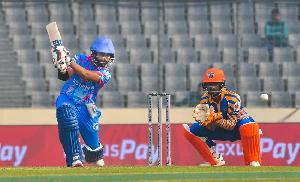
Mahmudullah Riyad, a name synonymous with resilience and hard work, may not have been the most naturally gifted cricketer of his era, but his tenacity and dedication elevated him to one of Bangladesh's most dependable players.
Announcing his retirement from T20 Internationals (T20Is) on Tuesday, the 38-year-old confirmed that the ongoing series against India would mark his final appearance in the format. Despite stepping down from T20s, he remains available for selection in One Day Internationals (ODIs), continuing his contributions to the Bangladesh cricket team.
Best known for his role as a "finisher," and "silent killer", Mahmudullah carved out a niche in limited-overs cricket, often steering Bangladesh to strong finishes with quick runs and powerful shots in the lower order. His retirement leaves a significant void, particularly in T20 cricket, where his finishing ability and calm under pressure were invaluable.
Reflecting on his decision, Mahmudullah expressed that it was the right time to step away from T20s, a sentiment echoed by cricket experts. Veteran coach and Bangladesh Cricket Board (BCB) director Nazmul Abedeen Fahim remarked, “We have to thank Mahmudullah for his contributions. He has been instrumental in Bangladesh's rise in world cricket."
Cricket analyst Mohammad Isam, the Bangladesh correspondent for ESPNcricinfo, shared a similar perspective, noting that Mahmudullah's retirement is well-timed given his age and recent form. Isam highlighted that while Mahmudullah made a brief T20I comeback earlier this year, he had been largely out of the format since the 2021 World Cup, missing 27 matches in 2022 alone.
Mahmudullah's adaptability has been one of his defining traits. Over his career, he batted in nearly every position and earned global recognition during the 2015 ODI World Cup, where he became the first Bangladeshi to score a century in the tournament. Despite excelling in various roles, he often lacked a permanent spot in the batting order, a testament to his willingness to do whatever the team needed.
"He never gave others a chance to claim his spot,” Nazmul Abedeen noted, emphasizing Mahmudullah's relentless work ethic and determination to remain indispensable. Despite playing primarily in the lower order, Mahmudullah accumulated 2,395 T20I runs, including eight half-centuries, ranking him second only to Shakib Al Hasan among Bangladesh’s top run-scorers in the format.
The second half of Mahmudullah’s T20 career, particularly after 2016, saw a transformation. Under the guidance of former coach Chandika Hathurusingha, Mahmudullah embraced the finisher’s role and developed a more aggressive, aerial-focused batting style. His average in T20Is improved noticeably, reflecting his growth as a player during that period.
Mahmudullah also holds the distinction of being Bangladesh’s most successful T20I captain, having led the team in 43 matches and winning 16 of them. His leadership on and off the field has been a crucial part of Bangladesh’s cricketing journey, and his ability to rally his team during challenging times set him apart as one of the country’s finest leaders.
Approaching the age of 40, Mahmudullah’s fitness levels have allowed him to remain competitive on the international stage, a remarkable feat given that many of his peers have retired. Despite expectations that he might miss out on this year’s T20 World Cup, Mahmudullah proved his worth and secured his spot in the squad.
Though his retirement marks the end of an era, it also signals a time for Bangladesh to reassess its T20 batting strategy. As Isam pointed out, Mahmudullah’s role as a finisher has become somewhat outdated in modern T20 cricket, where teams increasingly rely on aggressive, top-order hitters to set the tempo.
While it will be difficult to replace his wealth of experience, the next generation of cricketers—such as Afif Hossain and Shamim Patwari—will have big shoes to fill. Mahmudullah’s legacy, however, extends beyond his statistics; his determination, adaptability, and leadership have left an indelible mark on Bangladesh cricket, and his contributions will be remembered long after he exits the stage.
Loading...
Loading...
Also read







Editor : Iqbal Sobhan Chowdhury
Published by the Editor on behalf of the Observer Ltd. from Globe Printers, 24/A, New Eskaton Road, Ramna, Dhaka.
Editorial, News and Commercial Offices : Aziz Bhaban (2nd floor), 93, Motijheel C/A, Dhaka-1000.
Phone: PABX- 41053001-06; Advertisement: 41053012; 01793317829, 01550707291, 01550707296
E-mail: [email protected], [email protected]. [email protected], [email protected], [email protected], [email protected], Online-email: [email protected]


