



| HEADLINE |

|
Allowing nature to thrive through architecture
Zia writes poetry in concrete
Published : Saturday, 2 November, 2024 at 12:00 AM
Takir Hossain


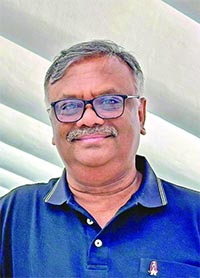 Ziaul Huq Chowdhury, commonly referred to as Zia, is a feted architect who has immersed himself in newfangled designs, practical yet visually captivating structures, and a strong commitment to sustainable construction methods. His architectural approach encompasses contemporary design elements that not only serve a purpose but also possess an alluring aesthetic and promote environmental consciousness.
Zia, with a wealth of experience spanning three decades, showcases key elements in his architectural work that set him apart. These include expansive vistas, abundant natural light, and effortless accessibility. Above all, his creations exude a modern aesthetic and a keen sense of balance. Zia's approach to optimising space strikes a harmonious and logical chord. His portfolio boasts an array of structures across diverse sectors ranging from educational institutions and dormitories to industrial complexes, commercial buildings, mosques, hospitals, and residential apartments. Throughout his body of works, Zia consistently prioritises unobstructed views and seamless integration of natural light with ventilation.
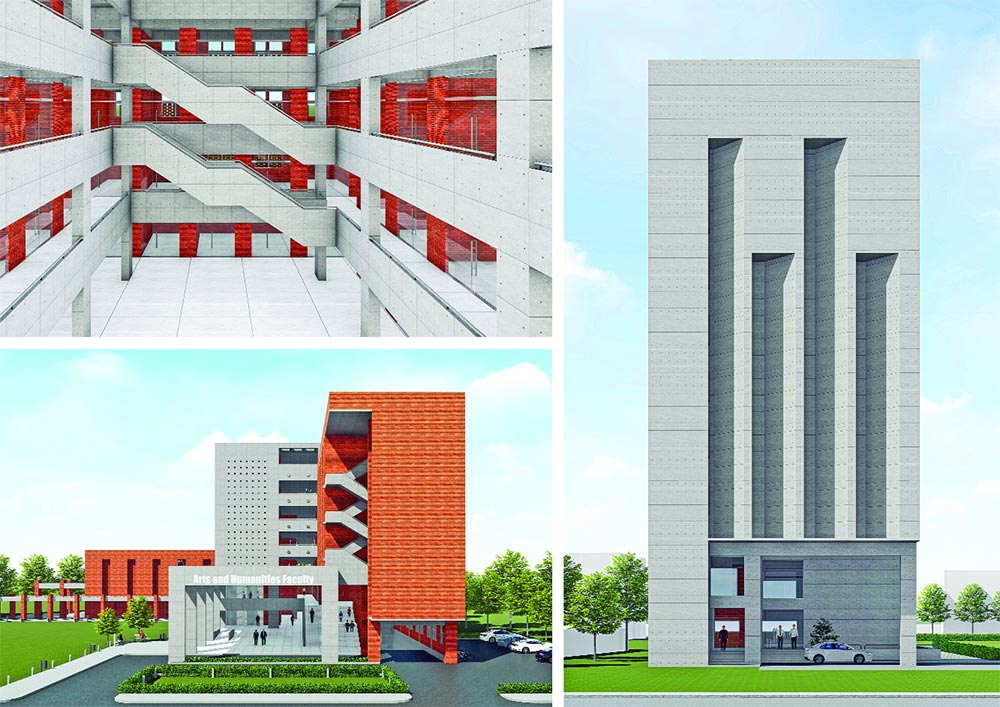
Zia has predominantly utilised a combination of concrete and bricks in the majority of his projects. This choice of materials offers exceptional strength and durability, making them highly suitable for constructing buildings. Additionally, the versatility of these materials allows for a wide range of sizes and shapes, providing ample flexibility in design. Bricks have been utilised for centuries in the construction of walls, floors, pavements, arches, and other architectural elements, owing to their enduring qualities and visually appealing patterns.
Zia places great emphasis on natural ventilation, which involves the supply of fresh air to buildings through passive forces. To achieve this, he has incorporated brick jali in several of his projects. The jali design allows for the passage of light and air while minimising the impact of direct sunlight and rain, and also facilitates cooling through passive ventilation. Jali is primarily employed to reduce direct sunlight and cool the air by allowing wind particles to pass through and expand, resulting in a cooling effect.
Zia experiences a surge of enthusiasm whenever he visits a location where a new structure is set to be built. He expresses, "A unique phenomenon occurs when I stroll back and forth around the site. It communicates with me, revealing its past, surroundings, environment, weather conditions, and every other factor that influences the area. I find myself attentively listening to the site, becoming deeply absorbed in learning from it. Eventually, I develop a strong affection for it, and that is when the project commences."
Zia's work effortlessly expresses the elements of air, light, and proportion. Additionally, he demonstrates a keen awareness of our climate and weather conditions. Bangladesh, being one of the most vulnerable coastal nations, faces significant threats from global warming and climate change. In response to these challenges, architecture plays a crucial role by incorporating sustainable materials and construction techniques. Zia's projects exemplify this approach as they prioritise natural ventilation to minimise excessive energy use.
Zia firmly believes that transparency and abundant light are essential elements in his artistic endeavours. His creations are characterised by their simplicity, employing a language that is straightforward, comprehensible, and easily relatable. As a result, his works are highly regarded and easily admired. When viewed from the street, they exude an inviting, captivating, and appealing aura, allowing pedestrians to fully immerse themselves in the urban fabric of the bustling metropolis.
Zia possesses insightful observations regarding the current architectural landscape of Bangladesh. He believes that the foundation of modern architecture in the country can be attributed to the remarkable contributions of Louis I Kahn and the pioneering efforts of Bangladeshi architect Muzharul Islam. The architectural scene gained prominence after Bangladesh gained independence in 1971. Throughout the early 90s, there were both positive and negative experiments in the field, but it appears that local architects have now found their stride, creating commendable works that are relevant on a global scale.
Projects finished by Zia include BSS Bhaban at Dilkusha C/A, Dhaka, Sheba Bhaban at Motijheel, Arts and Humanities Faculty Building, Jahangirnagar University (JU), Biological Science Faculty Building, JU;Social Science Faculty Building, JU;Mathematical and Physical Sciences Faculty Building, JU; Bangaldesh Sangbad Sangstha office at Paltan, BREB Headquarter Building in Bagerhat, CRP Khulna Akij Centre, CRP Moulvibazar Centre, 250-Bed Cox's Bazar District Hospital in Bakerganj, Rupa Tower at Tongi, Residential Apartments--South Pride at Dhanmondi, Navana Homes at Banani, Mayakunja at Pallabi, Angshu Villa at Uttara, Sultana's Dream at Uttara, Garib-E-Newaj Villa at Uttara, Amera's Corner at Uttara, Chhaya Pallab at Pallabi, Prime View at Gulshan,TMR Knit Fabrics Factory at Rupganj, Rupa Composite Knit Dying Factory at Tongi, South Land Center Shopping Complex in Chattogram, PBL Tower Building, Basundhara Group's Office, Chairman Bari in Bakerganj, Factory of Rupa Knitwear Private Ltd, DFO Resident and Staff Dormitory for Bangladesh Forest Department Financed by World Bank, Vacation Home at Bashundhara and more.
Zia currently serves as the managing director at Architects Limited. Renowned for his wit, liberal mindset, and gentle demeanour, he stands out among his peers. Zia's unparalleled passion for literature, especially novels and poetry, sets him apart. Furthermore, his deep understanding of social and political matters stems from his involvement with a left-leaning party during his student years.
The writer is an art critic and cultural curator.
Loading...
Loading...
Also read



Editor : Iqbal Sobhan Chowdhury
Published by the Editor on behalf of the Observer Ltd. from Globe Printers, 24/A, New Eskaton Road, Ramna, Dhaka.
Editorial, News and Commercial Offices : Aziz Bhaban (2nd floor), 93, Motijheel C/A, Dhaka-1000.
Phone: PABX- 41053001-06; Advertisement: 41053012; 01793317829, 01550707291, E-mail: [email protected], [email protected] Online: email: [email protected] 41053014; 01550707297 Advertisement: 01550707296
Published by the Editor on behalf of the Observer Ltd. from Globe Printers, 24/A, New Eskaton Road, Ramna, Dhaka.
Editorial, News and Commercial Offices : Aziz Bhaban (2nd floor), 93, Motijheel C/A, Dhaka-1000.
Phone: PABX- 41053001-06; Advertisement: 41053012; 01793317829, 01550707291, E-mail: [email protected], [email protected] Online: email: [email protected] 41053014; 01550707297 Advertisement: 01550707296


