The Centre for Policy Dialogue (CPD) on Thursday recommended scrapping all plans for new coal-fired power plants, initiating a time-bound phase-out of existing coal capacity, halting new LNG terminal projects, and redirecting investments towards domestic gas exploration.
It laid emphasis on integrating regional renewable energy (RE) trade into the national plan to stabilize the grid and lower costs.
The think tank made the observation at a press briefing on "Energy & Power Sector Master Plan (EPSMP): 2026-2050" at its office here.
Helen Mashiyat Preoty, senior research associate, presented the research findings at the briefing.
In her presentation, Helen Mashiyat Preoty said that zone-wise power demand and supply should be planned according to the upcoming RE power plants and the National Solar Rooftop Programme.
"As there are already plans to integrate more than 5,000 megawatts (MW) of RE from utility-scale projects and more than 3,000 MW from the national rooftop programme, location-wise planning and estimation must be done through zonal mapping," she added.
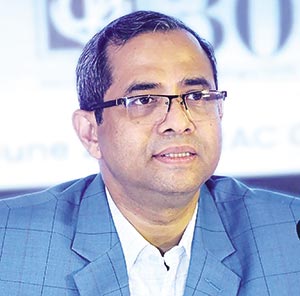
Khondaker Golam Moazzem, Research Director of CPD, said the proposed Master Plan is fundamentally flawed and non-participatory, and risks locking the country into costly and carbon-intensive infrastructure for decades.
Questioning the mission and vision of the draft, Moazzem said renewable energy has not been positioned as a core priority, while domestic coal is being promoted under the banner of "resource optimisation." He also questioned the rationale behind planning for nearly 60,000 MW of electricity capacity, asking who would ultimately consume such a volume of power.
According to CPD's analysis, around half of the proposed capacity would be sufficient to meet demand by 2040, particularly as Bangladesh's future industrial growth is expected to remain service-oriented, labour-intensive, and relatively low in energy intensity. Overestimating demand, he warned, would only deepen excess capacity and worsen financial stress in the power sector.
CPD believes the entire EPSMP formulation process should be halted and deferred until after national elections, allowing an elected government to initiate a fresh and inclusive planning exercise.
The think tank said the draft appears to reflect pressure from foreign partners and entrenched domestic energy lobbies, especially in relation to the expansion of liquefied natural gas infrastructure.
Referring to upcoming economic and trade agreements with Japan and the United States, Moazzem said there are strong indications that energy-related commitments have influenced the master plan.





