



| HEADLINE |

|

US Asstt Secy Due On Mar 3
A fresh move in BD-US relations under BNP govt
Talks to focus on GSOMIA and ACSA defence pacts, trade deficit reduction, and expanded strategic co-op
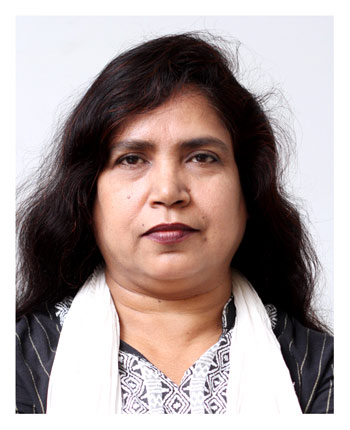


 As Bangladesh's new government led by BNP Chairman Tarique Rahman begins charting its foreign policy course, a high-level visit from Washington is set to assess the direction of Dhaka-US relations. US Assistant Secretary of State for South and Central Asia Paul Kapur will arrive in Dhaka on March 3 for a two-day visit aimed at deepening Dhaka-Washington partnership.
The visit marks the first by a senior US official - or any top foreign dignitary - since the formation new BNP government. It comes at a delicate moment, shaped by shifting regional tensions and evolving trade dynamics.
On February 9, just three days before February 12 parliament election the interim government signed a reciprocal trade agreement with the USA. Dhaka has already begun increasing imports from the US, including aircraft for Biman Bangladesh Airlines, in what officials describe as an effort to reduce the longstanding trade imbalance between the two countries.
Discussions during Kapur's visit are expected to focus on narrowing that deficit and expanding bilateral trade cooperation.
However, there are protests, criticisms and demand in the political and trade bodies against the US-BD trade deal, hastily signed by the interim government. CPD, the leading think tank, on Saturday urged the new government to scrap the BD-US trade deal describing it, "extremely discriminatory".
During Kapur's visit security and defence cooperation are likely to feature prominently. In a congratulatory message to Prime Minister Tarique Rahman, President Donald Trump indicated that full implementation of pending defence agreements could enable Bangladesh to purchase advanced US military equipment.
Two key agreements - the General Security of Military Information Agreement (GSOMIA) and the Acquisition and Cross-Servicing Agreement (ACSA) - are currently under discussion. If signed, these frameworks would pave the way for closer military collaboration and access to sophisticated defence technology. Officials suggest that Kapur's meetings may address these agreements alongside broader bilateral concerns.
The visit also unfolds amid global uncertainties. A recent ruling by the Supreme Court of the United States declared certain tariffs imposed under the International Emergency Economic Powers Act (IEEPA) unconstitutional. However, Bangladeshi officials say they have yet to receive clear guidance from Washington regarding the impact of the verdict on Bangladeshi exports to the US market.
Trade and investment issues were recently reviewed when US Ambassador to Bangladesh Brent T Christensen met Foreign Minister Khalilur Rahman. According to the Ministry of Foreign Affairs, discussions covered trade, defence and security, development cooperation, immigration and people-to-people exchanges.
US Secretary of State Marco Rubio has also expressed Washington's willingness to work with Bangladesh's newly elected government to advance regional prosperity and security.
For his part, Foreign Minister Rahman has emphasised that Bangladesh will address all bilateral issues "in a dignified manner grounded in mutual respect," ensuring that national interests remain protected. "We hope to establish and sustain deep relationships with all our friendly nations, both in our region and across the world," he said following his recent meeting with the US ambassador.
Paul Kapur, nominated last year to oversee South Asian affairs, previously told a Senate hearing that Bangladesh possesses the second-largest economy in South Asia after India. If confirmed in his role, he pledged to strengthen US security interests, expand trade ties and counter China's growing influence in the region.
Against this backdrop, Kapur's visit carries significance beyond protocol. It signals Washington's early engagement with Bangladesh's new leadership.

Loading...
Loading...
Also read



Editor : Iqbal Sobhan Chowdhury
Published by the Editor on behalf of the Observer Ltd. from Globe Printers, 24/A, New Eskaton Road, Ramna, Dhaka.
Editorial, News and Commercial Offices : Aziz Bhaban (2nd floor), 93, Motijheel C/A, Dhaka-1000.
Phone: PABX- 41053001-06; Advertisement: 41053012; 01793317829, 01550707291, E-mail: [email protected], [email protected] Online: email: [email protected] 41053014; 01550707297 Advertisement: 01550707296
Published by the Editor on behalf of the Observer Ltd. from Globe Printers, 24/A, New Eskaton Road, Ramna, Dhaka.
Editorial, News and Commercial Offices : Aziz Bhaban (2nd floor), 93, Motijheel C/A, Dhaka-1000.
Phone: PABX- 41053001-06; Advertisement: 41053012; 01793317829, 01550707291, E-mail: [email protected], [email protected] Online: email: [email protected] 41053014; 01550707297 Advertisement: 01550707296


