



| HEADLINE |

|

Shockwaves From The Gulf
War risks dragging Bangladesh's economy into turbulence
Published : Wednesday, 25 March, 2026 at 12:00 AM
Faruk Ahmed


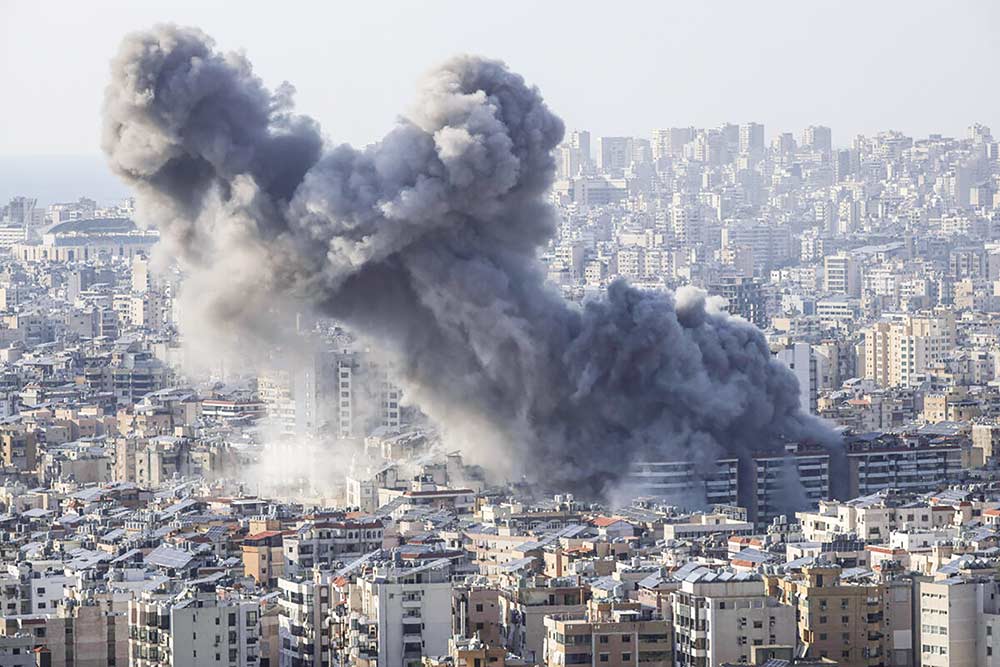 A gathering storm in the Gulf is sending tremors through Bangladesh's economic foundations, with fresh analysis warning that a prolonged conflict involving the United States, Israel and Iran could cut the country's gross domestic product (GDP) by as much as 3 per cent over the next two years.
 The projection by the South Asian Network on Economic Modeling lays bare a stark reality: Bangladesh's growth story remains deeply exposed to distant geopolitical fault lines.
The risks are immediate and systemic.
Bangladesh's economic engine-powered by imported energy, export-led manufacturing and remittance inflows from Gulf economies-stands vulnerable on all three fronts.
SANEM's modelling, based on the Global Trade Analysis Project (GTAP) framework, outlines a series of escalating scenarios. In the worst case, where energy prices surge, trade routes are disrupted and remittances decline, the economy could contract sharply by around 3 per cent. Even under less severe conditions, the outlook remains sobering, with growth slowing and pressures mounting across key sectors.
Energy emerges as the first and most potent transmission channel. A disruption to Middle Eastern supply lines could push global crude oil prices up by roughly 40 per cent and liquefied natural gas by 50 per cent.
For Bangladesh, heavily reliant on imported fuel, such increases would translate almost instantly into higher electricity generation costs and surging industrial expenses.
The consequences would be far-reaching. Factories would face rising production costs, eroding competitiveness in global markets, while households would be squeezed by escalating prices of transport, food and daily essentials.
So inflationary pressures could intensify, eating into real wages and weakening consumer demand-the very backbone of the domestic economy.
The global alarm bells are already ringing. Fatih Birol, head of the International Energy Agency, has warned that the world economy is under "major threat" from the unfolding energy crisis, stressing that no nation will be spared.
Reports of extensive damage to energy infrastructure across the region only deepen the sense of uncertainty.
Financial markets have responded with unease. Japan's Nikkei 225 and South Korea's KOSPI have both recorded sharp declines, while currency volatility has surged. Such signals point to tightening global financial conditions-an ominous development for Bangladesh as it navigates external financing pressures and exchange rate stability.
Trade, the lifeblood of Bangladesh's export-driven economy, forms the second major fault line. Freight costs could rise by as much as 25 per cent amid higher fuel prices and escalating insurance premiums for vessels traversing high-risk maritime zones.
At the same time, demand from key Western markets may weaken, with exports projected to fall by around 5 per cent.
The ready-made garment sector, which anchors Bangladesh's export earnings, is particularly exposed. Any disruption in shipping schedules or spike in logistics costs could prompt buyers to shift orders elsewhere, triggering a cascading slowdown across supply chains-from textile mills to transport services.
The third pressure point lies in remittances. Millions of Bangladeshi workers in Gulf countries form a crucial economic lifeline, sending home billions each year.
However, a regional economic slowdown could curtail these flows. SANEM's worst-case scenario anticipates a 10 per cent drop in remittances, a blow that would strain foreign exchange reserves and dampen consumption in rural economies.
Voices at home are growing increasingly cautious.
Mirza Fakhrul Islam Alamgir has warned that prices of essential commodities, particularly fuel, are likely to rise as global supply tightens.
Economists at the Centre for Policy Dialogue have echoed these concerns, noting that the country may be heading into a period of heightened economic stress marked by inflation and external imbalances.
What makes the current crisis particularly perilous is the convergence of shocks. Higher energy costs drive up production expenses; trade disruptions choke export earnings; falling remittances weaken domestic demand. Together, they form a reinforcing cycle capable of slowing growth more sharply than any single factor alone.
For policymakers, the message is unequivocal.
Immediate measures-ranging from targeted subsidies to prudent energy procurement and exchange rate management-may soften the blow. Yet the deeper challenge is structural. Reducing reliance on imported energy, diversifying export markets and strengthening domestic value chains are no longer strategic choices but economic imperatives.
Bangladesh has demonstrated resilience in the face of past global shocks. However, the unfolding crisis in the Gulf presents a more complex and enduring test. If the conflict persists, the shockwaves will not simply disrupt the economy-they could reshape its trajectory.
In an increasingly volatile world, Economists say Bangladesh's economic future may well depend on how swiftly and decisively it can adapt to forces far beyond its borders.

Loading...
Loading...
Also read



Editor : Iqbal Sobhan Chowdhury
Published by the Editor on behalf of the Observer Ltd. from Globe Printers, 24/A, New Eskaton Road, Ramna, Dhaka.
Editorial, News and Commercial Offices : Aziz Bhaban (2nd floor), 93, Motijheel C/A, Dhaka-1000.
Phone: PABX- 41053001-06; Advertisement: 41053012; 01793317829, 01550707291, E-mail: [email protected], [email protected] Online: email: [email protected] 41053014; 01550707297 Advertisement: 01550707296
Published by the Editor on behalf of the Observer Ltd. from Globe Printers, 24/A, New Eskaton Road, Ramna, Dhaka.
Editorial, News and Commercial Offices : Aziz Bhaban (2nd floor), 93, Motijheel C/A, Dhaka-1000.
Phone: PABX- 41053001-06; Advertisement: 41053012; 01793317829, 01550707291, E-mail: [email protected], [email protected] Online: email: [email protected] 41053014; 01550707297 Advertisement: 01550707296


