



| HEADLINE |

|

Govt to focus on investment-friendly policies over loans, money printing: Finance Minister
Major companies under tax evasion review
Published : Thursday, 2 April, 2026 at 12:00 AM
Business Correspondent


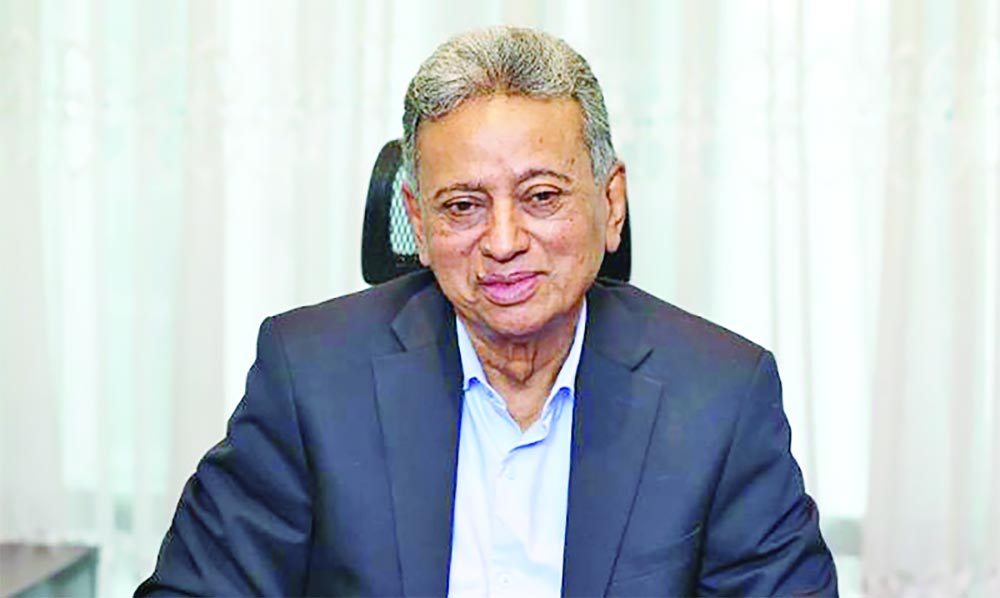 Finance Minister Amir Khasru Mahmud Chowdhury said the government plans to revive the country's fragile economy by creating an investment-friendly environment instead of relying on loans and excessive money printing.
The Bangladesh government is also reviewing alleged tax evasion by major companies as it attempts to raise revenue amid the "three-sided challenge" of economic recovery amid various crises in the macro economy, the implementation of the BNP election manifesto, and rising fuel prices amid the war in the Middle East.
Highlighting these three challenges, Finance Minister Amir Khosru Mahmud Chowdhury said the National Board of Revenue (NBR), which had investigated tax evasion by industrial groups close to the Awami League during the interim government, is being reviewed.
He made the remarks while briefing reporters after a meeting at the National Board of Revenue (NBR) headquarters in Agargaon, Dhaka, on Wednesday.
Responding to questions, the Finance Minister said the government is shifting its focus toward building an investment-driven economy rather than a debt-based one.
He added that the government aims to move away from large-scale money printing used previously to keep economic activities running.
"To increase the tax-to-GDP ratio, the economy must first be strengthened, and the main source of that strength will be higher domestic and foreign investment," he said.
He was asked about the progress of the investigation and whether a new drive would be co
Khosru said, "Everything (was discussed). It's not just about one issue."
"There are many issues involved. Everything is being reviewed."
Once the interim government took power, the NBR's Central Intelligence Cell launched tax evasion investigations into various industrial groups including Beximco, Summit, and S Alam. The agency also collected some of these taxes.
Describing the economic situation inherited from the previous government as "very bad," the minister said the current administration faces three major challenges: stabilising the fragile economy, implementing election manifesto commitments, and managing additional expenditure pressures caused by rising fuel prices amid the Middle East conflict.
He added that the government considers resource mobilisation a key strategy to address these challenges.
Assuring that frequent changes in policies will be stopped to restore investor confidence, the minister said that the policy will be kept unchanged for a specified period so that investors can make long-term plans. In addition, steps are being taken to ease the path of investment by reducing major 'deregulation' or legal and administrative complications. The main goal now is to restore discipline in the financial sector and capital markets.
Regarding the budget, Amir Khasru said that the government's goal is to bring the deprived and common people of the society into the mainstream of the economy. Social security programs like family card or farmer card will continue. The common people will not be kept out of the benefits of development in the name of the budget. The overall budget is being prepared by ensuring their dues.
The Finance Minister said that the government is considering providing facilities like bonded warehouses and back-to-back LC to other sectors, not just relying on the garment sector in the export sector.
Bilateral discussions are underway with the ambassadors of various countries including Japan and Germany to deal with the economic crisis. The process of postponing the deadline for LDC transition by three years is also underway.
NBR Chairman Abdur Rahman Khan and income tax, VAT and Customs officials were present at the meeting.

Loading...
Loading...
Also read



Editor : Iqbal Sobhan Chowdhury
Published by the Editor on behalf of the Observer Ltd. from Globe Printers, 24/A, New Eskaton Road, Ramna, Dhaka.
Editorial, News and Commercial Offices : Aziz Bhaban (2nd floor), 93, Motijheel C/A, Dhaka-1000.
Phone: PABX- 41053001-06; Advertisement: 41053012; 01793317829, 01550707291, E-mail: [email protected], [email protected] Online: email: [email protected] 41053014; 01550707297 Advertisement: 01550707296
Published by the Editor on behalf of the Observer Ltd. from Globe Printers, 24/A, New Eskaton Road, Ramna, Dhaka.
Editorial, News and Commercial Offices : Aziz Bhaban (2nd floor), 93, Motijheel C/A, Dhaka-1000.
Phone: PABX- 41053001-06; Advertisement: 41053012; 01793317829, 01550707291, E-mail: [email protected], [email protected] Online: email: [email protected] 41053014; 01550707297 Advertisement: 01550707296


