



| HEADLINE |

|
When dreams settle in the Mediterranean- a tragic cry and state responsibility
Published : Saturday, 4 April, 2026 at 12:00 AM
Osman Gani


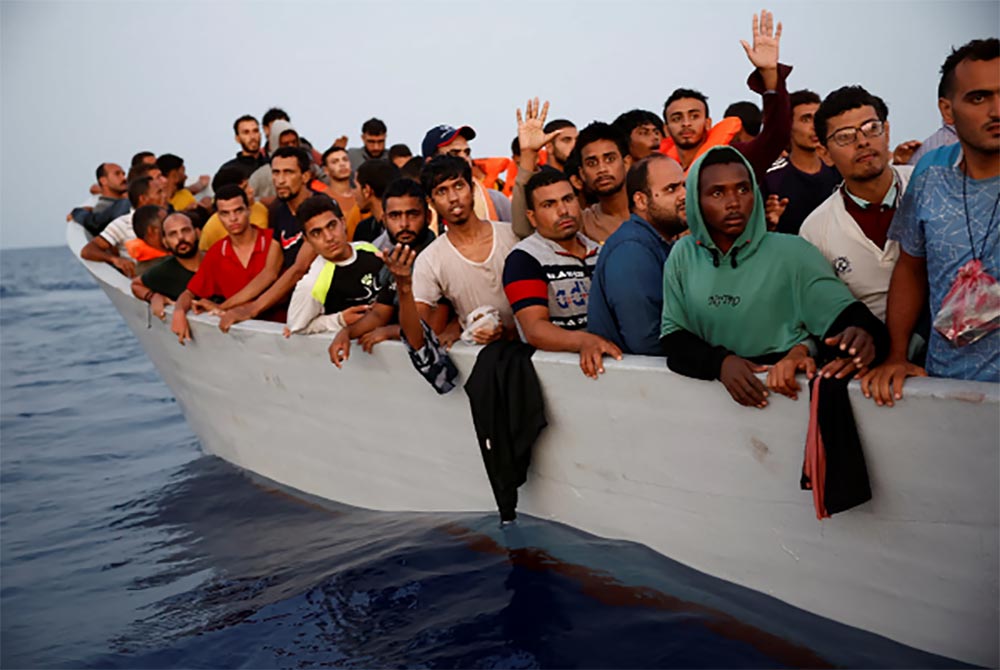
 Over the past few decades, the Mediterranean Sea has transformed into a vast graveyard where countless dreams, emotions, and the hopes of families lie buried beneath its waters. Recently, the heartbreaking news of a group of youths from the Sylhet region of Bangladesh dying of starvation on a trawler bound for Greece, and later being cast into the sea, has shaken our conscience once again. When humans are forced to throw the bodies of fellow humans into the ocean just to survive, it raises a painful question: has human life become so cheap? Where does this endless procession of death end, and who is truly responsible for such tragedies?
The desire for a better life is natural and timeless. In many rural areas of Bangladesh, there is an unspoken competition to change one's fortune through migration and remittance. This trend is especially strong in expatriate-dominated regions like Sylhet. When a young man sees others returning from abroad with financial success, he becomes desperate to follow the same path. Taking advantage of this desperation, local brokers create illusions of prosperity in Europe while hiding the harsh and deadly realities behind illegal migration routes.
Families, driven by hope, often sell their last possessions or take on heavy debts to finance these journeys. What follows is a terrifying ordeal: months of inhumane conditions in transit countries such as Libya or Tunisia, physical and psychological torture, and finally, a perilous journey across the Mediterranean Sea. For many, that journey ends not in opportunity but in death.
While local brokers are often blamed for these tragedies, and rightly so, they are only part of a much larger network. These brokers operate within powerful domestic and international trafficking syndicates. This raises serious concerns about the role of administration and law enforcement agencies. When groups of young men disappear from the same area, it is difficult to believe that authorities remain unaware. Yet, in most cases, only minor offenders are arrested after tragedies, while the masterminds remain beyond reach. This culture of impunity continues to fuel the cycle of human trafficking.
At the state level, effective long-term solutions remain limited. Although the government promotes legal migration, the process is often too complex and costly for ordinary citizens. As a result, many are forced to choose illegal routes. Relevant ministries should strengthen monitoring in transit countries and actively collaborate with international organizations to rescue trafficked individuals. Unfortunately, beyond formal condolences, strong diplomatic action is rarely visible when such tragedies occur.
Another critical issue is the lack of social awareness. Despite widespread access to information, many families continue to send their children on these dangerous journeys. Poverty plays a role, but the deeper problem is the growing obsession with rapid wealth and social status. Success stories overshadow the countless untold failures, creating a dangerous illusion that encourages others to take the same risks.
 Ultimately, the responsibility lies heavily with the state. A lack of sufficient employment opportunities forces many young people to seek uncertain futures abroad. If dignified livelihoods were available at home, fewer individuals would risk their lives in this way. To address this crisis, the government must adopt a zero-tolerance policy against human trafficking, ensuring strict punishment for both small-scale brokers and the powerful figures behind them. At the same time, investment in technical education and entrepreneurship is essential to provide alternatives for the youth.
Every life lost in the Mediterranean represents not just an individual tragedy but the collapse of a family's hopes. The grief of those left behind becomes a silent testimony to systemic failure. If a state cannot guarantee safety and opportunity for its citizens, claims of development lose their meaning. Dreaming is not wrong, but when dreams demand life as their price, they become unbearable tragedies.
In conclusion, the Mediterranean crisis reflects deeper structural problems within society and governance. When a young person risks death to escape their own country, it signals a profound failure of opportunity and support at home. Addressing this issue requires more than border control; it demands dismantling trafficking networks, expanding employment, improving education, and ensuring accessible legal migration pathways. Public awareness must also be strengthened to shift mindsets and discourage dangerous decisions.
If immediate and coordinated action is not taken, more lives will be lost, and more dreams will sink into the sea. Life must be valued above all else, as no dream is worth dying for. The time has come to act decisively so that no more families are left waiting for loved ones who will never return.
The writer is a Vice President, Chandina Press Club
Loading...
Loading...
Also read



Editor : Iqbal Sobhan Chowdhury
Published by the Editor on behalf of the Observer Ltd. from Globe Printers, 24/A, New Eskaton Road, Ramna, Dhaka.
Editorial, News and Commercial Offices : Aziz Bhaban (2nd floor), 93, Motijheel C/A, Dhaka-1000.
Phone: PABX- 41053001-06; Advertisement: 41053012; 01793317829, 01550707291, E-mail: [email protected], [email protected] Online: email: [email protected] 41053014; 01550707297 Advertisement: 01550707296
Published by the Editor on behalf of the Observer Ltd. from Globe Printers, 24/A, New Eskaton Road, Ramna, Dhaka.
Editorial, News and Commercial Offices : Aziz Bhaban (2nd floor), 93, Motijheel C/A, Dhaka-1000.
Phone: PABX- 41053001-06; Advertisement: 41053012; 01793317829, 01550707291, E-mail: [email protected], [email protected] Online: email: [email protected] 41053014; 01550707297 Advertisement: 01550707296


