Thursday | 18 June 2026 | Reg No- 06
বাংলা
Bangla | Thursday | 18 June 2026 | Epaper
BREAKING: Global oil prices drop further after US-Iran deal      Train services to Kurigram resume after 12hrs halt      Ronaldo declares Messi the GOAT      Joane faces 3-match ban in World Cup      Bangladesh, Argentina eye stronger cultural ties      EU provides €14m support for Rohingya response      Salahuddin rejects ‘Loan Defaulters’ Parliament’ claim      

Opposition walks out accusing BNP of breaking political agreement

July Uprising Memorial Museum bill passed with government-friendly amendments despite special committee recommending no changes

Published : Friday, 10 April, 2026 at 8:32 PM  Count : 236
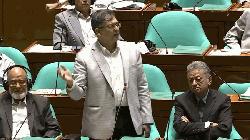
The opposition walked out of the national parliament on Friday evening accusing the ruling party, Bangladesh Nationalist Party (BNP), of breaking a political agreement after the government pushed through amendments to the July Mass Uprising Memorial Museum bill.

Opposition Leader Shafiqur Rahman led the walkout at around 7:30 pm, telling the House before departing, "Today we leave parliament with sorrow. We will meet again in future."

The dispute erupted over three amendments introduced by ruling party MP Anisur Rahman to a bill that the parliamentary special committee had recommended passing in its original form without any changes. 

The amendments made the Culture Minister or State Minister the chairperson of the museum's governing board, replacing the original provision for an eminent expert in education, history, literature, or culture to lead the body. 

They also granted the government power to cancel the nomination of any board member at any time in the public interest and removed the provision fixing the chairperson's tenure at three years with eligibility for one additional term.

Opposition Chief Whip Nahid Islam accused the ruling party of violating their political understanding, saying the bill was passed through trickery and deception in broad daylight by introducing amendments that were never part of the agreed framework.

The ruling party countered that the amendments were brought by a private member and not the government, adding that the bill could be amended again in the future if necessary.

When opposition members objected to the amendments during the legislative process, Speaker Major (retd) Hafiz Uddin Ahmed, Bir Bikram, ruled that objections at that stage of the proceedings were not permissible and that the opposition should have submitted their own amendment proposals earlier. 

All three amendments were subsequently adopted and the bill was passed through voice vote.

The original ordinance issued during the interim government had envisioned an independent governing structure for the museum, with leadership by a distinguished academic or cultural figure appointed on government-determined terms. Board members could resign through a signed letter to the government, and the chairperson would serve a fixed three-year term renewable once.

The amendments fundamentally altered this framework by placing a political figure at the helm, removing tenure protections, and giving the government sweeping authority to remove any board member, effectively transforming the museum from an independently governed institution into one under direct ministerial control.


Loading...
Loading...
Also read
Editor : Iqbal Sobhan Chowdhury
Published by the Editor on behalf of the Observer Ltd. from Globe Printers, 24/A, New Eskaton Road, Ramna, Dhaka.
Editorial, News and Commercial Offices : Aziz Bhaban (2nd floor), 93, Motijheel C/A, Dhaka-1000.
Phone: PABX- 41053001-06; Online: 41053014; Advertisement: 41053012.
E-mail: district@dailyobserverbd.com, news@dailyobserverbd.com, advertisement@dailyobserverbd.com, For Online Edition: mailobserverbd@gmail.com
🔝
close