
Every year, the same distressing scene unfolds-early floods submerge the golden paddy fields of the haor, while farmers watch helplessly. This raises a critical question: is this merely a natural disaster, or the result of prolonged mismanagement?
The haor wetlands of northeastern Bangladesh-particularly in Sunamganj, Kishoreganj, Netrokona, and Sylhet-are a vital reservoir of natural resources, agriculture, and fisheries. Yet today, this region is facing a multidimensional crisis. Early flooding, declining navigability of rivers, unplanned embankments, and a deteriorating drainage system are making livelihoods increasingly uncertain.
Recent heavy rainfall and upstream water surges have once again caused severe waterlogging across the haor areas. Vast stretches of boro paddy fields have gone underwater, threatening the region's primary source of food security. Crops that were just weeks away from harvest are now at risk of complete loss.
This crisis is not purely natural; rather, it reflects long-standing policy failures and weak river management. Following the devastating floods of 2017, embankment construction was intensified to protect crops. However, in many cases, these structures were poorly planned, disrupting natural water flow and drainage. Soil erosion from embankments is gradually filling up the haor basin, reducing its water retention capacity, while canals and natural waterways are becoming increasingly ineffective.
At the same time, reduced river navigability and blocked tributaries are preventing the swift outflow of water. As a result, waterlogging has become more prolonged, severely affecting both agriculture and fisheries.
In this context, river dredging and restoration in the haor region have become urgent. However, dredging must not be treated as a stand-alone project. It should be part of an integrated, science-based master plan that considers hydrology, ecology, agriculture, and the local economy in a coordinated manner.
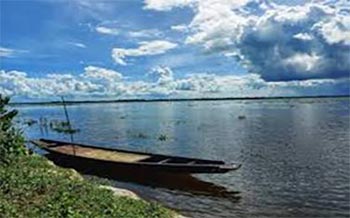
The primary objectives of river dredging should include controlling early floods, protecting crops, restoring natural fish breeding cycles, and conserving aquatic biodiversity. Technical aspects such as river depth, water retention capacity, flow patterns, and proper management of dredged materials must be carefully addressed to ensure long-term sustainability.
The planned use of dredged soil can create new opportunities-such as elevated resettlement areas, climate-resilient housing, improved market infrastructure, and the development of fisheries-based industries.
Once, rivers like the Jadukata, Rakti, and Baulai in Tanguar Haor formed a thriving fisheries ecosystem, supporting natural fish breeding and migration. Today, these natural flows have nearly disappeared, severely disrupting fish reproduction. Restoring these river systems through proper dredging is essential to revive ecological balance.
However, the greatest challenge lies in the lack of coordination and effective governance. Clear, science-based decisions are needed on where to dredge, where to conserve, and where to establish fish passages. Strict oversight is also necessary to ensure proper management of dredged materials and to regulate the activities of leaseholders.
Regional river connectivity is equally important for effective water management in the haor. Linking the Surma-Kushiyara river system to the Meghna via Bhairab, ensuring the flow of transboundary rivers, and restoring old river channels could form part of a long-term solution.
Although the government has undertaken river dredging initiatives, the key question remains: will these efforts remain limited to isolated projects, or will they evolve into a comprehensive ecological restoration program?
The people of the haor are not only fighting natural disasters; they are also battling policy gaps and systemic inefficiencies. The time has come to decide-will we continue repeating the same mistakes, or adopt a science-based, integrated approach to secure a sustainable future for the haor?
Without timely and effective action, the haor will not survive-and without the haor, the economy and livelihoods of this region will face serious consequences.
The writer is a journalist





