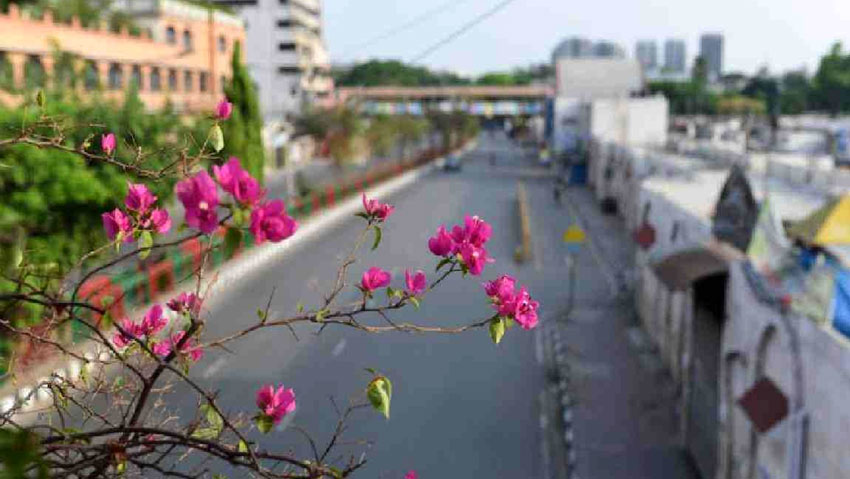
Air quality in Dhaka showed slight improvement on Tuesday morning, ranking the city 22nd among the world’s most polluted locations with an Air Quality Index (AQI) of 75 at 11:45 AM.
According to IQAir standards, the air was classified as “Moderate,” meaning the overall air quality is acceptable, though sensitive individuals may still experience minor health effects.
In the global ranking, Delhi recorded the highest AQI at 540, followed by Lahore with 196 and Kathmandu with 155, placing them among the most polluted cities on the list.
AQI levels are measured based on key air pollutants and categorized by health impact: 101-150 is considered “unhealthy for sensitive groups,” 151-200 “unhealthy,” 201-300 “very unhealthy” and anything above 301 is “hazardous,” posing serious health risks.
The AQI system reflects daily air conditions by measuring pollutants such as PM10, PM2.5, nitrogen dioxide, carbon monoxide, sulphur dioxide and ozone. In Bangladesh, air pollution remains a persistent challenge, especially in urban centers.
Experts note that air quality in Dhaka typically worsens during the winter season due to dry conditions and increased particulate matter, while monsoon rains help improve air conditions temporarily.
According to World Health Organization, air pollution is responsible for around seven million deaths globally each year, linked to stroke, heart disease, chronic respiratory diseases, lung cancer and acute infections.
SH