



| HEADLINE |

|
BD can't wait for India to resolve Teesta issue
The project will definitely be discussed with China, says Foreign Minister Khalil
Published : Wednesday, 6 May, 2026 at 12:00 AM


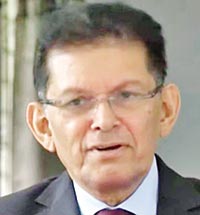 Bangladesh's government does not want to wait for a water-sharing agreement with India on what it calls a matter of "life and death" for people living along the Teesta River, Foreign Minister Khalilur Rahman has said. Instead, it is interested in discussing development projects in the region with China.
Ahead of an official visit to China, Khalilur told the media on Tuesday that the Teesta project would "definitely" be discussed during his trip.
Asked whether Dhaka still had hopes for the long-stalled Teesta water-sharing agreement-especially after the BJP came to power in West Bengal, possibly removing the earlier obstacle posed by Chief Minister Mamata Banerjee-he said Bangladesh would not sit idle waiting for India to act.
"Look, a government has not yet been formed in West Bengal, and what they think or what they will do is for them to say. It is not my job to read their minds," he said.
"We hope that the agreement reached at that time can be considered again under the current circumstances. But we cannot just sit and wait for that. We have our own work to do."
In September 2011, ahead of then Indian prime minister Manmohan Singh's visit to Dhaka, ministers responsible for water resources from both countries reached a consensus on the Teesta water-sharing agreement. The deal was expected to be signed during the visit, but was blocked by opposition from then West Bengal chief minister Mamata Banerjee.
After Narendra Modi's government came to power in India, there were renewed hopes regarding the agreement, but her position did not change.
With the deal stalled, Bangladesh initiated the "Teesta River Comprehensive Management and Restoration Project".
During former prime minister Sheikh Hasina's visit to Beijing in July 2019, media reports said she sought Chinese assistance for the project and several others. According to a BBC report at the time, it would include riverbank management infrastructure, flood control measures, and facilities to address dry-season water shortages.
Amid reports of Indian concern over awarding the project to a Chinese company, Beijing submitted a formal proposal worth nearly $1 billion.
In May 2024, during a visit to Dhaka, then Indian foreign secretary Vinay Kwatra expressed India's interest in financing the project. The following month, during Hasina's visit to India, New Delhi again showed interest in joining the Teesta master plan. Prime Minister Modi said a technical team from India would soon visit Bangladesh.
About a month later, on 5 August, Hasina's government fell amid a student-led mass uprising in Dhaka, and she fled to India.
Since then, large-scale protests have been held in northern Bangladesh demanding implementation of the Teesta master plan. The BNP, which played a leading role in the movement, is now in power, and one of its leaders, Asadul Habib Dulu, serves as minister for disaster management.
With both the water-sharing agreement and the development project still unresolved, Khalilur began a three-day visit to Beijing on Tuesday. In addition to bilateral talks with Chinese Foreign Minister Wang Yi, he is scheduled to meet Wang Huning, chairman of China's Political Consultative Conference.
Asked about the purpose of the trip, Rahman said: "China is a very important friend of ours, with whom we have a Strategic Cooperative Partnership. This is the new government's first visit to China."
"The Chinese foreign minister invited me, and during this trip we will discuss in detail how to deepen, accelerate and broaden relations between our two countries."
He added that both sides would explore whether the relationship could go beyond a strategic partnership.
"You mentioned Teesta… of course it will be discussed. This is a matter of life and death for the people of that region. They have raised the call, 'Jago Bahe' (Rise up, brother). If we do not respond to that call, then why are we here?"
"This is a commitment of our honourable prime minister and of our government-to solve the problems of that region. We will fulfil that commitment." �"bdnews24
Loading...
Loading...
Also read



Editor : Iqbal Sobhan Chowdhury
Published by the Editor on behalf of the Observer Ltd. from Globe Printers, 24/A, New Eskaton Road, Ramna, Dhaka.
Editorial, News and Commercial Offices : Aziz Bhaban (2nd floor), 93, Motijheel C/A, Dhaka-1000.
Phone: PABX- 41053001-06; Advertisement: 41053012; 01793317829, 01550707291, E-mail: [email protected], [email protected] Online: email: [email protected] 41053014; 01550707297 Advertisement: 01550707296
Published by the Editor on behalf of the Observer Ltd. from Globe Printers, 24/A, New Eskaton Road, Ramna, Dhaka.
Editorial, News and Commercial Offices : Aziz Bhaban (2nd floor), 93, Motijheel C/A, Dhaka-1000.
Phone: PABX- 41053001-06; Advertisement: 41053012; 01793317829, 01550707291, E-mail: [email protected], [email protected] Online: email: [email protected] 41053014; 01550707297 Advertisement: 01550707296


