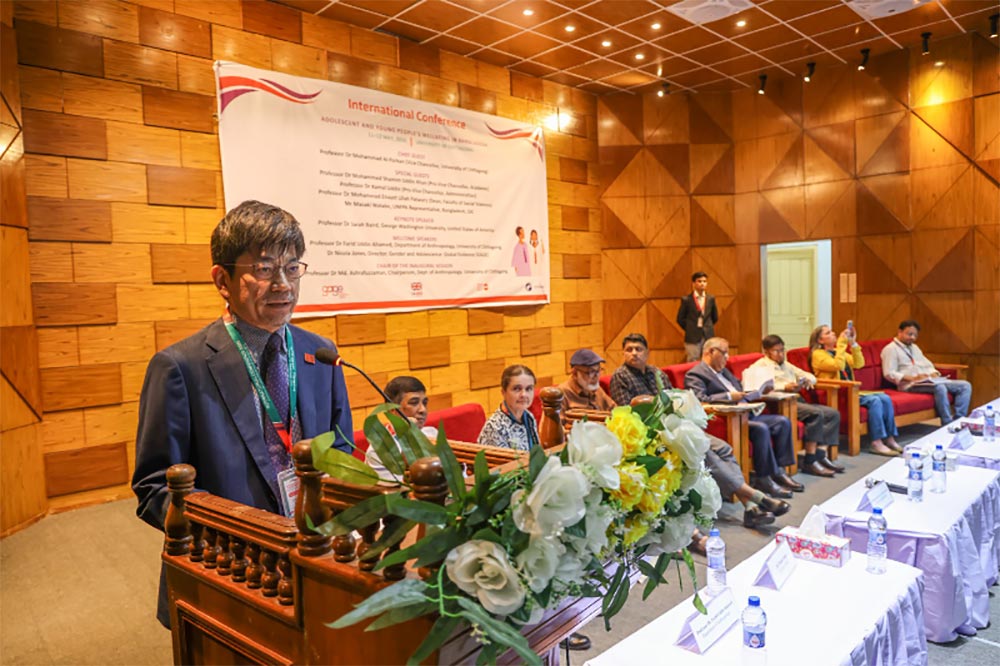
A week-long series of events focusing on adolescent and youth wellbeing in Bangladesh has brought together researchers, policymakers and development practitioners to strengthen evidence-based action for young people across the country. The initiative is being jointly organised by the Gender and Adolescence Global Evidence (GAGE) programme, the United Nations Population Fund (UNFPA) and the University of Chittagong.
Bangladesh is home to nearly 36 million adolescents aged between 10 and 19, making up almost a quarter of the population. Experts say investing in adolescents is essential for building a healthier and more resilient future generation. Yet many young people continue to face challenges such as school dropout, child marriage, limited access to sexual and reproductive health services, and psychosocial stress. These challenges are even more severe for Rohingya adolescents living in refugee camps in Cox's Bazar.
Held on 11-12 May at the University of Chittagong, the International Conference on Adolescent and Young People's Wellbeing in Bangladesh gathered more than 300 local and international participants. Discussions focused on education, employment, health, mental wellbeing, bodily autonomy, climate resilience and the impact of humanitarian crises on young lives.
Professor Dr Mohammad Al-Forkan, Vice Chancellor of the University of Chittagong, stressed the need to ensure every adolescent has the opportunity to thrive. Representatives from the British High Commission and UNFPA highlighted the importance of turning research into practical policies and ensuring adolescents themselves play a meaningful role in shaping decisions that affect their futures.





