Bangladesh's hospitality sector today is shaped by business travel, international hotel brands, MICE demand, service standards and foreign guests. By 2024, the country had more than 3,000 registered hotels and resorts, with international chains including Marriott, Radisson, InterContinental, Le Méridien and Pan Pacific expanding their footprint, according to The Bangladesh Monitor. Yet recent reporting also shows the sector still facing familiar pressures: weak occupancy, fewer foreign guests, corporate travel uncertainty and the need for disciplined hotel operations.
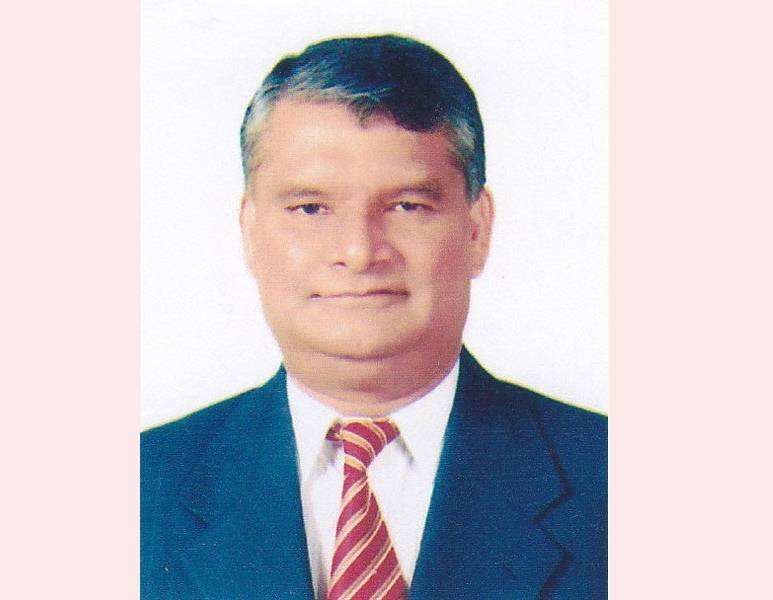
That makes the earlier formation of the sector worth revisiting. In December 2005, at Dhaka Travel Mart, Sadique Ahsan stood before reporters and argued that hotels should be understood not merely as individual businesses, but as part of the country's foreign-currency-earning economy. “If any foreign guest comes to Dhaka, he not only pays hotel charges but also many other expenses which ultimately help increase foreign currency earnings,” he said in remarks later published by a local daily.
A year earlier, in 2004, Ahsan had founded the Bangladesh Hotel and Guest House Owners Association (BHGHOA), becoming its first president at a time when hotels and guest houses largely handled licensing, taxation and regulatory concerns on their own. The association later became an A-class association affiliated with FBCCI. “The guest house movement in Bangladesh was started by Sadique Ahsan along with a few others,” said Taufiq Rahman, Chief Executive of Journey Plus.
Ahsan's authority came from years inside hotel operations rather than from public advocacy alone. After studying commerce at Dhaka University and completing a four-year articleship under ICAB, he joined Pan Pacific Sonargaon Dhaka in December 1980 as an accountant while the hotel was still under construction. Over the following sixteen years, he developed experience through local operations and professional training across several Asian hospitality markets. Those systems later influenced how he ran his own businesses, where discipline, service routines and professional conduct were treated as part of daily work. Former colleague Shahid Hamid, FIH, Executive Director of Dhaka Regency Hotel and Resort, recalls the significance of that period. “Sadique Ahsan is the second Bangladeshi to replace a foreign Finance Controller in an international hotel like Pan Pacific Sonargaon,” he said. “He made a great contribution to the expansion of the hotel management sector in Bangladesh.”
In 1996, at the age of 44, Ahsan left corporate life and moved into a market gap he believed was underserved: smaller properties with stronger standards than ordinary guest houses, but more personalised scale than large five-star hotels. Beginning with Crystal Palace, a ten-suite property in Gulshan-2, he later expanded into one of Bangladesh's early boutique hospitality portfolios that included Crystal Garden, Crystal Crown, Crystal Beach Resort in Cox's Bazar, Crystal Blue Resort on Saint Martin's Island and Asparagus Restaurant on Gulshan Avenue, later described as Bangladesh's first theatre restaurant. The broader group also included Crystal Tours and Travels and Crystal Architects and Interiors Limited, connecting accommodation, tourism support and hospitality-related services within one ecosystem.
His work through BHGHOA addressed practical operating questions facing hotels as the sector professionalised. These included hotel taxation, banking charges, and the ability of hotels to accept and exchange foreign currency payments on-site for foreign guests. Such issues were not abstract policy concerns; they affected how Bangladeshi hotels served international travellers and aligned with standard hospitality practice. His interest in skills development extended beyond his own properties: he chaired the Industrial Skills Council for Tourism and Hospitality under a joint initiative involving the Government of Bangladesh, the International Labour Organisation and the European Union, placing him within a broader effort to professionalise tourism and hospitality skills at a time when Bangladesh's service economy was still developing its institutional base.
Ahsan's business career later faced a major rupture. He experienced enforced disappearance during a period when business figures associated with the Bangladesh Nationalist Party (BNP) faced pressure under the military-backed caretaker government. The United States State Department's 2008 Human Rights Report documented widespread detentions and related concerns during that period.
In the years that followed, hotels under development, opening or restructuring continued seeking his experience. He worked on projects including Hotel Sandor in Kuala Lumpur, Ocean Paradise in Cox's Bazar, Amari Dhaka, The Westin Dhaka, Rose View Hotel, Hotel Grand Park, Marino Royal Hotel and other hospitality projects. These assignments kept him involved as Bangladesh's hotel market became more exposed to international operating expectations, where trained staff, service routines and financial discipline mattered as much as new buildings.
Rahman also places Ahsan within the wider tourism movement. He recalled that Ahsan worked with others in the hotel and tourism sectors during Bangladesh's early tourism fairs, seminars and international engagements. “He also did a lot of work on tourism,” Rahman said, adding that he and Ahsan worked together for the development of the tourism sector and continued contributing until around 2015-2016.
Beyond institutional work, those who worked with Ahsan also point to his role in developing people. His properties functioned as training grounds, covering service protocols, hygiene standards, food and beverage operations, guest relations, hospitality English and the routines of professional hotel management. He was strict about employees continuing their institutional education and professional training. Many who began with limited experience later moved into supervisory or management roles. Others built careers in hotels, restaurants and tourism businesses in Bangladesh and abroad, including the Middle East, Southeast Asia and Europe.
That movement of people is one of the less visible ways a service industry develops. Buildings may carry hotel names, but standards travel through workers who move from one property to another, taking with them habits learned on the job. In Ahsan's case, former employees and industry colleagues describe a work culture where employment, discipline and learning were closely linked. Colleagues also remember his working style: he discouraged rushed decisions and believed in giving enough time to assess a situation- a temperament that shaped how people around him learned to think, respond and manage pressure.
Sadique Ahsan remained active in hospitality until his final days, passing away on 14 May 2020 at the age of 67. The Bangladesh Hotel and Guest House Owners Association that he founded continues to operate today. His institutional legacy is often linked to BHGHOA. His workforce legacy sits in a quieter place: among the workers, supervisors and managers who passed through his businesses and carried those standards elsewhere. For Bangladesh's hospitality sector, still judged by consistency, training and professionalism, that part of his story remains directly relevant.