
Our country has laws, regulations, and provisions for fines. However, despite the existence of laws, due to long-standing mismanagement, non-enforcement, or improper enforcement, public confidence in the rule of law has almost disappeared. Although strict laws existed on paper, their reflection in real life was often absent. As a result, a social culture gradually developed in which breaking rules was not considered unusual by many; rather, it was often viewed as convenient. However, in recent times, the application of technology-driven surveillance and high fines in traffic management is signaling a change in that old reality.
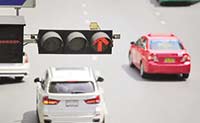
At one time, the traffic signals at intersections across Dhaka seemed to exist merely to make the city look like a city. Nobody cared when they were functioning or when they were not. The red light would be on, yet vehicles would continue moving underneath it. Forget obeying traffic signals late at night; even in broad daylight, signals were often ignored. Traffic police were seen standing on the roads constantly, controlling vehicles through hand gestures or batons. But now that picture is changing rapidly. AI-based traffic systems have now been introduced in Dhaka. There is now the possibility of being caught on camera for violating signals, along with the fear of automatic case filing and substantial fines. As a result, drivers are becoming much more cautious than before. Even at midnight, many vehicles can now be seen waiting at traffic signals in compliance with the rules.
This change has been made possible through technology-based law enforcement, something we could hardly have imagined before. Every government wanted to bring discipline to Dhaka’s roads, but repeatedly failed. However, due to AI cameras and automated case management systems, law violators now have far fewer opportunities to evade responsibility. Much stricter action is now being taken against offenses such as signal violations, driving in the wrong direction, driving without a license, or riding motorcycles without wearing helmets.
People follow rules not only because of morality but also because of the fear of potential consequences. When penalties for breaking the law are very low, many people do not hesitate to violate it. But when the cost increases significantly, behavior also begins to change. Developed countries around the world have long followed this principle. There, financial penalties for traffic violations, environmental pollution, or activities against public interest are set at levels that serve as effective deterrents for citizens.
That reality is now beginning to become visible in our country as well. In the past, fines for many traffic offenses ranged from only 100 to 500 taka. But now, in various cases, the amount has been increased to several thousand or even tens of thousands of taka. As a result, people now think at least twice before violating the law. This can play a positive role not only in road safety but also in developing a broader culture of compliance with the law.
Policymakers within the government are now discussing whether the positive changes seen in traffic management can be applied to other sectors as well. In particular, an integrated system of technology-based surveillance and high fines could be effective in addressing long-standing problems such as polythene use, overcharging fares, public smoking, food adulteration, and illegal occupation of footpaths.
Take the issue of polythene, for example. Despite being extremely harmful to the environment, polythene is still widely used across the country. According to the law, strict penalties exist against the production, import, or marketing of polythene. However, due to weak enforcement, its use has not been fully controlled. Similarly, single-use plastics have become a major environmental threat. If technology-driven monitoring and regular enforcement of fines can be ensured, changes may also be achieved in this area.
The issue of overcharging passengers in public transport has also been a long-standing source of suffering. Collecting fares higher than the approved rates, failing to display fare charts, or harassing passengers under various pretexts are everyday occurrences. Although legal provisions for punishment exist, their implementation remains limited in practice. If digital complaint systems, GPS-based monitoring, and instant fines can be introduced, significant improvement in the situation is possible.
Issues such as public smoking and food adulteration are also directly linked to public health. Although anti-smoking laws exist, they are often not followed in many public places. While drives against food adulteration are conducted, the problem has not been completely eliminated. This is because, in most cases, offenders do not sufficiently fear punishment. When violating the law results in substantial financial losses or business risks, the likelihood of changing behavior increases significantly.
The problem of footpath encroachment and illegal structures is of a similar nature. In almost all major cities of the country, a significant portion of footpaths remains occupied. As a result, pedestrian movement is hindered, and the quality of urban life suffers. Although regular eviction drives are conducted, the old situation often returns after some time.
The reason is the lack of consistency and effectiveness in punishment. If regular monitoring through technology and progressively increasing fines for repeat offenses can be introduced, a path toward a permanent solution may emerge.
However, it is not realistic to assume that simply increasing the amount of fines will solve all problems. If there is discrimination in law enforcement or opportunities for corruption remain, even strict laws may fail to produce the desired results. Therefore, equal application of the law for all, transparency, accountability, and impartial enforcement are essential. At the same time, raising public awareness and fostering a sense of civic responsibility are equally important.
The combination of technology and administrative capacity has created an opportunity to establish a new form of governance. The visible changes in traffic management have demonstrated that citizen behavior can be transformed when enforcement is properly implemented. Even in a society where many people once paid little attention to breaking the law, it is possible to cultivate a culture of compliance.
If strict laws, eye-opening fines, and non-discriminatory enforcement can be combined, a new chapter may begin in Bangladesh’s urban life, public safety, and social order. The recent changes in traffic management may well be the first step toward that broader transformation.
The writer is a banker





