Peace is not the absence of conflict; it is a noble triumph bought with valor. As the world marks the International Day of United Nations Peacekeepers, Bangladesh reflects on its own monumental contributions with immense national pride. This is more than a commemoration; it is a tribute to a legacy of bravery that continues to safeguard global stability. Bangladesh proudly stands at the pinnacle of global blue-helmet deployments. Over 206,000 of our vigilant guardians have served across volatile terrains, from the scorched deserts of Africa to various conflict zones worldwide, hoisting our red-green flag high. Beyond global prestige, they have contributed nearly BDT 31,000 crore in invaluable remittance to our national economy. Yet, the peak of global diplomacy and reputation we occupy today was not achieved overnight. To understand how a population once subjected to utter neglect and colonial slurs transformed into the primary driving force of world peace, we must revisit our historical roots.
The Defence Journalists Association of Bangladesh (DJAB) recently organized a special seminar on the International Day of UN Peacekeepers. This timely event inspired me to write this article to honor that saga of bravery and highlight our peacekeepers' monumental contributions to the nation.
The Colonial Slur and the ‘Non-Martial Race’ Theory: Following the 1857 Sepoy Mutiny, British rulers systematically banned Bengalis from military enlistment for nearly sixty years, branding them a 'non-martial' and 'effeminate' race. In 1899, British journalist G.W. Steevens even wrote a deeply racist critique mocking their physical stature, claiming 'the Bengali’s leg is the leg of a slave.' Yet, the story of how these very legs shattered colonial shackles and transformed into instruments of global triumph began on the battlefields of World War I in 1917.
The 1st East Bengal Regiment and Its Forgotten Architects: The second and most crucial institutional chapter of establishing Bengali military self-respect began in November 1947. While serving at the Supreme Command Headquarters in Delhi, the then Officer Commanding (OC), Major Abdul Wahed Choudhury, through his solitary patriotic efforts and indomitable resolve, initiated the formal process of raising the 1st East Bengal Regiment. He successfully secured the historic authorization for this regiment directly from the British Field Marshal Claude Auchinleck.
Standing upon the rock-solid professional foundation he laid, the 1st East Bengal Regiment (Senior Tigers) officially commenced its journey on February 15, 1948, at the Kurmitola grounds. Joining him in this mission was Major Abdul Ghani (Tiger Ghani), who traversed the country from Teknaf to Tetulia to inspire and recruit Bengali youths into the regiment. Though history has somewhat sidelined trailblazers like Major A.W. Choudhury, the truth remains: had he not sown the seeds of Bengali military existence in the Delhi headquarters back then, the armed foundation of our 1971 Liberation War might never have materialized.
Following the 1857 Sepoy Mutiny, British rulers systematically banned
Bengalis from military enlistment for nearly sixty years, branding them a
'non-martial' and 'effeminate' race. In 1899, British journalist G.W.
Steevens even wrote a deeply racist critique mocking their physical
stature, claiming 'the Bengali’s leg is the leg of a slave
Knocking Out the Punjabis: Proving Superiority in the Boxing Ring: However, this journey was anything but smooth. The Pakistani military junta harbored deep-seated biases, viewing Bengalis as a 'non-martial race' and dismissing their sports skills. To them, boxing was the ultimate test of military superiority. History was rewritten in 1949 when the 1st East Bengal Regiment faced the 3rd and 8th Punjab Regiments. Balancing on the very legs Steevens had mocked as 'slave legs,' the Bengali jawans swept the ring with eight straight knockouts.
Taking over as CO in 1951, Lt. Col. Osmany rigorously trained these soldiers to be exceptionally fight-fit, bringing lasting glory to Bengalis. Humiliated by their rise, the Pakistani leadership conspired to dismantle the regiment by subjecting them to grueling endurance tests in Punjab's extreme weather. Yet, defying all odds, they repeatedly proved their mettle, culminating in their heroic defense of the Lahore sector during the 1965 Indo-Pak War.
The DJAB Seminar and Spontaneous Pivot: During the DJAB seminar, speakers eloquently praised the glorious milestones of Bangladeshi peacekeepers, such as Bangla becoming an honorary official language in Sierra Leone. Realizing the younger generation is unaware of our armed forces' foundational history, I abandoned my prepared speech and spoke spontaneously about the military resurgence of Bengalis. Guided by the maxim, 'Dead men teach the living men,' I continued even when the session chair signaled a time constraint, as the Chief Guest was so captivated by the history that she permitted me to proceed amid enthusiastic audience cheers. I extend my heartfelt gratitude to DJAB for providing this unique platform to share this saga.
Navy’s Multifaceted Contribution and the Call for a Defence Attaché in Beirut: Beyond land and sky, the Bangladesh Navy has become indispensable in global peacekeeping. A prime testament is the UNIFIL mission in the Mediterranean Sea, where the Bangladesh Navy has played a historic role since 2010. Even as budgetary constraints forced the UN to downsize naval deployments from various countries, our corvette warship, BNS SANGRAM, remains deployed in this highly strategic maritime zone due to its exceptional professionalism. Given our active naval operations in Lebanon, appointing a Navy officer as a 'Defence Attaché' at the Beirut Embassy is now a strategic necessity. This role would streamline real-time logistical coordination and provide a vital shield to rapidly evacuate thousands of Bangladeshi expatriates from Beirut port during emergencies. Promisingly, the Honorable State Minister for Foreign Affairs has embraced this far-sighted strategy positively, steering our defense diplomacy toward new horizons.
The State Minister’s Humanist Perspective: At the seminar, the Chief Guest, far-sighted diplomat and Honorable State Minister for Foreign Affairs Shama Obayed, illuminated a deeply humane and emotional aspect of our peacekeeping contributions. She noted that while we often calculate the thousands of crores of rupees earned from peacekeeping missions, the nation sometimes overlooks the profound uncertainty and sacrifices borne by the peacekeepers' families. When a family sends a father, husband, or brother to a war-torn country in distant Africa, they live in constant anxiety, not knowing if their loved one will return home unharmed. It is pure patriotism and an unwavering commitment to global humanity that drives them to take such risks.
Our current standing on the global stage, with our heads held high, directly traces its roots back to the Kurmitola grounds in 1948. As we celebrate our position as global torchbearers of peace, paying rich tributes to the vision and institutional foresight of pioneers like Major A.W. Choudhury, Tiger Ghani Col Osmanyis our national duty. It was the 1st East Bengal Regiment raised by them that paved the way for subsequent Bengal Regiments, which formed the bedrock of armed resistance against Pakistani oppressors during the 1971 Liberation War, ultimately delivering our independence and the red-green flag.
Shattering a century-old colonial myth of being a "non-martial race," the sons of this soil have proven themselves as the most trusted guardians of global peace and as true 'Global Peacekeepers'. May the extraordinary sacrifices of all our Bengal Regiments that fought in 1971, coupled with the contemporary global glory of our peacekeepers, serve as our greatest source of fortitude in any future national crisis or conflict, and remain burning as an imperishable flame of patriotism in the veins of future generations.
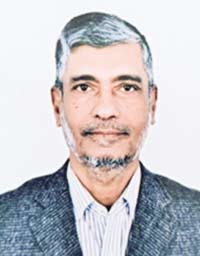
The writer is a former Assistant Chief of Naval Staff and Pro-VC of BUP





