



| HEADLINE |

|

Education allocation rises by 56.64pc in FY2026-27 budget
Govt targets edn spending at 5pc of GDP; unveils curriculum reforms, tech-driven initiatives



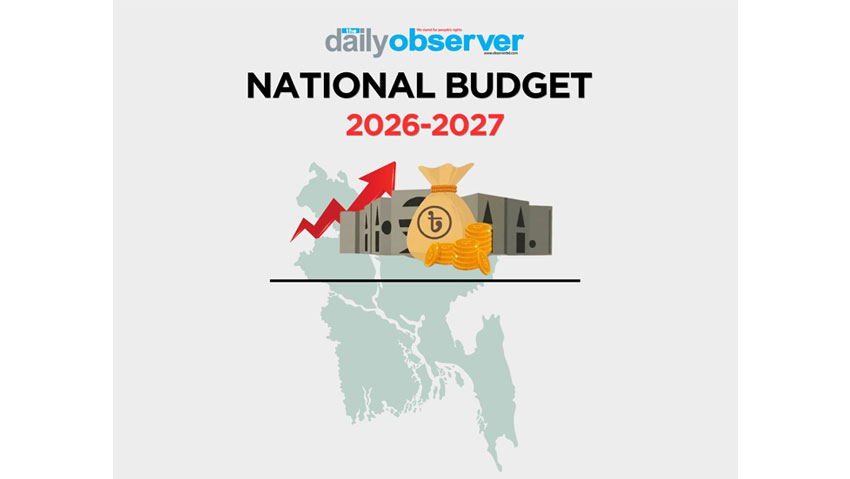
The education sector in Bangladesh received a significant boost in the first budget of the new Bangladesh Nationalist Party government, with a proposed allocation of Tk 1,36,606 crore for the 2026-27 fiscal year, marking an increase of about 56.64 per cent over the previous fiscal year’s allocation of Tk 87,206 crore.
Finance Minister Amir Khosru Mahmud Chowdhury announced the allocation while presenting the national budget in the Parliament on Thursday, June 11, 2026.
The proposed allocation accounts for 2 per cent of the country’s Gross Domestic Product (GDP), up from 1.39 per cent in the 2025-26 fiscal year. The increase amounts to Tk 49,400 crore compared with the previous budget.
Of the total allocation, Tk 57,301 crore has been earmarked for secondary and higher education, Tk 46,737 crore for primary education and Tk 18,457 crore for technical and madrasa education.
Presenting the budget, the finance minister described education as one of the sectors most affected during what he termed the country’s “long period of fascism”.
“Embracing the aspirations of the youth, we have returned to democratic Bangladesh through the July mass uprising. We must now build a Bangladesh where students grow up as honest, competent, skilled and responsible citizens,” he said.
He added that the government aims to gradually raise public investment in education to 5 per cent of GDP.
Curriculum Reform and Third Language Initiative
The finance minister said the government, under the leadership of Prime Minister Tarique Rahman, is undertaking a comprehensive curriculum transformation to promote moral values, social responsibility, leadership and humanitarian qualities among students.
A compulsory third language will be introduced alongside Bangla and English. Proposed languages include Japanese, Korean, Chinese, Arabic, French and German.
The government also plans to provide education loans of up to Tk 10 lakh to students seeking higher education in countries linked to those languages after acquiring the necessary linguistic skills.
Support for Female and Disadvantaged Students
The budget proposes free education for female students up to honours level as part of efforts to expand women’s access to higher education.
Technical Education from Class Six
The budget places special emphasis on technical and vocational education, technology based learning, sports, culture and the introduction of “Learning with Happiness” programmes.
Technical and vocational education, along with joyful learning, will be introduced from Class Six, while the government seeks to create opportunities for students to pursue diverse career paths as technicians, entrepreneurs, researchers, artists, teachers, businesspeople and athletes.
Quality enhancement programmes in science, mathematics, English and information technology will also be introduced in madrasas alongside religious education.
Technology, AI, and Midday Meal
To modernise the education system, the government will launch the “One Teacher One Tab” initiative, expand multimedia classrooms and extend free WiFi facilities in educational institutions.
The budget also proposes strengthening industry academia linkages, expanding apprenticeship and internship opportunities and supporting start up ventures to create new entrepreneurs.
The government further announced the reintroduction of the midday meal programme in schools, which will be expanded nationwide in phases to improve student nutrition and health outcomes.
Sanitation, hygiene and healthcare facilities for students will also receive priority, while debate competitions, science fairs, cultural programmes and literary activities will be promoted through club based co curricular activities.
‘Brain Circulation’ Strategy
To address the issue of brain drain, the government has proposed a “brain circulation” strategy aimed at engaging highly qualified Bangladeshi professionals living abroad in the country’s education and research sectors.
The budget also pledges enhanced support for research, innovation and knowledge creation, with a focus on leveraging global expertise for national development.
“We want to create an environment where students and teachers can realise their full potential through modern education, training and facilities,” the finance minister said.
Finance Minister Amir Khosru Mahmud Chowdhury announced the allocation while presenting the national budget in the Parliament on Thursday, June 11, 2026.
The proposed allocation accounts for 2 per cent of the country’s Gross Domestic Product (GDP), up from 1.39 per cent in the 2025-26 fiscal year. The increase amounts to Tk 49,400 crore compared with the previous budget.
Of the total allocation, Tk 57,301 crore has been earmarked for secondary and higher education, Tk 46,737 crore for primary education and Tk 18,457 crore for technical and madrasa education.
Presenting the budget, the finance minister described education as one of the sectors most affected during what he termed the country’s “long period of fascism”.
“Embracing the aspirations of the youth, we have returned to democratic Bangladesh through the July mass uprising. We must now build a Bangladesh where students grow up as honest, competent, skilled and responsible citizens,” he said.
He added that the government aims to gradually raise public investment in education to 5 per cent of GDP.
Curriculum Reform and Third Language Initiative
The finance minister said the government, under the leadership of Prime Minister Tarique Rahman, is undertaking a comprehensive curriculum transformation to promote moral values, social responsibility, leadership and humanitarian qualities among students.
A compulsory third language will be introduced alongside Bangla and English. Proposed languages include Japanese, Korean, Chinese, Arabic, French and German.
The government also plans to provide education loans of up to Tk 10 lakh to students seeking higher education in countries linked to those languages after acquiring the necessary linguistic skills.
Support for Female and Disadvantaged Students
The budget proposes free education for female students up to honours level as part of efforts to expand women’s access to higher education.
Poor students will receive school uniforms, shoes and school bags, while children with disabilities and special needs will be brought under an inclusive education framework through specialised learning materials and assistive technologies.
The budget places special emphasis on technical and vocational education, technology based learning, sports, culture and the introduction of “Learning with Happiness” programmes.
Technical and vocational education, along with joyful learning, will be introduced from Class Six, while the government seeks to create opportunities for students to pursue diverse career paths as technicians, entrepreneurs, researchers, artists, teachers, businesspeople and athletes.
Quality enhancement programmes in science, mathematics, English and information technology will also be introduced in madrasas alongside religious education.
Technology, AI, and Midday Meal
To modernise the education system, the government will launch the “One Teacher One Tab” initiative, expand multimedia classrooms and extend free WiFi facilities in educational institutions.
The budget also proposes strengthening industry academia linkages, expanding apprenticeship and internship opportunities and supporting start up ventures to create new entrepreneurs.
The government further announced the reintroduction of the midday meal programme in schools, which will be expanded nationwide in phases to improve student nutrition and health outcomes.
Sanitation, hygiene and healthcare facilities for students will also receive priority, while debate competitions, science fairs, cultural programmes and literary activities will be promoted through club based co curricular activities.
‘Brain Circulation’ Strategy
To address the issue of brain drain, the government has proposed a “brain circulation” strategy aimed at engaging highly qualified Bangladeshi professionals living abroad in the country’s education and research sectors.
The budget also pledges enhanced support for research, innovation and knowledge creation, with a focus on leveraging global expertise for national development.
“We want to create an environment where students and teachers can realise their full potential through modern education, training and facilities,” the finance minister said.

Loading...
Loading...
Also read



Editor : Iqbal Sobhan Chowdhury
Published by the Editor on behalf of the Observer Ltd. from Globe Printers, 24/A, New Eskaton Road, Ramna, Dhaka.
Editorial, News and Commercial Offices : Aziz Bhaban (2nd floor), 93, Motijheel C/A, Dhaka-1000.
Phone: PABX- 41053001-06; Advertisement: 41053012; 01793317829, 01550707291, E-mail: [email protected], [email protected] Online: email: [email protected] 41053014; 01550707297 Advertisement: 01550707296
Published by the Editor on behalf of the Observer Ltd. from Globe Printers, 24/A, New Eskaton Road, Ramna, Dhaka.
Editorial, News and Commercial Offices : Aziz Bhaban (2nd floor), 93, Motijheel C/A, Dhaka-1000.
Phone: PABX- 41053001-06; Advertisement: 41053012; 01793317829, 01550707291, E-mail: [email protected], [email protected] Online: email: [email protected] 41053014; 01550707297 Advertisement: 01550707296


