



| HEADLINE |

|
Trump's Post-Iran Deal Economic Claims: What the data actually shows
Published : Friday, 19 June, 2026 at 2:58 PM
Observer Online Desk


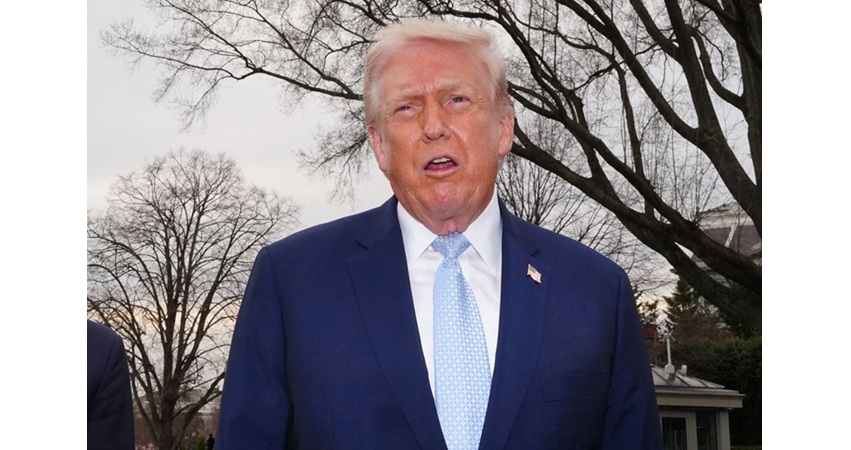
US President Donald Trump took to his Truth Social platform with a sweeping declaration of economic success after the immediate aftermath of the United States and Iran signing a memorandum of understanding (MoU) to end the US-Israel war on Iran.
Each of his four claims invites scrutiny. A cross-examination against current data and expert opinion reveals that some assertions carry partial validity, while others are either premature, misleading, or demonstrably inaccurate.
1. Stock Markets: Partly True, But Limited in Reach
The president's claim about record stock markets is selectively accurate. The Dow Jones Industrial Average did close at an all-time high of 51,999.67 on Tuesday, buoyed by renewed optimism around the peace MoU and the debut of SpaceX on public markets. However, the Dow retreated the following day after the US Federal Reserve announced it would hold the benchmark interest rate steady within a target band of 3.5 to 3.75 percent, finishing Wednesday at 51,494.99. By midday Thursday, the index had partially recovered, gaining roughly 0.35 percent.
Crucially, neither the Nasdaq Composite Index nor the S&P 500 closed at record highs. The broader market picture is therefore more subdued than the president's language implies.
More significantly, approximately 38 percent of American households have no equity market exposure, meaning equity performance carries little direct relevance to their financial lives.
Michael Klein, professor of international economic affairs at The Fletcher School, Tufts University, cautioned against conflating market performance with broader economic wellbeing. The stock market is not the economy, he told Al Jazeera, adding that households experience the economy primarily at the fuel pump and the supermarket checkout , neither of which is yet delivering the relief the president has advertised.
2. Prices Dropping: A Marginal and Fragile Decline
Fuel prices have indeed declined. According to daily tracking data from the American Automobile Association (AAA), the national average price for a gallon of petrol stood at $3.99 on Thursday , a meaningful retreat from the $4.48 peak recorded in May. However, that figure remains sharply elevated against the $2.98 per gallon consumers were paying on 28 February, the date on which the US and Israel launched military strikes on Iran.
Industry specialists warn that the decline in fuel costs is unlikely to be sustained. The United States Strategic Petroleum Reserve has reached its lowest volume since 1983, and replenishing it while simultaneously untangling shipping reroutes, insurance premiums, and disrupted supply chains will take considerable time. Tammy Kulesa, director of product marketing for supply chain execution at Blue Yonder, a supply chain management firm, noted that even once oil prices stabilise, cost pressures throughout supply chains will remain elevated for an extended period.
Mark Jones, professor of political science at Rice University in Houston, Texas, was more specific about timelines. He told Al Jazeera that even after confidence in the truce is established and maritime transit through the Strait of Hormuz normalises, the logistical cycle of tanker voyages means stocks cannot realistically be replenished before the early third quarter of 2026.
A return to pre-war pricing is unlikely before the end of 2027, he estimated.
Consumer price inflation more broadly remains elevated at 4.2 percent , the fastest pace recorded in three years. Energy costs alone have risen by close to eight percent over the past two months. At the grocery level, food prices at supermarkets increased by 0.1 percent in May, following a 0.7 percent month-on-month rise in April, with bakery items, cereals, beverages, and fresh produce recording some of the steepest increases.
The retail sector's own behaviour reflects the strain on consumers. Kroger, the largest supermarket chain in the United States with approximately 3,000 outlets nationwide, announced on Thursday that it would reduce prices across thousands of product lines. Chief Executive Greg Foran acknowledged that customers are being more deliberate in their spending, and that too many shopping trips are driven by promotions rather than routine full-basket purchases. The statement underscored what Professor Klein described bluntly: wages have not kept pace with prices, and real purchasing power has fallen.
3. Jobs at Records: The Claim Does Not Hold
The assertion that jobs are at record levels is the least defensible of the president's four claims. The US economy added 172,000 positions in May , a respectable figure, but well below the 214,000 jobs added in March, which represents the peak of the current administration's tenure in terms of monthly employment gains.
The longer historical trajectory is even less flattering. Under former President Joe Biden, the economy averaged in excess of 300,000 jobs added monthly, with individual months , particularly during the post-pandemic labour market recovery , substantially exceeding that figure. The average monthly job gain under the current administration in 2025 was approximately 15,000. The economy shed 92,000 jobs in February of this year.
Layoff data compounds the picture. According to employment consultancy Challenger, Gray and Christmas, job cuts increased by 16 percent between April and May 2026, reaching the highest volume of redundancies recorded since the height of the COVID-19 pandemic in May 2020.
Slightly more than 97,000 workers were made redundant in May alone. Artificial intelligence adoption was identified as a primary driver of those cuts , a structural factor unlikely to reverse irrespective of diplomatic developments in the Middle East.
4. Oil Is Flowing: Movement Is Resuming, But Slowly
Vice President JD Vance stated that 12.5 million barrels of crude oil transited the Strait of Hormuz overnight , a strategically vital waterway through which roughly one fifth of the world's oil supply normally passes. That figure is broadly consistent with a reopening trajectory.
However, independent maritime tracking firm Kpler recorded only six verified vessel crossings on 17 June, indicating that transit volumes remain well below their pre-conflict baseline.
Oil futures reflected the cautious optimism: Brent crude futures fell by $0.78, or approximately one percent, to $76.51 per barrel in midday Thursday trading. Liquefied natural gas (LNG) shipments have also begun ramping up, with a QatarEnergy vessel returning to the Ras Laffan terminal and loading more than 209,000 cubic metres of LNG, according to Kpler.
These are genuine signs of normalisation. But normalisation is not the same as resolution. As logistics specialists and academic economists uniformly caution, the supply-chain disruptions set in motion by the conflict will take many months , and in some dimensions, the better part of two years , to fully unwind.
Assessment
Of the four economic claims advanced by President Trump on Truth Social, only the Dow Jones record high is straightforwardly supported by data. The partial resumption of oil flows through the Strait of Hormuz is encouraging but incomplete.
The claim that prices are dropping is misleading: fuel costs remain substantially above pre-war levels, consumer inflation is near a three-year high, and supply chain specialists do not expect meaningful relief before late 2026 at the earliest. The assertion that jobs are at record levels is directly contradicted by available data, which shows both declining monthly employment growth and a sharp rise in layoffs.
The broader caution offered by Professor Klein of Tufts University bears repeating in this context: the economy as it is experienced by most households is not the stock market. It is the price of bread, the cost of filling a tank, and the stability of a job. On those measures, the data does not yet support the triumphalist narrative being advanced from the White House.
Source: This article is based on and credits reporting by Al Jazeera (Andy Hirschfeld) and Reuters, published 18 June 2026. Original report: aljazeera.com
Each of his four claims invites scrutiny. A cross-examination against current data and expert opinion reveals that some assertions carry partial validity, while others are either premature, misleading, or demonstrably inaccurate.
1. Stock Markets: Partly True, But Limited in Reach
The president's claim about record stock markets is selectively accurate. The Dow Jones Industrial Average did close at an all-time high of 51,999.67 on Tuesday, buoyed by renewed optimism around the peace MoU and the debut of SpaceX on public markets. However, the Dow retreated the following day after the US Federal Reserve announced it would hold the benchmark interest rate steady within a target band of 3.5 to 3.75 percent, finishing Wednesday at 51,494.99. By midday Thursday, the index had partially recovered, gaining roughly 0.35 percent.
Crucially, neither the Nasdaq Composite Index nor the S&P 500 closed at record highs. The broader market picture is therefore more subdued than the president's language implies.
More significantly, approximately 38 percent of American households have no equity market exposure, meaning equity performance carries little direct relevance to their financial lives.
Michael Klein, professor of international economic affairs at The Fletcher School, Tufts University, cautioned against conflating market performance with broader economic wellbeing. The stock market is not the economy, he told Al Jazeera, adding that households experience the economy primarily at the fuel pump and the supermarket checkout , neither of which is yet delivering the relief the president has advertised.
2. Prices Dropping: A Marginal and Fragile Decline
Fuel prices have indeed declined. According to daily tracking data from the American Automobile Association (AAA), the national average price for a gallon of petrol stood at $3.99 on Thursday , a meaningful retreat from the $4.48 peak recorded in May. However, that figure remains sharply elevated against the $2.98 per gallon consumers were paying on 28 February, the date on which the US and Israel launched military strikes on Iran.
Industry specialists warn that the decline in fuel costs is unlikely to be sustained. The United States Strategic Petroleum Reserve has reached its lowest volume since 1983, and replenishing it while simultaneously untangling shipping reroutes, insurance premiums, and disrupted supply chains will take considerable time. Tammy Kulesa, director of product marketing for supply chain execution at Blue Yonder, a supply chain management firm, noted that even once oil prices stabilise, cost pressures throughout supply chains will remain elevated for an extended period.
Mark Jones, professor of political science at Rice University in Houston, Texas, was more specific about timelines. He told Al Jazeera that even after confidence in the truce is established and maritime transit through the Strait of Hormuz normalises, the logistical cycle of tanker voyages means stocks cannot realistically be replenished before the early third quarter of 2026.
A return to pre-war pricing is unlikely before the end of 2027, he estimated.
Consumer price inflation more broadly remains elevated at 4.2 percent , the fastest pace recorded in three years. Energy costs alone have risen by close to eight percent over the past two months. At the grocery level, food prices at supermarkets increased by 0.1 percent in May, following a 0.7 percent month-on-month rise in April, with bakery items, cereals, beverages, and fresh produce recording some of the steepest increases.
The retail sector's own behaviour reflects the strain on consumers. Kroger, the largest supermarket chain in the United States with approximately 3,000 outlets nationwide, announced on Thursday that it would reduce prices across thousands of product lines. Chief Executive Greg Foran acknowledged that customers are being more deliberate in their spending, and that too many shopping trips are driven by promotions rather than routine full-basket purchases. The statement underscored what Professor Klein described bluntly: wages have not kept pace with prices, and real purchasing power has fallen.
3. Jobs at Records: The Claim Does Not Hold
The assertion that jobs are at record levels is the least defensible of the president's four claims. The US economy added 172,000 positions in May , a respectable figure, but well below the 214,000 jobs added in March, which represents the peak of the current administration's tenure in terms of monthly employment gains.
The longer historical trajectory is even less flattering. Under former President Joe Biden, the economy averaged in excess of 300,000 jobs added monthly, with individual months , particularly during the post-pandemic labour market recovery , substantially exceeding that figure. The average monthly job gain under the current administration in 2025 was approximately 15,000. The economy shed 92,000 jobs in February of this year.
Layoff data compounds the picture. According to employment consultancy Challenger, Gray and Christmas, job cuts increased by 16 percent between April and May 2026, reaching the highest volume of redundancies recorded since the height of the COVID-19 pandemic in May 2020.
Slightly more than 97,000 workers were made redundant in May alone. Artificial intelligence adoption was identified as a primary driver of those cuts , a structural factor unlikely to reverse irrespective of diplomatic developments in the Middle East.
4. Oil Is Flowing: Movement Is Resuming, But Slowly
Vice President JD Vance stated that 12.5 million barrels of crude oil transited the Strait of Hormuz overnight , a strategically vital waterway through which roughly one fifth of the world's oil supply normally passes. That figure is broadly consistent with a reopening trajectory.
However, independent maritime tracking firm Kpler recorded only six verified vessel crossings on 17 June, indicating that transit volumes remain well below their pre-conflict baseline.
Oil futures reflected the cautious optimism: Brent crude futures fell by $0.78, or approximately one percent, to $76.51 per barrel in midday Thursday trading. Liquefied natural gas (LNG) shipments have also begun ramping up, with a QatarEnergy vessel returning to the Ras Laffan terminal and loading more than 209,000 cubic metres of LNG, according to Kpler.
These are genuine signs of normalisation. But normalisation is not the same as resolution. As logistics specialists and academic economists uniformly caution, the supply-chain disruptions set in motion by the conflict will take many months , and in some dimensions, the better part of two years , to fully unwind.
Assessment
Of the four economic claims advanced by President Trump on Truth Social, only the Dow Jones record high is straightforwardly supported by data. The partial resumption of oil flows through the Strait of Hormuz is encouraging but incomplete.
The claim that prices are dropping is misleading: fuel costs remain substantially above pre-war levels, consumer inflation is near a three-year high, and supply chain specialists do not expect meaningful relief before late 2026 at the earliest. The assertion that jobs are at record levels is directly contradicted by available data, which shows both declining monthly employment growth and a sharp rise in layoffs.
The broader caution offered by Professor Klein of Tufts University bears repeating in this context: the economy as it is experienced by most households is not the stock market. It is the price of bread, the cost of filling a tank, and the stability of a job. On those measures, the data does not yet support the triumphalist narrative being advanced from the White House.
Source: This article is based on and credits reporting by Al Jazeera (Andy Hirschfeld) and Reuters, published 18 June 2026. Original report: aljazeera.com
Loading...
Loading...
Also read









Editor : Iqbal Sobhan Chowdhury
Published by the Editor on behalf of the Observer Ltd. from Globe Printers, 24/A, New Eskaton Road, Ramna, Dhaka.
Editorial, News and Commercial Offices : Aziz Bhaban (2nd floor), 93, Motijheel C/A, Dhaka-1000.
Phone: PABX- 41053001-06; Advertisement: 41053012; 01793317829, 01550707291, E-mail: [email protected], [email protected] Online: email: [email protected] 41053014; 01550707297 Advertisement: 01550707296
Published by the Editor on behalf of the Observer Ltd. from Globe Printers, 24/A, New Eskaton Road, Ramna, Dhaka.
Editorial, News and Commercial Offices : Aziz Bhaban (2nd floor), 93, Motijheel C/A, Dhaka-1000.
Phone: PABX- 41053001-06; Advertisement: 41053012; 01793317829, 01550707291, E-mail: [email protected], [email protected] Online: email: [email protected] 41053014; 01550707297 Advertisement: 01550707296


