



| HEADLINE |

|
JnU aims to become a centre of academic excellence
Published : Wednesday, 22 July, 2026 at 12:00 AM


 Jagannath
University (JnU) has embarked on a series of reforms to address
long-standing challenges, including ageing infrastructure, session
delays, weak international rankings, legal and the delayed
implementation of its second campus project.
Jagannath
University (JnU) has embarked on a series of reforms to address
long-standing challenges, including ageing infrastructure, session
delays, weak international rankings, legal and the delayed
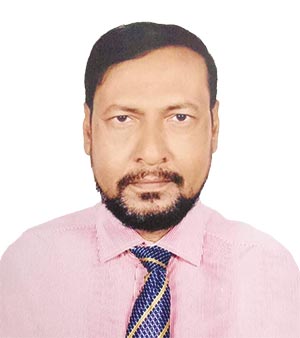
implementation of its second campus project.In an exclusive interview with Tanvir Raihan of The Daily Observer, JnU Vice-Chancellor, Professor Dr Md Rais Uddin outlined various measures undertaken to construct a new academic building, form a dedicated committee to improve international rankings, increase research funding and accelerate work on the second campus. Here are excerpts of the interview:
Daily Observer: What measures have been taken to address the university's infrastructural vulnerability?
Vice-Chancellor: Most of our academic buildings are quite old, and ensuring the safety of students became our immediate priority after I assumed office.
Following an incident in which two students were injured after part of the ceiling of the Chemistry Department collapsed, we immediately launched retrofitting work without delay.
Renovation of the Chemistry laboratories and several classrooms in the Mathematics Department has already been completed. Retrofitting is a highly specialised process, so the work is being carried out by experienced professional firms. We have also identified other vulnerable sections of the Science Building, where renovation work is currently underway.
To address the shortage of academic space, we have proposed the construction of a new five-storey building. The proposal has been submitted to the Ministry of Education, and we have received a positive response. Once completed, the building will expand library facilities and create additional space for study and research.
Daily Observer: What initiatives have been adopted to improve the university's international ranking?
Vice-Chancellor: The university has strong academic potential, but we previously lacked a systematic approach to collecting and documenting the data required for international ranking assessments.
After taking office, I formed a high-powered Ranking Development Committee. The committee has already held several meetings, and we have organised training sessions with ranking experts from both public and private universities.
We have also met with deans and department chairpersons to prepare an action plan focusing on research output, publications, international collaboration and other ranking indicators. The entire process is now under close monitoring, and we expect to perform much better in future global rankings.
Daily Observer: There has been a discussion about appointing a Pro-Vice Chancellor and reforming the university's legal framework. What is the current status?
Vice-Chancellor: There has been considerable discussion on social media about appointing a Pro-Vice Chancellor. However, many people are unaware that the Jagannath University Act of 2005 contains no provision for such a position. It also lacks several important governance structures, including a Senate.
To address these institutional gaps, we have formed a committee to recommend amendments to the university law. The committee has already held several meetings and is expected to submit its report soon. After approval by the university syndicate, the recommendations will be forwarded to the University Grants Commission (UGC) and then to the Ministry of Education for further legal procedures.
Daily Observer: Students have raised concerns over the second campus project. What progress has been made?
Vice-Chancellor: Although the project began in 2018, visible progress remained limited for many years. After assuming office, I made the project one of our highest priorities.
Several key activities, including lake excavation, pond ghat construction and land filling, have already been completed. Following students' demands, the Bangladesh Army has been engaged in implementing the project.
Since taking office, I have held several coordination meetings with the Army. The project is scheduled for completion by December 30, 2026, and we are working to ensure all remaining work is finished within that timeframe.
I have made it clear that the university must receive transparent information regarding both the project's progress and expenditure. The work should be implemented on the basis of accountability, transparency and mutual trust.
Daily Observer: Questions have been raised about the cost of implementing the project through the Army. What is your comment?
Vice-Chancellor: Financial matters are governed by the relevant policies and procedures. It would not be appropriate for me to comment on whether the costs are comparatively high or low. What matters most is ensuring quality, timely completion and transparency throughout the implementation process.
Daily Observer: How do you assess the university's recent academic and research performance?
Vice-Chancellor: Many of our academic departments are performing exceptionally well. This year, our Chemistry Department secured second place in the national ranking after previously holding the top position.
One of our most significant achievements has been introducing a central academic calendar. Classes for the 2026-27 academic session began on schedule, and the first semester has already been completed within the planned timeline. Our goal is to ensure that every four-year undergraduate programme is completed within four years.
We have also made significant progress in research. Funding for MPhil, PhD and postgraduate researchers is being increased through research scholarships. Our long-term objective is to build a stronger research culture and establish Jagannath University as a leading centre of academic excellence and knowledge creation.
Loading...
Loading...



Editor : Iqbal Sobhan Chowdhury
Published by the Editor on behalf of the Observer Ltd. from Globe Printers, 24/A, New Eskaton Road, Ramna, Dhaka.
Editorial, News and Commercial Offices : Aziz Bhaban (2nd floor), 93, Motijheel C/A, Dhaka-1000.
Phone: PABX- 41053001-06; Advertisement: 41053012; 01793317829, 01550707291, E-mail: [email protected], [email protected] Online: email: [email protected] 41053014; 01550707297 Advertisement: 01550707296
Published by the Editor on behalf of the Observer Ltd. from Globe Printers, 24/A, New Eskaton Road, Ramna, Dhaka.
Editorial, News and Commercial Offices : Aziz Bhaban (2nd floor), 93, Motijheel C/A, Dhaka-1000.
Phone: PABX- 41053001-06; Advertisement: 41053012; 01793317829, 01550707291, E-mail: [email protected], [email protected] Online: email: [email protected] 41053014; 01550707297 Advertisement: 01550707296


