



| HEADLINE |

|

Mango orchards becoming new tourist attractions in Rajshahi, C’Nawabganj
Published : Tuesday, 28 July, 2026 at 12:00 AM
Rafiqul Hasan Firoz and Jamal Hossain Palash


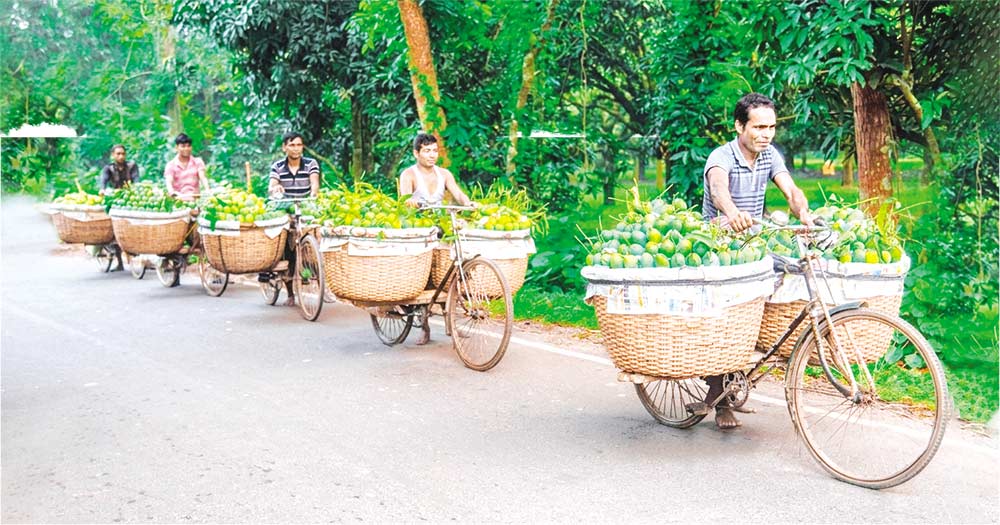 As dawn breaks across the fertile plains of northwestern Bangladesh, the mango orchards of Rajshahi and Chapainawabganj awaken with quiet energy. Farmers climb ladders beneath sprawling century-old trees, carefully harvesting clusters of golden-green fruit while birdsong fills the morning air. Within hours, visitors from across the country begin arriving-families, photographers, food enthusiasts, researchers and travellers-all drawn by the simple yet unforgettable experience of walking through orchards laden with some of the world's finest mangoes.
 For decades, Rajshahi has been synonymous with mangoes. Alongside neighbouring Chapainawabganj-widely known as Bangladesh's "Mango Capital-"the region forms the country's largest mango-producing belt. Every summer, thousands of hectares of orchards transform the landscape into a vibrant sea of green, producing renowned varieties such as Khirsapat (Himsagar), Langra, Fazli, Gopalbhog, Amrapali, Ashwina, BARI Aam-4 and several indigenous varieties that have earned nationwide recognition for their exceptional taste and quality.
Today, these orchards are emerging as more than agricultural assets. Tourism experts believe they have the potential to become one of South Asia's most distinctive agro-tourism destinations.
Mango cultivation has long been the economic backbone of Rajshahi and Chapainawabganj. Every harvest season supports thousands of farmers, traders, transport workers, exporters and seasonal labourers. Increasingly, however, another industry is beginning to flourish alongside agriculture-tourism.

Around the world, agricultural landscapes have evolved into globally recognised tourist attractions. Vineyards in France and Italy, lavender fields in Japan, apple orchards in South Korea and tea estates in Sri Lanka attract millions of visitors annually by combining farming traditions with immersive travel experiences.
Rajshahi possesses many of the same ingredients.
Visitors are no longer satisfied with traditional sightseeing alone. Instead, they seek authentic experiences that connect them with local culture, food and rural life. Walking through mango orchards, harvesting fruit directly from the trees, meeting farming families, tasting freshly picked mangoes and learning about cultivation techniques offer experiences impossible to recreate in urban destinations. During the peak harvesting months of May through July, orchards become natural attractions where photography, fruit tasting and rural hospitality combine to create memorable travel experiences.
More Than Mangoes: The tourism appeal of Rajshahi extends far beyond its orchards. Often referred to as Bangladesh's "Education City" and one of its cleanest metropolitan areas, Rajshahi offers an exceptional combination of history, archaeology, nature and culture. A short journey from the mango orchards takes visitors to some of Bengal's most treasured historical landmarks.
The magnificent Bagha Mosque, built in 1523 during the Sultanate period, stands as one of the finest surviving examples of medieval Islamic architecture in Bangladesh. Nearby, across the Padma River region and into Chapainawabganj, visitors can explore the Choto Sona Mosque, admired for its intricate stone carvings and elegant design.
The ancient ruins of Gaur (Gauda)-once the capital of medieval Bengal-offer an extraordinary glimpse into centuries of political, cultural and architectural history. Among its notable attractions are the Darasbari Mosque, Firoz Minar, Kotwali Gate, and remnants of palaces and fortifications that once formed one of South Asia's most prosperous cities.
Nature lovers can also visit the scenic banks of the Padma River, particularly during sunset when the riverfront becomes one of Rajshahi's most picturesque destinations. The city's well-maintained embankment, river cruises, local food stalls and cultural gatherings make it a favourite recreational spot for both residents and visitors.
Other attractions include Varendra Research Museum, the oldest museum in Bangladesh, housing priceless archaeological collections from ancient Bengal; Puthia Temple Complex, located in Rajshahi district, featuring the country's largest concentration of historic Hindu temples and magnificent zamindar architecture; Rajshahi University Campus, celebrated for its expansive greenery, lakes and vibrant academic atmosphere; Mohanpur and Charghat orchard belts, where visitors can experience mango cultivation alongside traditional village life.
Together, these destinations create an opportunity to combine agro-tourism, heritage tourism, cultural tourism and eco-tourism within a single itinerary.
Chapainawabganj district: The economy of Chapainawabganj district is mainly based on agriculture. This region is also famous for its seasonal mangos. The district is known as the Mango Capital of Bangladesh because this summer fruit is the main source of the economy of this district. In summer, the major quantity of mangos is delivered across the country from this district. The largest mango markets of Bangladesh sit here during the season. Thus, this district is also called the land of mangos.
One of the major places of interest in this district is Choto Sona Mosque. Other attractions are Shah Neamotullah's Tomb, Chamchika Mosque, Darasbari Mosque, Dhaniyachak Mosque, Shopnopalli, and Nachol Palace.
There are 13 tourist attractions found in Chapainawabganj. This is 13% of all tourist attractions listed in Rajshahi Division. The major types of tourist attractions listed here are landmarks and nature attractions. Then there is also amusement parks listed in Chapainawabganj. You may find a list of all categories of Chapainawabganj attractions on this page. Click on a category to find all attractions of Chapainawabganj of that type.
Untapped Tourism Potential: Despite its remarkable assets, tourism in Rajshahi remains largely seasonal. Most visitors travel during mango harvesting months before returning home on the same day. Industry observers believe the region could significantly increase visitor spending and overnight stays through strategic investments in tourism infrastructure.
Suggested developments include guided orchard tours led by local farmers; farm-stay accommodations; cycling routes connecting orchards and heritage sites; mango-picking experiences; culinary tours featuring mango-based cuisine; seasonal cultural festivals; local handicraft markets; photography trails and improved transportation and visitor information centres. Such initiatives would not only diversify tourism but also create year-round employment opportunities.

Branding Bangladesh Through Mangoes: While Bangladesh's beaches, mangrove forests and hill districts receive considerable international attention, Rajshahi's mango heritage remains largely absent from global tourism campaigns.
Tourism analysts argue that stronger international branding could position Rajshahi as a flagship agro-tourism destination. Documentaries, travel writers, international food bloggers, social media creators and culinary tourism campaigns could introduce global audiences to the region's unique blend of agriculture, gastronomy and history.
The growing popularity of food tourism presents another significant opportunity. Across the world, travellers increasingly plan journeys around local cuisine and agricultural experiences. Rajshahi's mangoes-already celebrated nationally-could become a powerful international tourism brand when combined with authentic rural hospitality.
Local Communities Leading the Way: Encouragingly, local entrepreneurs have already begun experimenting with tourism initiatives. Several orchards now welcome visitors during harvest season, offering guided tours, fruit tasting and educational experiences. Seasonal mango festivals showcase traditional foods, folk music, cultural performances and locally produced mango products including pickles, juices, desserts and sweets.
These initiatives remain relatively modest but demonstrate increasing community interest in transforming agriculture into a sustainable tourism industry.
For local residents, mango tourism offers opportunities far beyond farming. Women entrepreneurs, young tour guides, photographers, transport operators, artisans, restaurant owners and small businesses all stand to benefit from a more diversified visitor economy. Experts caution that tourism expansion must never compromise the productivity of orchards or the ecological balance of the region. Responsible tourism practices-including waste management, water conservation, environmentally friendly infrastructure and strong community participation-will be essential for long-term success.
Protecting traditional farming practices while creating meaningful visitor experiences will ensure that tourism enhances rather than replaces agriculture. A Destination Ready to Bloom: As global travellers increasingly seek authentic experiences rooted in food, farming and local culture, Rajshahi finds itself at a pivotal moment.
Its mangoes have already established an enviable reputation across Bangladesh. Combined with centuries-old mosques, archaeological treasures, temple complexes, river landscapes and rich culinary traditions, the region possesses all the ingredients needed to become a premier agro-tourism destination.
With strategic investment, improved infrastructure, effective international branding and sustainable planning, Rajshahi and Chapainawabganj could redefine tourism in Bangladesh-not through luxury resorts or crowded attractions, but through authentic rural experiences that celebrate the country's agricultural heritage.
In the years ahead, visitors may come not only to taste Bangladesh's sweetest mangoes, but also to discover the history, hospitality, culture and landscapes that have made the region one of the nation's most remarkable destinations.
Loading...
Loading...
Also read



Editor : Iqbal Sobhan Chowdhury
Published by the Editor on behalf of the Observer Ltd. from Globe Printers, 24/A, New Eskaton Road, Ramna, Dhaka.
Editorial, News and Commercial Offices : Aziz Bhaban (2nd floor), 93, Motijheel C/A, Dhaka-1000.
Phone: PABX- 41053001-06; Advertisement: 41053012; 01793317829, 01550707291, E-mail: [email protected], [email protected] Online: email: [email protected] 41053014; 01550707297 Advertisement: 01550707296
Published by the Editor on behalf of the Observer Ltd. from Globe Printers, 24/A, New Eskaton Road, Ramna, Dhaka.
Editorial, News and Commercial Offices : Aziz Bhaban (2nd floor), 93, Motijheel C/A, Dhaka-1000.
Phone: PABX- 41053001-06; Advertisement: 41053012; 01793317829, 01550707291, E-mail: [email protected], [email protected] Online: email: [email protected] 41053014; 01550707297 Advertisement: 01550707296


