



| HEADLINE |

|

Nil Sagar now beckons tourists
The waterbody where history, legend and nature converge
Published : Tuesday, 4 August, 2026 at 12:00 AM
Mohosinul Karim & Md Abdul Bari


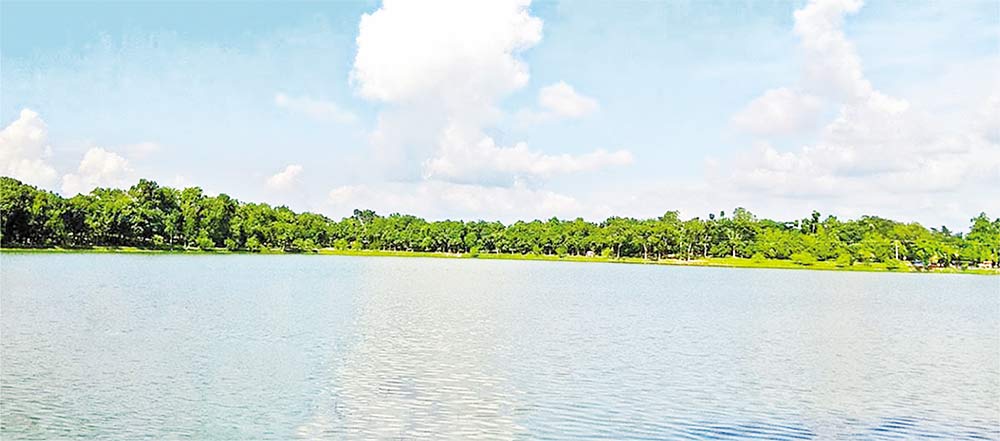 Nestled amid the tranquil plains of northern Bangladesh, Nil Sagar (Nilsagar Dighi) stands as one of the country's largest and most historically significant ancient reservoirs. Located in Gorgram Union under Nilphamari Sadar Upazila, about 14-15 kilometres northwest of Nilphamari town, the vast waterbody offers a unique blend of history, mythology, biodiversity, spirituality and rural charm.
Despite its name, which literally means "Blue Sea," Nil Sagar is not a sea but a massive man-made reservoir. Its expansive blue waters often resemble an inland sea, inspiring the name by which it is known today. Fringed by ancient trees and lush greenery, the reservoir provides a peaceful retreat while preserving centuries of history and folklore.
A Legacy Rooted in History and Legend
The origins of Nil Sagar remain intertwined with both historical tradition and local mythology. According to folklore and references associated with the Mahabharata, the reservoir was excavated during the reign of the legendary King Virat of the ancient Matsya Kingdom to supply water for his extensive cattle farms. Another popular belief holds that the Pandavas took refuge in King Virat's kingdom during their exile, and the enormous reservoir was created to meet their needs.
Over time, the reservoir became known by several names, including Birat Dighi, Birna Dighi and Binna Dighi. Some historical accounts suggest that the name "Binna Dighi" originated from Binnabati, a daughter of King Virat.
Its exact age remains uncertain. Government tourism records trace the reservoir to around the eighth century, while local tradition associates it with the Mahabharata era. Although historians differ on its precise origin, they generally regard Nil Sagar as one of northern Bangladesh's oldest surviving man-made reservoirs and a significant part of the region's cultural landscape.
Following Bangladesh's independence, restoration and beautification works were undertaken. During renovation in 1979-80, the district administration officially renamed the historic reservoir Nil Sagar, giving it the identity by which it is widely known today.

A Scenic Heritage Landscape
Nil Sagar is among Bangladesh's largest historic reservoirs. Government records place the protected area at approximately 53.9 acres, including nearly 32.7 acres of water. During the monsoon, the reservoir reaches a depth of about 23 feet at its centre. Its greatest attraction, however, lies in its tranquil surroundings. Crystal-clear water reflects the changing colours of the sky, while landscaped walkways, sprawling shade trees and open countryside create an ideal setting for relaxation. The lake is particularly popular with photographers and nature enthusiasts during sunrise and sunset, when shimmering reflections transform the landscape.
Winter Sanctuary for Migratory Birds
Every winter, thousands of migratory birds arrive from Siberia and other colder regions, making Nil Sagar one of northern Bangladesh's most important seasonal bird habitats. Species such as Northern Pintails, Lesser Whistling Ducks (Sarali) and other migratory waterfowl flock to the reservoir between November and February. Recognising its ecological value, the district administration declared Nil Sagar a bird sanctuary in 1998. Besides migratory birds, the reservoir supports diverse fish species, aquatic vegetation and native trees, contributing to its environmental significance.
Environmentalists, however, have stressed the importance of balancing tourism development with habitat conservation, noting that some landscaping activities have affected traditional bird habitats.
A Symbol of Cultural Harmony
Nil Sagar is also an important cultural landmark. An ancient Hindu temple stands on one side of the reservoir, while a Muslim shrine (mazar) is situated on the opposite bank, symbolising the area's long tradition of religious harmony.
Each year, the lakeside hosts traditional fairs, particularly during the Baruni Snan festival, drawing thousands of devotees and visitors who enjoy religious ceremonies, folk music, handicrafts and vibrant rural markets.
Growing Tourism Destination
Over the years, the government has developed Nil Sagar into an increasingly popular tourist destination while retaining its historical character.
Facilities now include landscaped gardens, paved walkways, seating areas, rest facilities, improved access roads and boating opportunities. Rows of mahogany, eucalyptus and fruit-bearing trees provide shade, creating a welcoming environment for families and day visitors.
Accessible via the Nilphamari-Debiganj-Panchagarh Road, the reservoir can be reached from Nilphamari town by local transport or private vehicle.
Winter is widely regarded as the best time to visit because of the pleasant weather and arrival of migratory birds, while the monsoon season offers lush greenery and spectacular waterscapes.
Tourism Potential Yet to Be Fully Realised
Despite its remarkable natural beauty and historical importance, local residents believe Nil Sagar has yet to realise its full tourism potential.
Although designated as a bird sanctuary, the site remains underutilised for much of the year due to limited visitor amenities and inadequate maintenance. The lack of recreational facilities, particularly for children, has also reduced its appeal as a family destination.
Visitor Moinul Haque said inadequate toilet facilities, insufficient tube wells and the absence of quality food outlets often cause inconvenience for tourists travelling from distant areas.
Local businessman Aminul Islam said the limited number of visitors has affected the livelihoods of traders around the reservoir. He suggested introducing attractions such as a mini zoo, themed recreational facilities and additional family-friendly entertainment to encourage year-round tourism.
Nilphamari Deputy Commissioner Mohammad Nayiruzzaman said the district administration has already undertaken several development initiatives centred on Nil Sagar to enhance its appeal. He expressed optimism that the ongoing projects would significantly increase domestic and international tourist arrivals while boosting the local economy.
With thoughtful planning, improved infrastructure and environmentally sustainable development, Nil Sagar has the potential to emerge as one of Bangladesh's premier heritage and eco-tourism destinations. As a place where history, mythology, biodiversity and rural life converge, the ancient reservoir offers visitors an experience that is both timeless and uniquely Bangladeshi.

Loading...
Loading...
Also read



Editor : Iqbal Sobhan Chowdhury
Published by the Editor on behalf of the Observer Ltd. from Globe Printers, 24/A, New Eskaton Road, Ramna, Dhaka.
Editorial, News and Commercial Offices : Aziz Bhaban (2nd floor), 93, Motijheel C/A, Dhaka-1000.
Phone: PABX- 41053001-06; Advertisement: 41053012; 01793317829, 01550707291, 01550707296
E-mail: [email protected], [email protected]. [email protected], [email protected], [email protected], [email protected], Online-email: [email protected]
Published by the Editor on behalf of the Observer Ltd. from Globe Printers, 24/A, New Eskaton Road, Ramna, Dhaka.
Editorial, News and Commercial Offices : Aziz Bhaban (2nd floor), 93, Motijheel C/A, Dhaka-1000.
Phone: PABX- 41053001-06; Advertisement: 41053012; 01793317829, 01550707291, 01550707296
E-mail: [email protected], [email protected]. [email protected], [email protected], [email protected], [email protected], Online-email: [email protected]


