



| HEADLINE |

|

Sundarbans: Not only tourist spot, but a shield to climate change
Safeguarding this unique mangrove ecosystem, a UNESCO World Heritage, means protecting our future, our environment and ultimately our very existence
Published : Tuesday, 11 August, 2026 at 12:00 AM
Sayek Ahmed Sajib


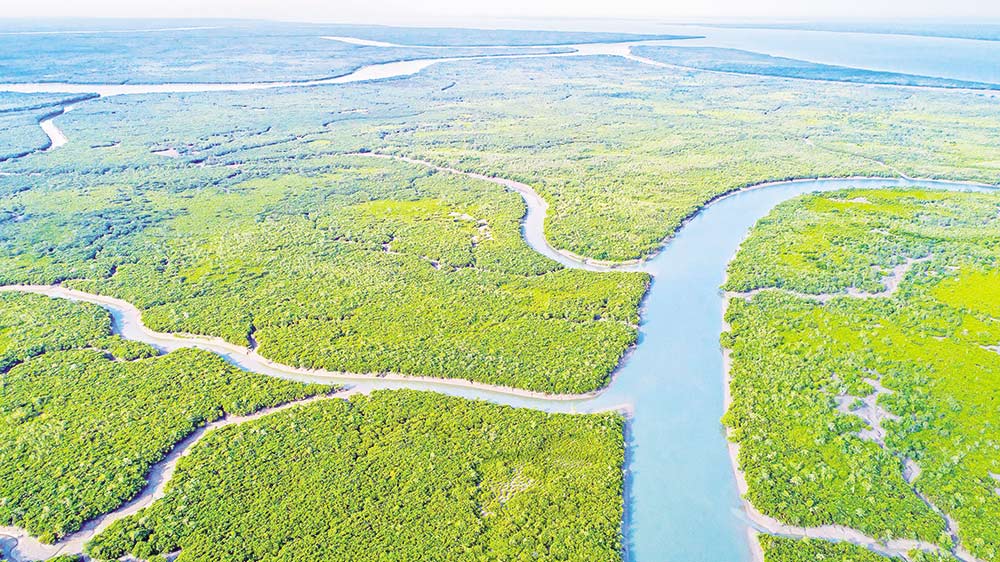 My village home is at Sarankhola Upazila in Bagerhat district. The Sundarbans has always been a part of my life. My home is located near this magnificent forest, and I grew up seeing its breathtaking natural beauty. I rode my bicycle along the road beside that canal, with the forest on one side and the local settlement on the other. Out of curiosity, I sometimes ventured into the forest. I saw monkeys, deer, and many other wild animals, although I never had the chance to see a tiger. However, people living right next to the forest had occasionally spotted them. As a child, I simply thought of the Sundarbans as a beautiful place to explore a land of extraordinary natural charm.
My perception of the Sundarbans changed after the devastating Cyclone Sidr in 2007. On the night of 15 November 2007, when the cyclone unleashed its destructive fury, the Sundarbans stood like a protective shield for us. Although many people in our upazila lost their lives, I later knew from newspapers that the destruction would have been far worse if the Sundarbans had not existed. The forest significantly reduced the cyclone's impact and saved countless lives and properties.Since that day, I have regarded the Sundarbans not just as a forest but as a true friend and protector. In fact, it is often called the lungs of Bangladesh, and rightly so. Sadly, despite its immense ecological and protective value, we remain alarmingly indifferent to its conservation. If we fail to protect this invaluable natural treasure today, we may lose one of our greatest allies against climate change and natural disasters in the future.

I discovered another important dimension of the Sundarbans in 2013. That year, two of my friends from France came to Bangladesh with a single purpose to visit the Sundarbans. Although they did not know much about Bangladesh, they were well aware of the Sundarbans and had always wanted to see it. Their visit made me realize how highly this natural wonder is valued around the world. It was then that I truly understood that the Sundarbans is not only our national treasure but also a precious heritage of global importance, deserving our utmost care and protection.
Located in the southwestern region of Bangladesh, the Sundarbans is the world's largest mangrove forest. It is not merely a forest, it is one of the country's most vital natural defenses, safeguarding Bangladesh's environment, economy, and the livelihoods of millions of coastal people. At a time when climate change poses unprecedented challenges, the importance of the Sundarbans has become greater than ever.
Protecting this unique mangrove ecosystem means protecting our future, our environment, and ultimately our very existence.Covering an area of approximately 10,000 square kilometers, about 6,517 square kilometers (approximately 66 percent) of the Sundarbans lie within Bangladesh, while the remaining 34 percent is located in the Indian state of West Bengal. Recognizing its exceptional ecological value, UNESCO designated the Sundarbans a World Heritage Site on 6 December 1997.

Every year, powerful cyclones and storm surges originating in the Bay of Bengal strike the Sundarbans before reaching the mainland. During devastating disasters such as Cyclones Sidr, Aila and Amphanthe forest absorbed the initial impact, significantly reducing the loss of human lives and property across Bangladesh's coastal regions. Its contribution to disaster risk reduction is both remarkable and indispensable.
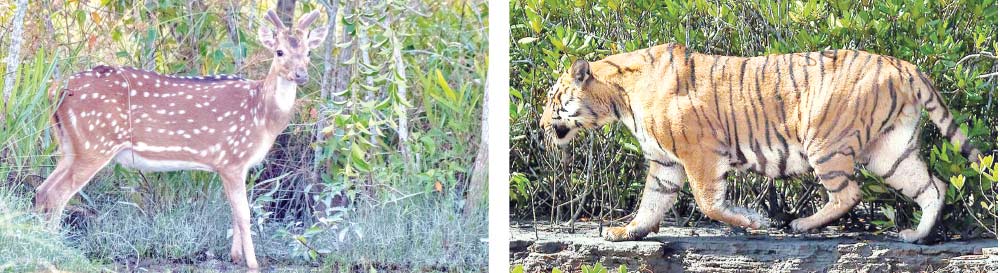
Mangrove forests are among the most effective natural carbon sinks on Earth. Scientific studies have shown that mangroves absorb and store far greater amounts of carbon dioxide than most terrestrial forests, locking carbon in their soils for extended periods. Consequently, the Sundarbans plays a crucial role in mitigating global warming and combating the adverse impacts of climate change.The Sundarbans is also a sanctuary for an extraordinary diversity of wildlife, including the endangered Royal Bengal Tiger, estuarine crocodiles, spotted deer, monkeys, countless species of birds, fish and other aquatic life. This rich biodiversity is not only Bangladesh's natural heritage but also a priceless asset for the entire world. At the same time, the forest supports the livelihoods of thousands of fishermen, honey collectors, and wood gatherers. Honey, fish, crabs, and other forest resources make significant contributions to the national economy.
Despite its immense ecological and economic value, the Sundarbans is facing multiple threats. Climate change has accelerated sea-level rise, increased salinity, and reduced freshwater inflow from upstream rivers, weakening the forest's delicate ecosystem. Illegal logging, wildlife poaching, plastic pollution, and unplanned industrial development continue to intensify these pressures. Another major concern is pollution from commercial vessels navigating waterways adjacent to the Sundarbans. Accidental spills of oil, coal, and hazardous chemicals have repeatedly contaminated rivers within and around the forest, causing long-term damage to aquatic life, vegetation, and the mangrove ecosystem as a whole. Ensuring strict environmental safeguards for shipping routes near the Sundarbans is therefore an urgent necessity.
Addressing these challenges requires a collective and comprehensive approach. Firstly, adequate freshwater flow into the Sundarbans must be restored and maintained. Secondly, existing forest and wildlife protection laws should be rigorously enforced to eliminate illegal logging and poaching. Thirdly, large-scale mangrove afforestation in buffer zones and environmentally sustainable development planning must be prioritized. Strong measures to control plastic and chemical pollution, stricter monitoring of vessels operating near the forest, and the creation of alternative livelihood opportunities for communities that depend heavily on forest resources are equally important.
The Sundarbans is far more than a forest. It is the foundation of Bangladesh's environmental security, a natural shield for its coastal communities, and an invaluable legacy for future generations. Protecting it is not solely the responsibility of the government, it is a shared obligation of every citizen. Through greater public awareness, environmentally responsible lifestyles, and active participation in conservation efforts, we can safeguard this valuable natural treasure. We should renew our commitment to protect the Sundarbans. Together, we can help build a greener, safer, and more sustainable Bangladesh for generations to come.
(The writer is Lecturer in English, BAF Shaheen College Dhaka)

Loading...
Loading...
Also read



Editor : Iqbal Sobhan Chowdhury
Published by the Editor on behalf of the Observer Ltd. from Globe Printers, 24/A, New Eskaton Road, Ramna, Dhaka.
Editorial, News and Commercial Offices : Aziz Bhaban (2nd floor), 93, Motijheel C/A, Dhaka-1000.
Phone: PABX- 41053001-06; Advertisement: 41053012; 01793317829, 01550707291, E-mail: [email protected], [email protected] Online: email: [email protected] 41053014; 01550707297 Advertisement: 01550707296
Published by the Editor on behalf of the Observer Ltd. from Globe Printers, 24/A, New Eskaton Road, Ramna, Dhaka.
Editorial, News and Commercial Offices : Aziz Bhaban (2nd floor), 93, Motijheel C/A, Dhaka-1000.
Phone: PABX- 41053001-06; Advertisement: 41053012; 01793317829, 01550707291, E-mail: [email protected], [email protected] Online: email: [email protected] 41053014; 01550707297 Advertisement: 01550707296


