



| HEADLINE |

|

Our private sector introduced to smart waste tracking systems
“GARBAGEMAN”, Bangladesh’s first app recycling business



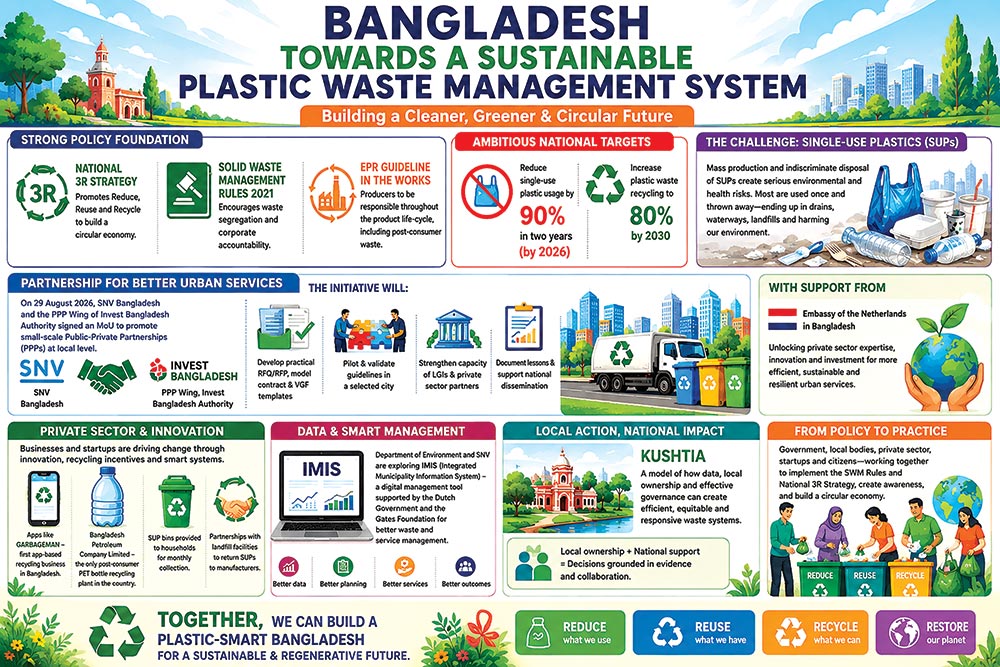 In a significant move to strengthen collaboration for sustainable urban services, SNV and the Public-Private Partnership (PPP) Wing of the Invest Bangladesh Authority signed a Memorandum of Understanding (MoU) on 29 August 2026. This partnership aims to mainstream Small-Scale PPPs at the local level, helping municipalities unlock private sector expertise, innovation, and investment for more efficient and resilient urban services.
The initiative, supported by the Embassy of the Netherlands, builds on SNV's longstanding collaboration with the PPP Authority. It will focus on developing practical contract templates and guidelines, piloting these in a selected city, and strengthening the capacity of local government institutions.
 A Policy Framework Takes Shape
The groundwork for this systemic change is being laid through government-led initiatives such as the National 3R Strategy (Reduce, Reuse, and Recycle) and the Solid Waste Management Rules 2021. These policies are creating a regulatory environment that promotes waste segregation and corporate accountability.
An Extended Producers Responsibility (EPR) guideline is also in the works. This forthcoming regulation is expected to outline stakeholder accountability over the entire product life-cycle, holding producers responsible for post-consumer waste management.
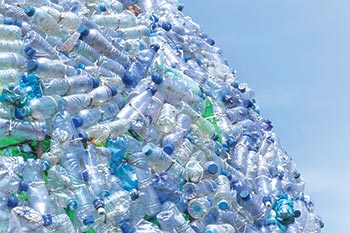
Furthermore, the government has set ambitious targets to address the urgent need for regulating single-use plastics (SUPs). The goal is to reduce single-use plastic usage by 90 per cent within two years (by 2026) and increase plastic waste recycling to 80 per cent by 2030.
In the municipality of Kushtia, data-driven action is setting an example for the country. By thoughtfully gathering and locally owning data on waste streams, the municipality is paving the way for more equitable and effective waste systems. This represents a shift towards local ownership backed by national support, with decisions grounded in evidence.
“Kushtia offers a quiet but powerful reminder: meaningful change begins with understanding our waste�"where it comes from, who manages it, and what happens to it”, official said.
 Private Sector and Local Innovation Drive Action
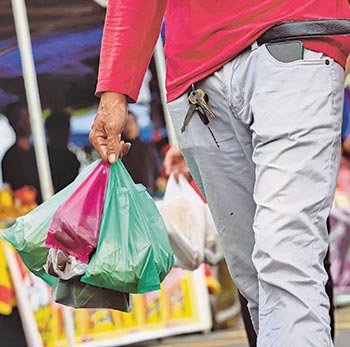
While the policy framework is essential, tangible action is already unfolding on the ground. Several companies, including small and medium-sized enterprises, are piloting source segregation and engaging in circular value chains. These businesses are providing SUP bins to households, striking deals with landfill facilities, and facilitating the return of SUPs to manufacturers.
Technology and Data: The New Frontier
A focus on data management is central to the transformation. The Department of Environment and SNV are exploring the potential of the Integrated Municipality Information System (IMIS)�"a digital management tool developed with support from the Dutch Government and the Gates Foundation�"for professional waste management services. This is complemented by the private sector's introduction of smart waste tracking systems, such as GARBAGEMAN, Bangladesh’s first app-based recycling business.
A Holistic Approach
The Department of Environment, under the Ministry of Environment, Forest, and Climate Change, is working with partners to engage local governments more holistically in implementing the SWM Rules and the National 3R Strategy.
"This is what effective governance looks like�"local ownership, national support, and decisions grounded in evidence and collaboration," officials noted, highlighting the importance of behavioural change communication strategies to raise consumer and producer awareness.
While the road to a circular economy is complex, Bangladesh's growing focus on policy, people, and partnerships signals a definitive shift from fragmented clean-ups to long-term, equitable, and inclusive systemic thinking. The steps being taken today carry the promise of a more accountable, sustainable, and regenerative future.
Bangladesh is accelerating its transition towards a sustainable, circular economy, driven by a combination of new national policies, ambitious targets, and strategic public-private partnerships. As the country grapples with mounting waste challenges, a series of initiatives are underway to transform waste management from a fragmented issue into a cornerstone of national development.

Loading...
Loading...
Also read



Editor : Iqbal Sobhan Chowdhury
Published by the Editor on behalf of the Observer Ltd. from Globe Printers, 24/A, New Eskaton Road, Ramna, Dhaka.
Editorial, News and Commercial Offices : Aziz Bhaban (2nd floor), 93, Motijheel C/A, Dhaka-1000.
Phone: PABX- 41053001-06; Advertisement: 41053012; 01793317829, 01550707291, E-mail: [email protected], [email protected] Online: email: [email protected] 41053014; 01550707297 Advertisement: 01550707296
Published by the Editor on behalf of the Observer Ltd. from Globe Printers, 24/A, New Eskaton Road, Ramna, Dhaka.
Editorial, News and Commercial Offices : Aziz Bhaban (2nd floor), 93, Motijheel C/A, Dhaka-1000.
Phone: PABX- 41053001-06; Advertisement: 41053012; 01793317829, 01550707291, E-mail: [email protected], [email protected] Online: email: [email protected] 41053014; 01550707297 Advertisement: 01550707296


