



| HEADLINE |

|

Nepal demands compensation from major greenhouse gas emitters
loss and damage claims



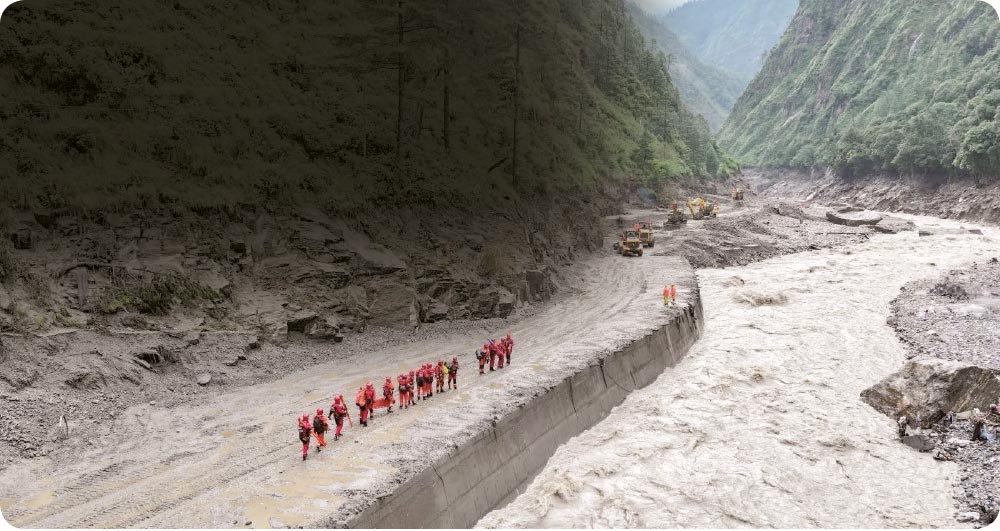 In a significant diplomatic escalation, Nepal has officially launched a campaign to demand compensation from major greenhouse gas emitters, citing a catastrophic glacial flood that has killed over 1,300 people and left more than 5,000 missing.
The Himalayan nation, which contributes less than 0.1% of global emissions, is seeking up to $5 billion in damages, framing the demand as a matter of "climate justice" rather than aid. The move marks one of the most assertive actions taken by a vulnerable nation under the UN's "Loss and Damage" framework.
The disaster, which struck on August 26, was triggered by the collapse of a glacier near the Langtang Lirung peak on the Nepal-Tibet border. The resulting avalanche of ice, rock, and mud surged down the Trishuli River, devastating the Rasuwa and Nuwakot regions and causing an estimated $2.56 billion in damage to homes, property, and infrastructure.
 Why Does Nepal Claim Compensation?
While initial reports suggested an earthquake, the US Geological Survey confirmed the event was a "glacial collapse"�"a phenomenon scientists say is accelerated by climate change. The impact of the collapsing glacier was so powerful it registered as a magnitude 5.2 seismic event.
Preliminary investigations have pointed to a collapsed glacier as the cause of the flash flood on the Nepal-Tibet border, highlighting the issue of rapidly melting Himalayan ice, scientists have told the
Initial reports of an earthquake led many to believe that a tremor had caused a landslide, which in turn caused the flood.
However, the US Geological Survey then clarified that the disaster was caused by a "glacial collapse", which is when a glacier or part of a glacier disintegrates.
The impact of the collapsed glacier hitting the bottom of a valley was so powerful that it registered a magnitude of 5.2, according to USGS data and scientists who have analysed the event.
Glaciologists, including Dr. Simon Cook from the University of Dundee, identified that a lower section of a glacier had disintegrated, sending a torrent of water, sediment, and boulders downstream. The International Centre for Integrated Mountain Development (ICIMOD) reported that water levels in rivers rose by seven to nine meters within just 30 minutes, washing away monitoring stations and settlements.
Professor Mike Searle of Oxford University noted that while Himalayan floods are common, the sheer scale of this event was "very unusual." He attributed the disaster to a combination of tectonic uplift and climate change, stating, "The whole thing is combining to form these catastrophic disasters that we are now seeing on a regular basis."
Scientists for years have warned of melting ice and permafrost, which is centuries-old frozen soil, in the Himalayas due to climate change. One analysis released by ICIMOD earlier this year found that the Hindu Kush Himalaya glaciers are now losing ice at double the rate since 2000. This in turn exacerbates dangers such as flooding.
Dr Cook pointed out that there have been similar incidents of floods and landslides caused by glacier collapses in India, Switzerland and Italy in recent years.
A Diplomatic Push
Nepal's Ministry of Finance and Ministry of Environment have submitted a joint letter to the United Nations requesting $20 million in immediate damages from the UN's Loss and Damage Fund. However, the broader diplomatic push is aimed at the world's largest carbon emitters, including the US and China.
“We are paying the ultimate price for a global crisis we did not create,” said Nepal’s Foreign Minister Shisir Khanal.
“Support for Nepal should not be seen from an angle of aid or charity, but should be seen from the perspective of climate justice.”
President Ramchandra Paudel echoed this sentiment in a national address, appealing to the international community to take "concrete and effective steps to ensure climate justice."
The Scale of the Crisis
The disaster has left a trail of devastation:
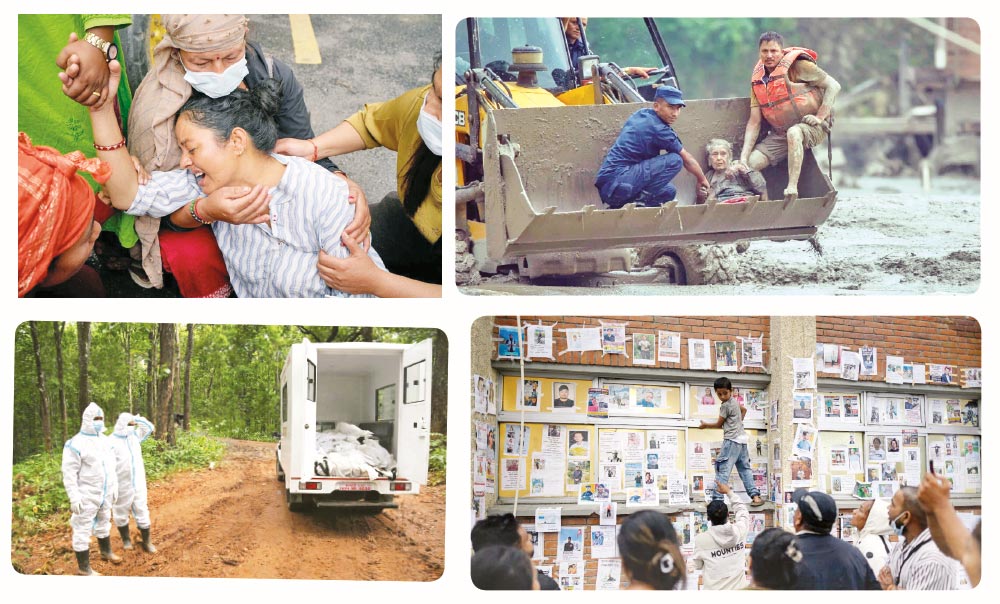
• Casualties: Over 1,300 confirmed dead, with more than 5,000 still missing.
• Damage: $2.56 billion in losses.
• Recovery: An immediate need of $52.6 million for temporary shelters, roads, and electricity.
• Reconstruction: At least 20,000 homes must be rebuilt, with 7,500 completely destroyed.
Tanuja Pandey, a climate activist and lawyer, expressed the collective frustration behind the demand, noting that Nepal is sandwiched between two major carbon emitters, India and China, and has lost nearly one-third of its glacial ice volume in just three decades.
What’s Next?
Nepal’s Prime Minister, Balendra Shah, is scheduled to address the 81st session of the United Nations General Assembly on September 24. His country's appeal for climate justice is expected to be a cornerstone of his address.
However, the UN’s Loss and Damage Fund is currently facing a $2.8 billion funding gap as it prepares to approve its first recovery projects. Nepal’s demand signals a growing impatience among vulnerable nations, who argue that the global community has failed to address the existential threat posed by climate change.

Loading...
Loading...
Also read



Editor : Iqbal Sobhan Chowdhury
Published by the Editor on behalf of the Observer Ltd. from Globe Printers, 24/A, New Eskaton Road, Ramna, Dhaka.
Editorial, News and Commercial Offices : Aziz Bhaban (2nd floor), 93, Motijheel C/A, Dhaka-1000.
Phone: PABX- 41053001-06; Advertisement: 41053012; 01793317829, 01550707291, E-mail: [email protected], [email protected] Online: email: [email protected] 41053014; 01550707297 Advertisement: 01550707296
Published by the Editor on behalf of the Observer Ltd. from Globe Printers, 24/A, New Eskaton Road, Ramna, Dhaka.
Editorial, News and Commercial Offices : Aziz Bhaban (2nd floor), 93, Motijheel C/A, Dhaka-1000.
Phone: PABX- 41053001-06; Advertisement: 41053012; 01793317829, 01550707291, E-mail: [email protected], [email protected] Online: email: [email protected] 41053014; 01550707297 Advertisement: 01550707296


