



| HEADLINE |

|
Researchers warn Bangladesh, 7 other countries of growing disaster risks
Published : Saturday, 19 September, 2026 at 9:29 PM
Observer Online Report


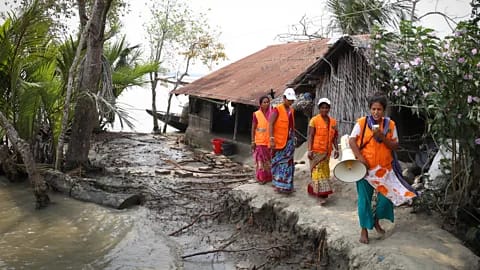
Researchers have issued a fresh warning to Bangladesh and seven other countries in the Hindu Kush-Himalayan region over growing risks of natural disasters linked to rapid changes in the mountains.
India, Pakistan, Nepal, Bhutan, China, Afghanistan and Myanmar are also on the list, according to a report by The New York Times, citing several international research studies.
The warning comes after devastating floods and landslides in Nepal and Tibet on August 26, which left more than 8,000 people dead or missing, according to the report.
Researchers say glaciers are rapidly melting across the Himalayas while permafrost—ground that remains frozen for long periods—is becoming unstable. This is increasing the risks of landslides, sudden glacial lake outbursts and floods caused by rising water levels in rivers originating in the Himalayas.
The Hindu Kush-Himalayan region stretches about 3,500 kilometres from Afghanistan in the west to Myanmar in the east. Disasters in the mountains can therefore affect both upstream and downstream communities across the region.
The region is home to nearly 40,000 glaciers, but only 21 are being actively monitored, according to a report by Systemiq, an environmental consultancy. Ten major river systems—including the Ganges, Brahmaputra, Indus, Mekong and Yangtze—originate in the Hindu Kush-Himalayas and provide water and livelihoods to around 2 billion people downstream.
The Ganges and Brahmaputra river systems flow into Bangladesh. Around 58 million people in Bangladesh depend directly on the Brahmaputra basin for drinking water, according to the International Centre for Integrated Mountain Development (ICIMOD).
A 2023 ICIMOD report found that glaciers melted 65 percent faster between 2010 and 2019 than in the previous decade, with global warming identified as a major factor.
Systemiq said nearly 200 glacial lakes in India alone are at high risk of breaching, including 56 considered to be at extremely high risk.
Researchers have called for increased monitoring of glaciers and rivers, greater sharing of information among countries and stronger early-warning and evacuation systems.
Walter Immerzeel, a mountain scientist at Utrecht University, said it would not be possible to monitor every glacier and rocky slope in the Himalayas. However, he said high-risk areas, particularly those near hydropower dams, cities and settlements, could be prioritised.
Experts also recommended using satellite data, remote sensing and sensors to monitor movements in mountain slopes and detect signs of instability, avalanches and sudden rises in glacial lake water levels.
Researchers stressed that climate-driven changes in the Himalayas do not respect national borders, making closer cooperation among countries essential.
- MaT
Loading...
Loading...
Also read







Editor : Iqbal Sobhan Chowdhury
Published by the Editor on behalf of the Observer Ltd. from Globe Printers, 24/A, New Eskaton Road, Ramna, Dhaka.
Editorial, News and Commercial Offices : Aziz Bhaban (2nd floor), 93, Motijheel C/A, Dhaka-1000.
Phone: PABX- 41053001-06; Advertisement: 41053012; 01793317829, 01550707291, E-mail: [email protected], [email protected] Online: email: [email protected] 41053014; 01550707297 Advertisement: 01550707296
Published by the Editor on behalf of the Observer Ltd. from Globe Printers, 24/A, New Eskaton Road, Ramna, Dhaka.
Editorial, News and Commercial Offices : Aziz Bhaban (2nd floor), 93, Motijheel C/A, Dhaka-1000.
Phone: PABX- 41053001-06; Advertisement: 41053012; 01793317829, 01550707291, E-mail: [email protected], [email protected] Online: email: [email protected] 41053014; 01550707297 Advertisement: 01550707296


