



| HEADLINE |

|

DR Zahid tells Daily Observer
Half of country’s families to get Family Cards in 4yrs
Published : Sunday, 20 September, 2026 at 12:00 AM
Mohosinul Karim & Walid Khan


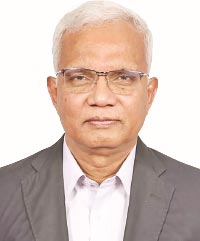 In an exclusive interview with The Daily Observer Chief Reporter Mohosinul Karim and Staff Correspondent Walid Khan, Social Welfare and Women and Children Affairs Minister Prof Dr AZM Zahid Hossain focused on a range of initiatives undertaken by the government to expand social protection, reduce poverty and help disadvantaged people become economically self-reliant. Among the initiatives, Family Card is at the centre of its flagship programmes. It aims to treat the family as the basic unit of development and provide assistance directly to eligible households without political influence or middlemen. He also outlined the government's plans for social security, poverty reduction, women and child development, rehabilitation of beggars and street people, support for persons with disabilities and other disadvantaged groups. Excerpts of the interview are as follows:
 Daily Observer: What are your main priorities after taking charge of the two ministries?
Prof Dr AZM Zahid Hossain: The Ministry of Social Welfare has a broad mandate covering different sections of society. One of our major responsibilities is implementing the Family Card programme, the first of the nine programmes in the BNP election manifesto. It particularly aims to empower rural women and strengthen their role in family decision-making.
Q: What is the main concept behind the Family Card?Prof Dr AZM Zahid Hossain: The Ministry of Social Welfare has a broad mandate covering different sections of society. One of our major responsibilities is implementing the Family Card programme, the first of the nine programmes in the BNP election manifesto. It particularly aims to empower rural women and strengthen their role in family decision-making.
A: We consider the family, rather than an individual, as the basic unit of development. If we improve the condition of a family, it can create wider social change.
We have divided society into five groups: extreme poor, poor, lower-middle income, middle income and upper-middle income. People in the first three groups will receive benefits under the Family Card. Middle- and upper-middle-income families may receive cards but will not receive financial benefits.
The card will contain an NFC chip, QR code and barcode. Benefits will be transferred directly through banks or mobile financial services, without any middleman.
Q: Will there be political influence in selecting beneficiaries?
A: No. We are following a universal approach to data collection. People in a particular geographical area will be included in the process so that nobody can dictate whose name should be included or excluded.
Q: What is the target of the programme?
A: Assuming an average of five members per family, we expect around two crore to two-and-a-half crore families to receive benefits within four years. The total number of families in Bangladesh may be around four crore to four-and-a-quarter crore. These are estimates on which we are developing the programme.
Q: How is the government collecting data?
A: Political people are not involved. Officials and field workers from the Agriculture, Social Welfare, Health, Family Welfare, and Women and Children Affairs ministries are involved. Information workers, Ansar members, village police and government primary school teachers are also participating.
Committees have been formed at the upazila, district, divisional and central levels. During the pilot programme, around 70,000 families received benefits in three phases.
Q: How will you determine who is poor?
A: We are using the internationally recognised Proxy Means Test (PMT). Information on different aspects of a family is collected and assigned different weights to generate a PMT score.
Our workers will go door to door, so people will not have to visit offices to apply. The card will be delivered to the household. We are also collecting photographs of the woman receiving the card and her house and developing a family tree based on the information collected.
Q: How will you ensure data accuracy?
A: We are developing a dynamic registry because people's economic conditions can change. Someone who is poor today may become lower-middle income tomorrow, while another person's condition may deteriorate.
Data will be verified at three levels-the place of collection, upazila, and district and central levels. We have also developed a central GIS monitoring system. District officials can monitor field workers, while officials in Dhaka can monitor activities through a central dashboard.
The data collector only enters information; the software automatically generates the PMT score. This will reduce the possibility of manipulating scores or adding names.
Q: What do you expect beneficiaries to do with the money?
A: We do not want people to become permanently dependent on government support. We want them to use the money to increase their own capacity.
They can buy ducks or chickens, seeds, fertiliser and plants, establish vegetable gardens, purchase educational materials or medicine, or invest in cottage industries. When people produce and sell goods locally, purchasing power, investment and manufacturing increase, contributing to economic growth.
During the first six months, many women receiving the money became more involved in family decision-making. They improved children's care and education and helped reduce school dropout. Some bought ducks and chickens, grew vegetables, sewed quilts or produced compost fertiliser.
Q: What is the government's plan to address begging?
A: There is a law to prevent and control begging, but it needs to be enforced alongside meaningful rehabilitation. We cannot simply remove people from the streets and place them somewhere else.
We should first ask people what they want to do. Those seeking skills should receive training and tools so they can become self-employed or find jobs. We are also working with government and non-government organisations to create employment opportunities.
There are currently only five beggar rehabilitation centres, which is inadequate. Some people leave the centres and return to the streets. There are also organised begging operations in some places, where a patron controls several beggars and takes a share of their earnings. In some cases, children are used to encourage people to give money.
Q: What about people living on the streets?
A: Many street people have no fixed address. We are working to trace them, provide proper addresses and bring them under the NID system. We have examined the situation in Chattogram, Khulna, Dinajpur, Mymensingh, Cox's Bazar, Bandarban, Khagrachhari, Sunamganj and Jashore.
Q: What are your plans for children?
A: Every union should have a playground outside school and college grounds, while every city ward should have an open playground. We also need to recover occupied playgrounds.
We want to strengthen the Bangladesh Shishu Academy and establish one in every district, eventually extending it to upazila level and transforming the academy into a Department of Children.
Children under 18 account for around 34 percent of the country's population, so protecting their rights and ensuring their physical and mental development is extremely important.
Q: What steps are being taken to protect women and children from violence?
A: Preventing violence against women and children is a major priority. We have signed an MoU with the Legal Aid Department to ensure legal assistance. Social Welfare and Women and Children Affairs officials will provide social and moral support, while law enforcement agencies will take legal action and medical assistance will be provided to victims.
A DNA laboratory is also operating under the Ministry of Women and Children Affairs. A Quick Response Team system has been introduced to provide victims and their families with prompt psychological, social and legal support.
Q: How are you addressing problems facing adolescents?
A: We have Kishore-Kishori Clubs at union level and plan to establish at least three clubs in every union. They will educate adolescents about their rights, cyber issues, healthcare and responsible behaviour.
We are also working to prevent child marriage. Tottho Apa workers, women affairs officials and the clubs will conduct grassroots awareness campaigns.
Drug abuse and the misuse of mobile phones, including online gambling, are also serious concerns. These problems require law enforcement as well as social participation and media awareness.
Q: What are your plans for working women and their children?
A: There are too few daycare centres. We are expanding facilities in Dhaka, district and divisional headquarters and other areas where large numbers of people work.
We are encouraging industries to establish daycare and breastfeeding facilities. The number of centres has increased from 43 to 63, with another 60 new centres in the process of being established, including through the use of available government buildings.
Q: How are you helping women become economically self-reliant?
A: We provide training in tailoring, beauty and beautification, food preparation, baking, poultry farming, cattle and goat rearing, hairdressing, plumbing, electrical work and mobile phone servicing.
Computer training is also provided to help women pursue outsourcing and employment. We are also focusing on the care economy, where demand is growing for trained people to care for children, elderly people, sick people and persons with disabilities.
Q: What support is being provided to persons with disabilities?
A: Education, skills development and rehabilitation are major priorities. There are 75 schools for persons with disabilities, around 72 or 73 of which are MPO-listed. We plan to establish government-model schools in every district and gradually extend them to every upazila.
We also need to train teachers and equip persons with disabilities with education and skills so they can become economically productive.
For children with hearing disabilities, initiatives are being taken to provide cochlear implants through government medical colleges and financial assistance for treatment. We are also increasing support for thalassemia patients who require lifelong blood transfusions, with assistance set to rise to Tk1 lakh.
Q: What support is available for orphan and abandoned children?
A: Government provides these boys and girls with food, education, training and other support up to age 18. Those who perform well academically can receive support for higher education, while assistance is also provided for employment and marriage where necessary.
A child's development is not limited to education and food. Sports, cultural activities, singing and recitation are also important for physical and mental development.
The government also supports private orphanages, where 50 percent of orphans receive Tk2,000 a month under the programme.
Q: What is your overall vision for social safety?
A: Government support should help people become capable of doing more for themselves rather than making them permanently dependent. If someone uses assistance to buy chickens, grow vegetables, establish a small business or produce goods, their financial capacity gradually increases. Their purchasing power and role in family decision-making also improve.
Our goal is to bring poor, disadvantaged and rural people under social protection and help them become economically self-reliant.
Q: What do you expect in the coming years?
A: We are hopeful that poverty in rural Bangladesh will improve to some extent within the next two to three years. Our priority is to make social security more effective and ensure that people receive the support they actually deserve.
The Family Card is our flagship programme, but we are also working for women, children, persons with disabilities, elderly people, people suffering from serious diseases and other disadvantaged groups.
Our biggest challenge is accurate data collection. If data collection and training are carried out properly, we will be able to provide benefits transparently and effectively.
Ultimately, we want to reduce errors, ensure that eligible people receive support and build a social protection system that people can trust.

Loading...
Loading...
Also read



Editor : Iqbal Sobhan Chowdhury
Published by the Editor on behalf of the Observer Ltd. from Globe Printers, 24/A, New Eskaton Road, Ramna, Dhaka.
Editorial, News and Commercial Offices : Aziz Bhaban (2nd floor), 93, Motijheel C/A, Dhaka-1000.
Phone: PABX- 41053001-06; Advertisement: 41053012; 01793317829, 01550707291, 01550707296
E-mail: [email protected], [email protected]. [email protected], [email protected], [email protected], [email protected], Online-email: [email protected]
Published by the Editor on behalf of the Observer Ltd. from Globe Printers, 24/A, New Eskaton Road, Ramna, Dhaka.
Editorial, News and Commercial Offices : Aziz Bhaban (2nd floor), 93, Motijheel C/A, Dhaka-1000.
Phone: PABX- 41053001-06; Advertisement: 41053012; 01793317829, 01550707291, 01550707296
E-mail: [email protected], [email protected]. [email protected], [email protected], [email protected], [email protected], Online-email: [email protected]


