



| HEADLINE |

|

Bangladesh-Japan summit discusses $6.3b investment, 200k jobs
Published : Wednesday, 28 October, 2026 at 8:47 AM
Observer Online Report


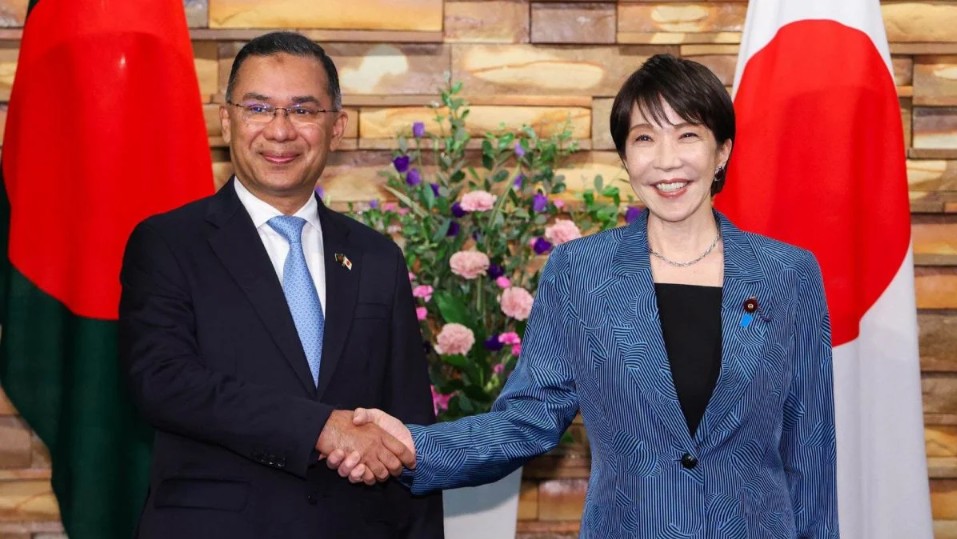
Collected Photo
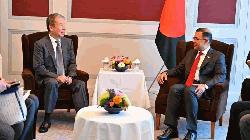
Prime Minister Tarique Rahman held a bilateral summit with Japanese Prime Minister Sanae Takaichi on Tuesday (October 27), where discussions highlighted prospects for attracting up to 1 trillion yen (approximately $6.3 billion) in Japanese private sector investment over the next five years, potentially creating nearly 200,000 jobs in Bangladesh.
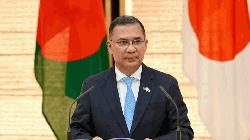
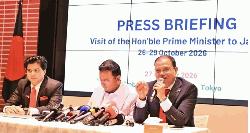
Detailing the outcomes of the summit during his four-day official visit to Japan, Prime Minister Tarique Rahman stated in a social media post that the talks focused on strengthening bilateral relations, trade, energy security, technology, transport infrastructure, and regional cooperation.
Describing his visit as a historic milestone, the Prime Minister noted that the long-standing friendship between Bangladesh and Japan is built on mutual respect and trust. He highlighted the foundational role played by his father, the late President Ziaur Rahman, in establishing bilateral ties, which were subsequently strengthened through visits and engagements by his late mother, former Prime Minister Begum Khaleda Zia.
During the summit, both leaders reaffirmed their shared commitment to democracy, the rule of law, economic development, and a peaceful, stable, and prosperous Indo-Pacific region. The primary objective of the talks was to translate the strategic partnership into tangible benefits for the people of Bangladesh.
To bolster Bangladesh's energy security, discussions covered an emergency financial assistance package of 50 billion yen (around $320 million) under Japan’s "Partnership for Power Asia" initiative.
Prime Minister Tarique Rahman emphasized that prospective Japanese private sector investments worth $6.3 billion would accelerate industrialization in Bangladesh, enhance manufacturing capacity, and create new employment opportunities for the youth.
To expand cooperation in artificial intelligence, cloud computing, robotics, and electronics manufacturing, the Prime Minister proposed establishing a dedicated Bangladesh-Japan Tech Park. He also sought Japanese technical and financial assistance for space science, satellite engineering, and the development of a high-speed rail network connecting six major divisional cities in Bangladesh.
Highlighting major achievements of the meeting, the Prime Minister noted a mutual commitment to advancing the Bay of Bengal Industrial Growth Belt (BIG-B) initiative. Priority will be given to integrated developments in energy, deep-sea ports, industrial infrastructure, technology, and regional transport networks, further strengthening Bangladesh’s position as a bridge between South and Southeast Asia.
Discussions also covered the swift implementation of the Bangladesh-Japan Economic Partnership Agreement (EPA), strengthening institutional collaboration, and establishing a joint ministerial commission to translate shared priorities into concrete results.
Prime Minister Tarique Rahman expressed gratitude for Japan’s continuous humanitarian assistance to the displaced Rohingya population and requested Tokyo's continued and active diplomatic engagement to facilitate their voluntary, safe, dignified, and sustainable repatriation to Myanmar.
Acknowledging Japan as one of the earliest nations to recognize Bangladesh’s independence, the Prime Minister thanked the Japanese government and its citizens for their hospitality and enduring friendship. He reaffirmed his government's resolve to build a robust economy through investment, innovation, and infrastructure development following democratic elections.
-EM

Loading...
Loading...
Also read






Editor : Iqbal Sobhan Chowdhury
Published by the Editor on behalf of the Observer Ltd. from Globe Printers, 24/A, New Eskaton Road, Ramna, Dhaka.
Editorial, News and Commercial Offices : Aziz Bhaban (2nd floor), 93, Motijheel C/A, Dhaka-1000.
Phone: PABX- 41053001-06; Advertisement: 41053012; 01793317829, 01550707291, 01550707296
E-mail: [email protected], [email protected]. [email protected], [email protected], [email protected], [email protected], Online-email: [email protected]


