



| HEADLINE |

|
Climate change: Youth must help shape ‘just transition’
Published : Thursday, 1 October, 2026 at 12:00 AM
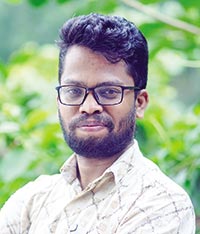
Sohanur Rahman


 Young people will inherit COP31’s outcomes, yet they are rarely in the room where just transition rules are written. That must change.
The just transition debate grew in part from concerns about fossil fuel phase-out and job losses. Climate action is also reshaping agriculture, industry and transport, changing livelihoods and development choices. Young people entering uncertain job markets face these pressures.
For Just Transition, Bangladesh brings credibility. It is the first Asian country with a dedicated just transition chapter in its NDC Implementation Plan, shaped by consultations with more than 200 participants from 140 organisations. It has committed to institutionalising social dialogue and is including workers’ and employers’ representatives in its COP31 delegation.
At COP31, parties should agree the just transition mechanism’s core functions and a pathway to operation. It should support cleaner technologies, skills, social protection and secure livelihoods across sectors. Finance should be grant-based or highly concessional and must not deepen debt. Least developed countries need meaningful representation in its governance. Bangladesh should advance a broader proposal, a Just Impact Transition (JIT). JIT is a proposal, not an agreed UNFCCC term, to address climate impacts on people across sectors and countries.
A fair transition must reflect national circumstances, protect labour rights and include informal workers, women, young people, persons with disabilities and affected communities. Climate investment should create decent jobs while cutting emissions and building resilience. We are not asking for symbolic space. We are asking to help design a transition that leaves no one behind. At COP31, parties must make the mechanism deliver finance and cooperation for a fair transition.
The writer is Executive Coordinator of YouthNet Global
Loading...
Loading...
Also read



Editor : Iqbal Sobhan Chowdhury
Published by the Editor on behalf of the Observer Ltd. from Globe Printers, 24/A, New Eskaton Road, Ramna, Dhaka.
Editorial, News and Commercial Offices : Aziz Bhaban (2nd floor), 93, Motijheel C/A, Dhaka-1000.
Phone: PABX- 41053001-06; Advertisement: 41053012; 01793317829, 01550707291, E-mail: [email protected], [email protected] Online: email: [email protected] 41053014; 01550707297 Advertisement: 01550707296
Published by the Editor on behalf of the Observer Ltd. from Globe Printers, 24/A, New Eskaton Road, Ramna, Dhaka.
Editorial, News and Commercial Offices : Aziz Bhaban (2nd floor), 93, Motijheel C/A, Dhaka-1000.
Phone: PABX- 41053001-06; Advertisement: 41053012; 01793317829, 01550707291, E-mail: [email protected], [email protected] Online: email: [email protected] 41053014; 01550707297 Advertisement: 01550707296


