



| HEADLINE |

|

PM’s Japan visit to focus on labour export, economic co-op
Published : Monday, 12 October, 2026 at 12:00 AM
Jahid Biplob


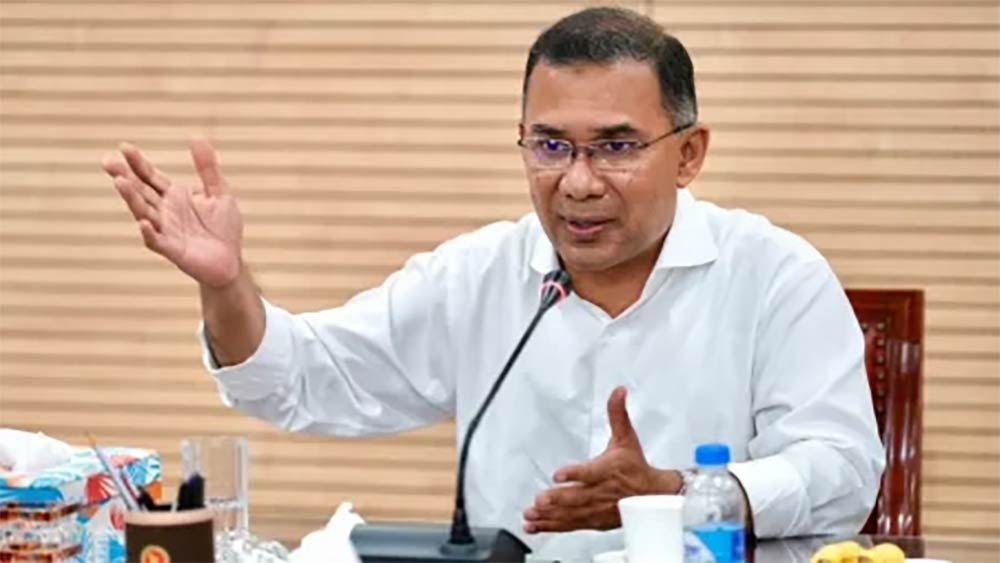 Prime Minister Tarique Rahman is set to make his maiden visit to Japan on October 26 for a four-day official tour, aiming to strengthen economic partnership with the country. During his visit to Tokyo from October 26 to 29, he is expected to hold bilateral talks with Japanese Prime Minister Sanae Takaichi and call on Emperor Naruhito.
 According to diplomatic sources, discussions on manpower, trade, investment, energy and development cooperation will receive significant attention during the visit.
One of the most significant potential developments during the Prime Minister’s visit could be a new memorandum of understanding (MoU) or agreement on sending Bangladeshi workers to Japan. Discussions between the two countries on the issue have progressed.
Demand for foreign workers is increasing in Japan.
Dhaka and Tokyo are working to increase the participation of Bangladeshi workers in the Japanese labour market. Discussions may cover simplifying the process of sending workers to Japan, skills development, Japanese-language training and removing recruitment-related barriers.
According to published reports, Japan had announced plans to recruit at least 100,000 workers from Bangladesh over the next five years. Bangladesh wants to strengthen its position in this market by taking advantage of various opportunities, including technical training, the Specified Skilled Worker programme and recruitment of professionals.
Japan is one of Bangladesh’s largest and longest-standing development partners. Bangladesh wants to take its economic relations with Japan beyond the traditional framework of development assistance and expand cooperation in trade, foreign direct investment, technology and industry.
During the visit, discussions may focus on encouraging Japanese investors to invest in promising sectors in Bangladesh, expanding existing investments and exploring opportunities for new projects. There is particular scope for increasing cooperation in industrial production, infrastructure, technology, energy and export-oriented sectors.
Japan has been a longstanding partner in Bangladesh’s infrastructure development. Japan has supported major projects such as the Matarbari deep-sea port and power project, the Dhaka Metro Rail and the third terminal of Hazrat Shahjalal International Airport.
During PM’s visit, discussions may focus on continuing development cooperation, energy security and mutual investment in potential new projects. There is also scope for expanding cooperation in renewable energy and sustainable development.
Relations between Bangladesh and Japan are no longer limited to development assistance and trade; defence and security cooperation have also become part of the partnership. In February this year, the two countries signed an agreement on the transfer of defence equipment and technology. In addition, an initiative has been taken to supply patrol vessels to the Bangladesh Navy under Japan’s Official Security Assistance framework.
The Prime Minister is scheduled to return home on October 29 at the end of the four-day visit.

Loading...
Loading...
Also read



Editor : Iqbal Sobhan Chowdhury
Published by the Editor on behalf of the Observer Ltd. from Globe Printers, 24/A, New Eskaton Road, Ramna, Dhaka.
Editorial, News and Commercial Offices : Aziz Bhaban (2nd floor), 93, Motijheel C/A, Dhaka-1000.
Phone: PABX- 41053001-06; Advertisement: 41053012; 01793317829, 01550707291, E-mail: [email protected], [email protected] Online: email: [email protected] 41053014; 01550707297 Advertisement: 01550707296
Published by the Editor on behalf of the Observer Ltd. from Globe Printers, 24/A, New Eskaton Road, Ramna, Dhaka.
Editorial, News and Commercial Offices : Aziz Bhaban (2nd floor), 93, Motijheel C/A, Dhaka-1000.
Phone: PABX- 41053001-06; Advertisement: 41053012; 01793317829, 01550707291, E-mail: [email protected], [email protected] Online: email: [email protected] 41053014; 01550707297 Advertisement: 01550707296


