



| HEADLINE |

|

RMG needs to strengthen competitiveness: BGMEA
Published : Monday, 9 November, 2026 at 12:00 AM
Mizanur Rahman


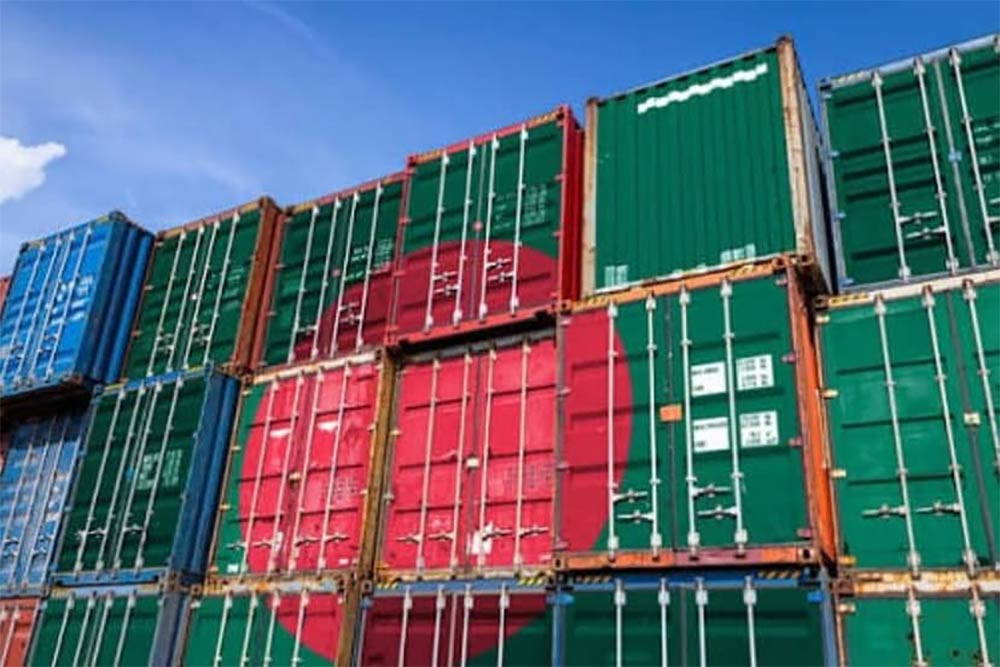 Bangladesh's readymade garment (RMG) exports recorded a positive growth of 5.82 per cent in the first four months of the current fiscal year (FY2026-27), driven mainly by strong performance in the USA and non-traditional markets, while sluggish growth in the European Union (EU) highlighted the need for further market diversification.
The country earned $13.75 billion from garment exports during July-October, up from $12.99 billion in the corresponding period of FY2025-26, according to statistics compiled by Bangladesh Apparel Voice (BAV) based on Export Promotion Bureau (EPB) data.
The United States emerged as the largest contributor to the additional export earnings, followed by non-traditional destinations and the EU.
Exports to the US increased 10.16 per cent to $2.85 billion, while shipments to non-traditional markets rose 9.30 per cent to $2.37 billion. In contrast, exports to the EU, Bangladesh's largest apparel destination, grew by only 2.79 per cent to $6.43 billion.
BGMEA President Mahmud Hasan Khan said the industry needs to strengthen its competitiveness, expand market access and improve its capacity to respond to changing global sourcing patterns to sustain export growth.
He has also emphasised the need for stronger policy support, improved trade facilities and greater access to emerging markets amid global trade uncertainties and rising production costs.
The US accounted for around 35 per cent of the total increase in Bangladesh's RMG export earnings during the period. Exports to the market increased by $262.9 million year-on-year.
Shipments of woven garments to the US rose 10.22 per cent to $1.75 billion, while knitwear exports increased 10.06 per cent to $1.10 billion. The US now accounts for 20.73 per cent of Bangladesh's total apparel exports, up from 19.92 per cent a year earlier.
Non-traditional markets contributed another 27 per cent of the overall export growth, with earnings increasing by $201.8 million.
Among non-traditional destinations, Turkey recorded the highest growth, with exports surging 107.05 per cent to $206.5 million. The country alone contributed around 53 per cent of the additional export earnings from non-traditional markets.
Japan remained Bangladesh's largest non-traditional market, with exports rising 2.40 per cent to $437.3 million. Shipments to Mexico increased 15.69 per cent to $113.3 million, while exports to the United Arab Emirates grew 19.89 per cent to $101.4 million.
However, exports to India, China, Russia and New Zealand declined during the period.
BGMEA Senior Vice-President Inamul Haq Khan has stressed the importance of product diversification alongside market expansion, particularly through greater investment in man-made fibre (MMF), synthetic and functional apparel.

Loading...
Loading...
Also read



Editor : Iqbal Sobhan Chowdhury
Published by the Editor on behalf of the Observer Ltd. from Globe Printers, 24/A, New Eskaton Road, Ramna, Dhaka.
Editorial, News and Commercial Offices : Aziz Bhaban (2nd floor), 93, Motijheel C/A, Dhaka-1000.
Phone: PABX- 41053001-06; Advertisement: 41053012; 01793317829, 01550707291, 01550707296
E-mail: [email protected], [email protected]. [email protected], [email protected], [email protected], [email protected], Online-email: [email protected]


