



| HEADLINE |

|

BB consolidates forex rules, allows importers to hedge commodity price risks
Published : Friday, 30 October, 2026 at 12:00 AM
Business Desk


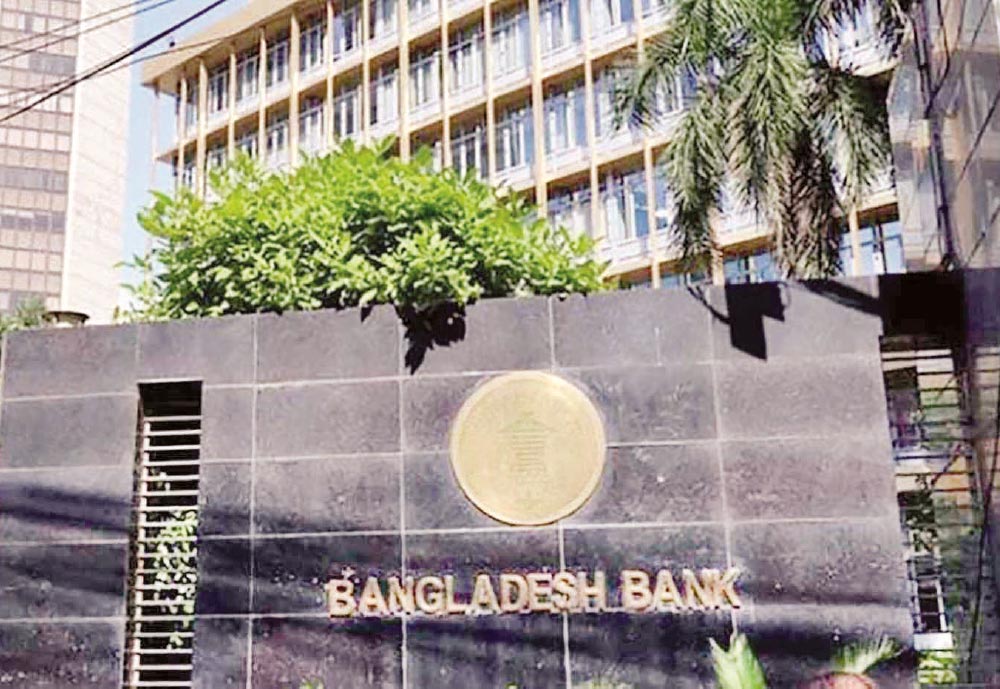 Bangladesh Bank (BB) issued a consolidated circular on foreign exchange management and operations, bringing existing regulations together in a single document while allowing Authorised Dealer (AD) banks to offer commodity price hedging facilities to eligible importers.
The Foreign Exchange Policy Department-2 of the central bank today issued the circular, repealing existing instructions on foreign exchange management and operations contained in the Guidelines for Foreign Exchange Transactions (GFET), 2018, Volume I, and subsequent circulars, except for monthly reporting instructions in Volume II.
The new circular will remain valid for one year from the date of issuance, with subsequent instructions issued during this period to be read alongside it.
Under the consolidated framework, AD banks can purchase and sell foreign currencies from or to customers and other dealers at freely negotiated rates.
Banks must report foreign exchange transactions worth at least US$100,000 or equivalent twice each business day through the Foreign Exchange Market (FXM) Module, according to BSS report.
The central bank will publish a daily reference benchmark exchange rate based on the weighted average of freely quoted rates in market transactions involving customers and other dealers.
Banks must also display the day's exchange rates on customer-visible digital screens or display boards and at the top of their websites.
In a significant provision for importers, the circular incorporates guidelines allowing AD banks to facilitate commodity price risk hedging for eligible importers, including those operating outside designated specialised zones.
The facility, introduced through a separate circular on September 13, is designed to help importers manage fluctuations in international commodity prices, improve cost planning and enhance business competitiveness.
Eligible importers include businesses importing raw materials and intermediate goods such as crude oil, edible oil, metals, grains and fertilisers, importers of essential commodities for domestic consumption, and public-sector entities involved in strategic or large-scale import operations.
Permitted instruments include commodity futures, forward contracts linked to reference commodity indices, commodity swaps and commodity options.
Importers will be allowed to hedge up to 100 percent of their underlying commodity exposure, subject to documentation and regulatory requirements. The hedge amount and maturity must not exceed the value and maturity of the corresponding import transaction.
The central bank has stipulated that hedging must be undertaken strictly to manage genuine price risks, not for speculative or leveraged trading.
Importers must provide supporting documents, including letters of credit, import contracts or confirmed purchase orders, and operate under a board-approved risk management policy.
AD banks must obtain prior concurrence from Bangladesh Bank before offering commodity price hedging services by submitting board-approved product specifications and standard operating procedures.
The circular was issued under Section 20(3) of the Foreign Exchange Regulation Act, 1947.

Loading...
Loading...
Also read



Editor : Iqbal Sobhan Chowdhury
Published by the Editor on behalf of the Observer Ltd. from Globe Printers, 24/A, New Eskaton Road, Ramna, Dhaka.
Editorial, News and Commercial Offices : Aziz Bhaban (2nd floor), 93, Motijheel C/A, Dhaka-1000.
Phone: PABX- 41053001-06; Advertisement: 41053012; 01793317829, 01550707291, 01550707296
E-mail: [email protected], [email protected]. [email protected], [email protected], [email protected], [email protected], Online-email: [email protected]


