



| HEADLINE |

|

France blames Iran's IRGC for supermarket freezer cyberattacks
Published : Tuesday, 10 November, 2026 at 11:34 AM
Observer Online Report


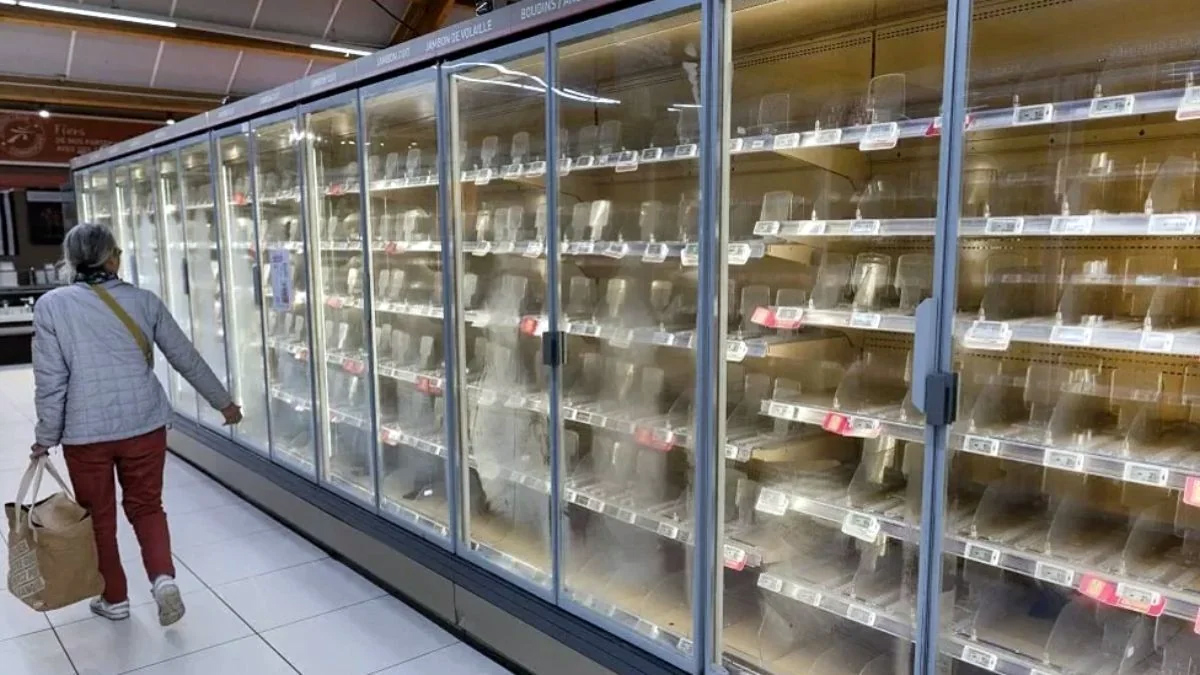
Collected Photo
The French government has officially blamed Iran's Islamic Revolutionary Guard Corps (IRGC) for a sophisticated cyberattack last month targeting refrigeration and cooling systems across hundreds of French supermarkets, which destroyed large quantities of perishable and frozen food.
French Foreign Minister Jean-Noël Barrot announced the development on Monday (November 9), describing the incident as unprecedented and warning that targeted sanctions will be imposed on those responsible. In response to the sabotage, France summoned the Iranian ambassador in Paris to lodge a strong formal protest.
"Such large-scale cyberattacks aimed at committing sabotage on French national territory constitute a serious blow to our national interests and public security," Barrot stated, adding that France will take necessary and proportionate measures in response and implement preventative safeguards against future incursions.
The Paris public prosecutor's office has launched an investigation against the head of an offensive cyber unit linked to the IRGC—identified as the "Shahid Kaveh" unit—alongside two alleged associates. French officials assert that the unit maintains direct ties to the IRGC's electronic and cyber warfare center.
Iran has yet to issue an official response to the allegations, though several Iranian media outlets have dismissed the claims as baseless.
The cyberattack occurred on October 11, when hackers infiltrated the temperature-control software of refrigeration units in French supermarkets. The breach affected over 100 supermarkets under the Coopérative U banner, alongside 180 stores operated by Intermarché and its discount brand Netto. Major retail chains including Carrefour, Monoprix, and E. Leclerc were also impacted. Many affected stores reported that freezer temperatures surged up to 50 degrees Celsius overnight.
The targeted supermarkets rely on temperature-management software manufactured by Danish engineering firm Danfoss, which allows remote monitoring and regulation of commercial cooling units.
Earlier this month, a second wave of similar cyberattacks struck retail outlets across several European nations, impacting over 100 stores in Belgium, Luxembourg, Sweden, Ireland, the Netherlands, Estonia, and Finland.
Additionally, investigations are underway to determine whether a suspicious malfunction that caused food spoilage at several US military bases in August was part of a coordinated cyber operation, according to reports from Reuters.
-SA

Loading...
Loading...
Also read






Editor : Iqbal Sobhan Chowdhury
Published by the Editor on behalf of the Observer Ltd. from Globe Printers, 24/A, New Eskaton Road, Ramna, Dhaka.
Editorial, News and Commercial Offices : Aziz Bhaban (2nd floor), 93, Motijheel C/A, Dhaka-1000.
Phone: PABX- 41053001-06; Advertisement: 41053012; 01793317829, 01550707291, 01550707296
E-mail: [email protected], [email protected]. [email protected], [email protected], [email protected], [email protected], Online-email: [email protected]


