



| HEADLINE |

|

Trump Says Iran War Is ‘Effectively Over’ After Midterm Election Setback


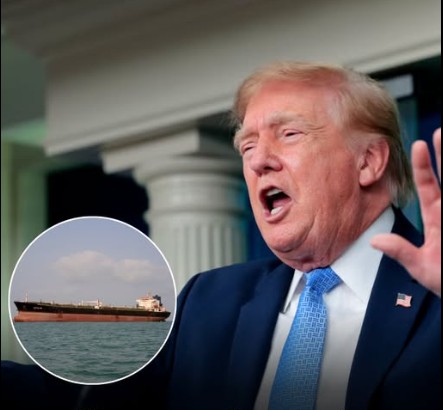
US President Donald Trump has declared that the war with Iran is "effectively over", indicating that Washington will hold off on threatened military strikes following a major Republican defeat in the midterm elections.
Trump downplayed the possibility of a renewed US military offensive, saying that although the American military remained fully prepared for action, he did not expect there to be any reason to use force.
Speaking to reporters at the White House on Tuesday (November 10), Trump said he had decided against launching further attacks at the request of neighbouring countries.
He specifically mentioned Qatar, Saudi Arabia, the United Arab Emirates, Bahrain, Kuwait and other countries, saying they had urged Washington not to carry out new strikes against Iran.
However, Trump said the United States would maintain its naval blockade in the Strait of Hormuz to continue exerting economic pressure on Tehran.
His remarks followed a meeting with Qatari Prime Minister Sheikh Mohammed bin Abdulrahman Al-Thani, who has played a key mediating role between Washington and Tehran since the United States and Israel launched the war on February 28.
Despite Trump's comments, tensions between the two sides remain unresolved, with attacks continuing at a reduced intensity.
Iranian state media reported that the United States had again struck Iran's Qeshm Island overnight. Tehran, meanwhile, had targeted tankers in the Gulf and the Strait of Hormuz earlier this month.
Iran's allies in Yemen, the Houthi movement, have also intensified attacks against Saudi Arabia in recent months.
Meanwhile, Trump has remained reluctant to accept an existing Iranian ceasefire proposal.
The proposal reportedly calls for an end to the US naval blockade of Iranian ports, the lifting of some sanctions and a halt to bombing. In return, Tehran would demilitarise the Strait of Hormuz, while negotiations over its nuclear programme and other sanctions would follow.
The political fallout from the war has also become increasingly significant in Washington.
The conflict's unpopularity, along with its impact on gasoline prices and the broader US economy, contributed to Democratic victories in the midterm elections.
US Vice President JD Vance directly blamed the conflict for the Republicans' historic electoral setback, acknowledging that the war had increased the cost of living for Americans.
Although the Qatari prime minister described his discussions with Trump and Vance as "positive", senior US and Gulf officials have expressed doubts about the possibility of reaching an immediate agreement.
Earlier, Iranian Security Council chief Mohsen Rezaei dismissed reports of ongoing negotiations between Washington and Tehran.
In a post on X, Rezaei urged the United States to stop spreading what he described as false reports about imaginary talks, adding that Washington should accept Iran's seven conditions.
Meanwhile, the Strait of Hormuz remains effectively closed, continuing to raise concerns over regional security and global energy supplies.
sks






Published by the Editor on behalf of the Observer Ltd. from Globe Printers, 24/A, New Eskaton Road, Ramna, Dhaka.
Editorial, News and Commercial Offices : Aziz Bhaban (2nd floor), 93, Motijheel C/A, Dhaka-1000.
Phone: PABX- 41053001-06; Advertisement: 41053012; 01793317829, 01550707291, 01550707296
E-mail: [email protected], [email protected]. [email protected], [email protected], [email protected], [email protected], Online-email: [email protected]


