



| HEADLINE |

|

State Minister calls for meaningful youth leadership at COP31
Published : Thursday, 12 November, 2026 at 9:03 AM
Observer Online Report


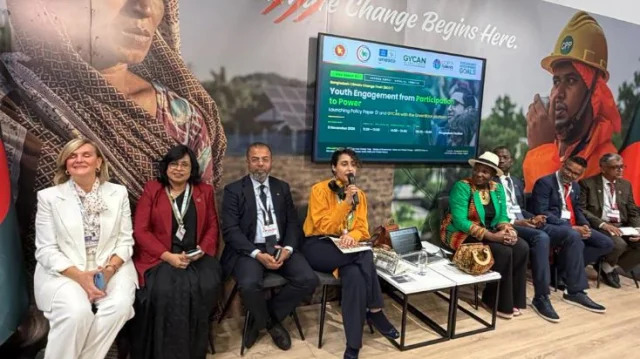
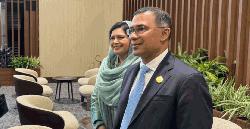
Collected Photo
State Minister for Environment, Forest and Climate Change Sheikh Faridul Islam has emphasized the need to ensure effective youth participation and leadership in combating climate change, moving beyond formal representation.
Speaking at a side event titled "Youth Engagement: From Participation to Power" organized by the Bangladesh Climate Change Trust (BCCT) at the Bangladesh Pavilion in the Blue Zone of COP31 in Antalya, Turkey, on Wednesday (November 11), he underscored the importance of involving young people in climate policymaking, international negotiations, financing, and decision-making processes.
"Youth participation in addressing the adverse impacts of climate change must not be confined to formal representation alone," the State Minister said. "Their active role must be ensured in policymaking, planning, project implementation, and monitoring, alongside expanding their involvement in climate adaptation, innovation, and green employment."
Acting Environment Secretary Dr Fahmida Khanam and Special Assistant to the Prime Minister Dr Md Saimum Parvez also addressed the session, highlighting the need to nurture youth skills, innovative thinking, and leadership in national and global decision-making. BCCT Managing Director Kazi Rawnakul Islam delivered the welcome address at the event, moderated by Professor Mohammad Nurunnabi.
During the session, BCCT announced that its upcoming 2026–2030 strategic action plan aims to mobilize 32,000 youth volunteers—recruiting 500 from each of Bangladesh's 64 districts—to lead grassroots awareness, risk identification, and climate resilience initiatives. The trust is also drafting operational guidelines for youth involvement in project execution and building a nationwide network of local youth organizations.
A policy paper titled "Youth Engagement Across COP-30" was unveiled at the event, reviewing youth participation from COP1 in 1995 to COP30 in Belém in 2025. It recommends raising representation of delegates under 35 in national delegations to 30 percent by 2030, establishing a $500 million annual fund for youth-led climate projects, integrating climate education into school curricula, reserving two board seats for youth in the Loss and Damage Fund, and incorporating youth participation metrics into Nationally Determined Contributions (NDC 3.0) reporting.
The event also marked the launch of the Global Youth Climate Action Network (GYCAN) and the Green Book digital platform to strengthen international collaboration among young climate leaders.
International panelists included GYCAN Founder and Co-Chair Princess Abeer S. Bin Farhan Al Saud, WHO Technical Officer Professor Brama Gnefan Kone, former WHO Director Dr Maria Neira, and Paris Committee on Capacity-Building Co-Chair Princess Dr Abze Djigma, alongside senior BCCT officials and youth delegates.
-SA

Loading...
Loading...
Also read





Editor : Iqbal Sobhan Chowdhury
Published by the Editor on behalf of the Observer Ltd. from Globe Printers, 24/A, New Eskaton Road, Ramna, Dhaka.
Editorial, News and Commercial Offices : Aziz Bhaban (2nd floor), 93, Motijheel C/A, Dhaka-1000.
Phone: PABX- 41053001-06; Advertisement: 41053012; 01793317829, 01550707291, 01550707296
E-mail: [email protected], [email protected]. [email protected], [email protected], [email protected], [email protected], Online-email: [email protected]


