



| HEADLINE |

|

EASEMENT RIGHTS: privileges over another person’s land
Published : Saturday, 14 November, 2026 at 4:17 PM
Rahul Deb Nath


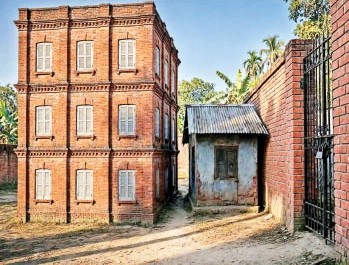
Property ownership does not always confine a person’s rights to the boundaries of their land or house. The reasonable enjoyment of property may depend on certain rights over neighbouring land, such as using a pathway, receiving light and air, accessing water or ensuring drainage.
Where legal conditions are fulfilled, such rights are recognised as easement rights. In Bangladesh, the Easements Act, 1882, governs their nature, acquisition, exercise and extinction over another person’s immovable property.
Easement by Prescription
Under Section 15 of the Easements Act, 1882, a person may acquire an easement by prescription if the right has been enjoyed peacefully, openly, continuously and as a matter of right for a period of 20 years, subject to the statutory requirements.
In the case of government property, the relevant period is 60 years under Section 26 of the Limitation Act, 1908.
However, prolonged use alone does not establish an easement. It must be exercised as a legal entitlement, not through the owner’s permission, consent or goodwill. Thus, the nature and circumstances of the use matter as much as its duration.
Right of Way and Necessity
Suppose the only access to your house crosses your neighbour’s land, but the neighbour suddenly blocks the pathway. Can you seek legal protection?
The answer depends on the legal basis of your claim. Section 13 of the Easements Act, 1882, recognises an easement of necessity, which may arise when a property transfer or partition makes access through another property essential for its beneficial enjoyment.
For instance, a right of way may arise when a property becomes landlocked following its transfer or partition, provided the statutory conditions are met.
An easement of necessity differs from one acquired through long-standing use, as each rests on distinct legal principles and requirements.
Right to Light and Air
If a neighbour’s multi-storey construction obstructs light and air entering your house, can you seek legal remedies?
Sections 7 and 15 of the Easements Act, 1882, recognise rights relating to light and air, subject to statutory requirements. However, every obstruction does not automatically constitute a violation. Relief depends on whether an enforceable easement exists, the extent of interference and compliance with applicable building regulations.
Thus, reduced light or air alone may not justify a legal challenge. The affected owner must establish an enforceable right or another recognised legal ground.
Easements may also cover water flow, drainage, access to water sources and support necessary for the stability of buildings or land.
Remedies for Easement Violations
When an established easement right is unlawfully obstructed, the affected owner may seek relief from a competent civil court, including a declaration of the right, temporary or permanent injunctions and other appropriate remedies.
Evidence is crucial to such claims. Title deeds, land maps, records of rights, proof of long-standing use and witness testimony may help establish the right.
The court considers how the easement was acquired, the nature and duration of its exercise and the circumstances of the interference. Maintaining proper land records and preserving evidence are therefore essential to protecting one’s legal interests.
To sum-up. Easement rights balance property ownership with the lawful enjoyment of another’s property. Neither an owner may unlawfully obstruct an established easement nor may another claim such a right without legal grounds. Understanding the Easements Act, 1882, helps prevent disputes and protect the lawful interests of neighbouring property owners.
-The writer is an Advocate at Dhaka Judges Court

Loading...
Loading...
Also read








Editor : Iqbal Sobhan Chowdhury
Published by the Editor on behalf of the Observer Ltd. from Globe Printers, 24/A, New Eskaton Road, Ramna, Dhaka.
Editorial, News and Commercial Offices : Aziz Bhaban (2nd floor), 93, Motijheel C/A, Dhaka-1000.
Phone: PABX- 41053001-06; Advertisement: 41053012; 01793317829, 01550707291, 01550707296
E-mail: [email protected], [email protected]. [email protected], [email protected], [email protected], [email protected], Online-email: [email protected]


