



| HEADLINE |

|

Bangladesh among 47 nations facing high climate debt distress


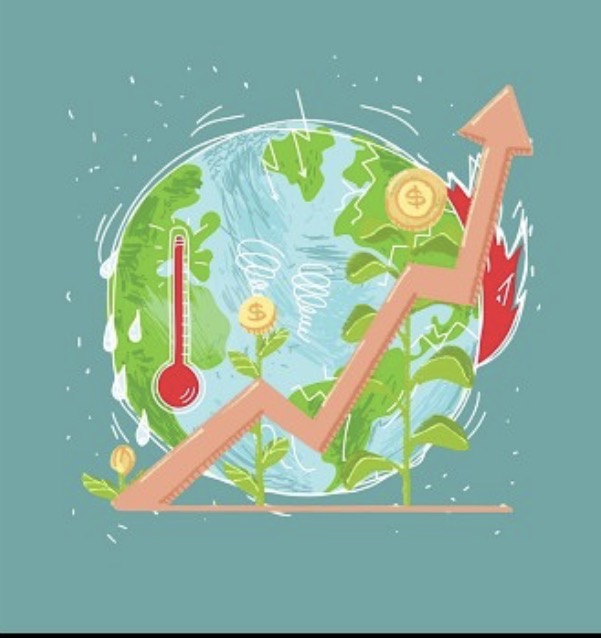
Bangladesh scored 65.37, placing it among 47 of 55 climate-vulnerable countries facing high or very high climate-debt distress, according to a new global index on climate debt.
The index classified Bangladesh as a “High Risk” nation, with an estimated climate debt of $80 per person, underscoring a deepening financial crisis driven by a global climate finance system that is structurally flawed and relies on loans rather than grants.
The findings were presented by Dhaka-based think tanks Change Initiative and Young Power in Social Action (YPSA) during a policy dialogue at COP3 on Saturday, titled “25 Years of Climate Finance: Progress, Gaps and Transformative Solutions.”
A system of ‘debt by design’
Data presented at the dialogue revealed a troubling trend in climate finance flows to Bangladesh. Between 2002 and 2023, the country’s energy sector received $2.54 billion in climate finance. However, 92 per cent of this funding was provided as loans. Furthermore, 18.84 per cent of the finance designated for “climate” projects was actually directed towards fossil-fuel initiatives.
Speakers at the event warned that this reliance on debt is not an accident but a feature of the international financial system. They noted that 69 per cent of public climate finance provided to developing countries in 2022 came as loans.
International public adaptation finance also fell from $28 billion in 2022 to $26 billion in 2023, with 58 per cent of that funding delivered as debt.
“Money is not the issue; the issue is that they are not interested in providing grants. That’s the whole problem of climate finance,” said M Zakir Hossain Khan, co-founder and chief executive of Change Initiative, who chaired the dialogue.
“What we are observing right now in the name of climate finance is debt by design.”
“Make it debt-free by design, not as an option,” Zakir Hossain Khan said in his remarks.
The human cost of this financial burden was highlighted by Barrister Mahbubul Alam Salehin, a lawmaker and member of the Parliamentary Standing Committee on Environment, Forest and Climate Change.
He pointed to families in riverine char areas who have been displaced and relocated “10, 12, 15, even 20 times.”
“Bangladesh must not become poorer in the process of protecting itself from climate change,” Salehin said, questioning whether vulnerable communities would be forced to repay the support they receive.
Borrowing costs and broken boundaries
Muhammad Haseeb Khan, project lead for West and South Asia at the Climate Vulnerable Forum and V20 Secretariat, added that vulnerable economies are forced to borrow at interest rates of 15-18 per cent, compared with 2-3 per cent for wealthy nations.
He noted that infrastructure loans often must be repaid within three to four years, even though the public facilities built are designed to last for decades.
Dr Fazle Rabbi Sadeque Ahmed, Bangladesh’s lead negotiator on climate finance, stated that the UNFCCC Adaptation Fund received only $300 million this year against a demand for $400 million to support 160 countries.
He reiterated that climate finance must be new, additional and grant-led.
The dialogue also addressed the broader ecological crisis. Researchers warned that seven of the nine critical Earth-system thresholds, known as planetary boundaries, have been breached, reaching record levels.
Only the ozone layer is showing recovery, which researchers linked to a dedicated fund that covered developing countries’ agreed transition costs.
“It doesn’t make any sense to continue investing in something while destroying the ecosystem and nature in the process,” said Mofazzal Hossain, research coordinator at Change Initiative.
Proposed solutions: Debt-free funding
To reduce reliance on sovereign borrowing, Change Initiative outlined 12 non-debt revenue mechanisms that could generate between $35 billion and $400 billion annually by the early 2030s, with a medium-scenario estimate of $160 billion.
Proposed sources include a climate damages tax on fossil-fuel profits ($60 billion annually), a 2 per cent minimum tax on billionaires ($25 billion) and redirecting fossil-fuel producer subsidies ($15 billion).
The group also proposed a 1 per cent “Climate-Security Contribution” from national military budgets, taxes on premium-class air travel, carbon border adjustments, and levies on international shipping, plastics and AI data centres.
The organisation called for strict allocation rules in the global framework, reserving 30-40 per cent of revenue from every new levy as grants exclusively for least developed countries and small island developing states.









Published by the Editor on behalf of the Observer Ltd. from Globe Printers, 24/A, New Eskaton Road, Ramna, Dhaka.
Editorial, News and Commercial Offices : Aziz Bhaban (2nd floor), 93, Motijheel C/A, Dhaka-1000.
Phone: PABX- 41053001-06; Advertisement: 41053012; 01793317829, 01550707291, 01550707296
E-mail: [email protected], [email protected]. [email protected], [email protected], [email protected], [email protected], Online-email: [email protected]


