



| HEADLINE |

|

Winter guests are returning to Bangladesh, Will they find a safe home?


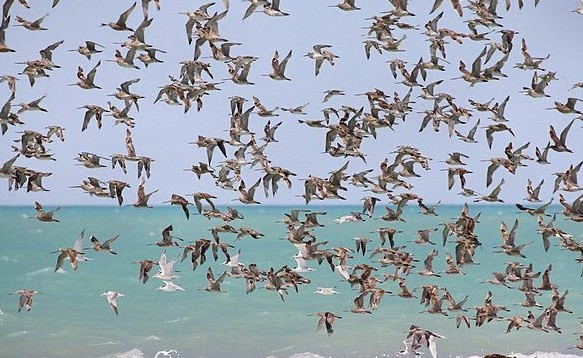
Every winter, thousands of birds travel thousands of kilometres to reach Bangladesh. They cross mountains, rivers and national borders, leaving colder regions behind in search of food, suitable temperatures and safe places to rest. For them, the wetlands of Bangladesh are not tourist destinations. They are essential stops on a journey that demands enormous energy and carries considerable risks.
The first signs of their return are already visible in November 2026. Migratory birds have been spotted in wetlands in Sirajganj and around the lakes of Jahangirnagar University. Their numbers are expected to increase as winter progresses, with December and January traditionally bringing the busiest period.
It is a familiar seasonal spectacle, but familiarity should not make us overlook what is happening. Bangladesh welcomes these birds every year, yet the natural habitats that sustain them face growing pressure from human activity. The question is no longer simply how many birds will arrive this winter. It is whether they will find enough safe places to survive.
Bangladesh's wetlands, including haors, beels, rivers, coastal mudflats and islands, provide important feeding and resting grounds for migratory birds. The Department of Forest lists 209 species of winter migratory birds in the country. Their presence is part of a much larger international migration system, connecting Bangladesh with distant breeding grounds in northern and central Asia and beyond.

These birds do not recognise national boundaries, but they depend on the condition of the habitats they encounter along the way. A wetland destroyed or disturbed in one country can affect a journey that spans several others.
Research analysing observations from 2009 to 2023 found declining population trends in 12 of 20 monitored Arctic shorebird species. The findings are particularly concerning for species that depend on coastal habitats during migration and winter. Bangladesh's coastal wetlands therefore have significance beyond their local biodiversity: they are part of a wider network that migratory birds need to survive.
Yet wetlands are increasingly exposed to pollution, land conversion, unplanned construction, excessive human activity and changes in water conditions. Fishing nets can trap birds, while hunting and illegal trade pose direct threats. The loss of feeding grounds can leave exhausted migrants with fewer opportunities to recover before continuing their journeys.
The situation at Jahangirnagar University illustrates the contradiction. The campus is widely recognised as a winter destination for birdwatchers, but concerns have been raised about declining bird numbers and the effects of construction, habitat changes, food shortages and human disturbance. A place celebrated for attracting migratory birds must also be judged by how well it protects their habitat.
The growing popularity of birdwatching brings another responsibility. A photograph may last a lifetime, but the disturbance caused while taking it can affect a bird's ability to rest and feed. Crowding around lakes, making loud noises, throwing objects to attract birds and getting too close for photographs can turn a resting place into another source of stress.
Birdwatching should not become an excuse to invade the space of wildlife. Visitors need to maintain a safe distance, avoid disturbing nesting or feeding areas, keep the surroundings clean and resist the temptation to feed wild birds. The best photograph is not worth forcing a bird to abandon a safe resting place.
Hunting presents a more direct threat. Reports from wetland areas, including the haor region of Moulvibazar, have highlighted the use of nets, firearms and other methods to capture wild birds. Some are reportedly sold through informal networks. The Wildlife (Conservation and Security) Act 2012 prohibits the hunting, capture and trade of protected wildlife, but legislation alone cannot protect birds if illegal activities continue without effective monitoring and enforcement.
Conservation also requires more than counting birds during the peak of winter. A January survey by the Scope Foundation recorded 47,157 waterbirds belonging to 63 species across 53 sites in the Meghna estuary. The corresponding 2025 survey recorded approximately 46,015 birds of 62 species across 48 sites. Although the latest count was higher, the number of surveyed sites also increased. The figures should not automatically be interpreted as proof of population recovery. Reliable comparisons require consistent monitoring across the same locations and under comparable conditions.
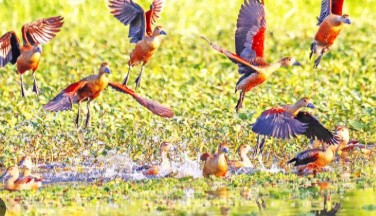
This is where conservation efforts need to become more systematic. Authorities must protect wetlands from encroachment, monitor hunting and illegal trade, reduce pollution and ensure that development does not destroy important feeding grounds. Bird populations and their habitats need regular scientific assessment rather than attention limited to the winter tourist season.
Local communities must also be part of the effort. People who live beside wetlands understand seasonal changes and often have direct knowledge of hunting, habitat loss and other threats. Conservation programmes are more likely to succeed when communities have a meaningful role and when protecting wildlife does not come at the expense of their livelihoods.
Migratory birds are often described as winter guests, but the description places an unnecessary emphasis on their brief visit. They are part of Bangladesh's natural environment, even if they spend only a few months here each year. Their presence reflects the health of wetlands and the wider ecosystems that support both wildlife and people.
When the winter ends, these birds will leave for their breeding grounds. They will not know whether a wetland has been protected by a new government initiative or whether a conservation campaign has attracted public attention. They will simply return to the places where they can find food and safety.
If those places disappear, the birds may not return.
Bangladesh should measure the success of its winter bird season not by the number of visitors carrying cameras, but by the condition of the wetlands and the survival of the birds that depend on them. Welcoming migratory birds means protecting their right to arrive, rest and leave safely. Anything less is admiration without responsibility.
Sources: Department of Forest, Scope Foundation, the Wildlife (Conservation and Security) Act 2012.










Published by the Editor on behalf of the Observer Ltd. from Globe Printers, 24/A, New Eskaton Road, Ramna, Dhaka.
Editorial, News and Commercial Offices : Aziz Bhaban (2nd floor), 93, Motijheel C/A, Dhaka-1000.
Phone: PABX- 41053001-06; Advertisement: 41053012; 01793317829, 01550707291, 01550707296
E-mail: [email protected], [email protected]. [email protected], [email protected], [email protected], [email protected], Online-email: [email protected]


