



| HEADLINE |

|

Real estate revival can boost economic growth.
Published : Friday, 20 November, 2026 at 5:13 PM
Salauddin


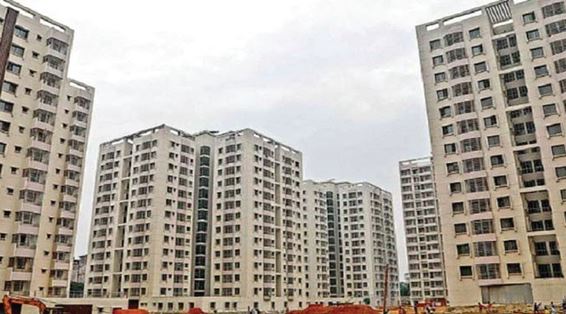
Collected Photo
The real estate sector is closely linked to Bangladesh's economic progress, employment generation and urbanisation. Its activities involve not only housing developers but also engineers, architects, construction workers, transport workers and people from numerous other professions. As a result, a crisis in the real estate sector is not merely a business-sector problem; it affects the livelihoods of millions of families and the overall economy.
Drawing on 19 years of experience in the real estate business and direct involvement in field-level operations as the managing director of a company, an industry professional has observed that the sector plays a significant role in Bangladesh's economy. However, despite its considerable potential, the sector is currently going through a difficult period due to various obstacles and policy complexities.
Many people believe that real estate business is limited to buying and selling land or constructing buildings. In reality, its scope is much broader, with numerous industries, businesses and employment opportunities directly and indirectly linked to the sector.
From developers and engineers to architects, masons, rod workers, electricians, painters, tile workers, transport workers and truck drivers, a large number of people at different levels depend on this sector. According to relevant estimates, around 4 million people are directly involved in livelihoods linked to the real estate sector. Another 10 million people depend on it indirectly. Therefore, a slowdown in the sector affects a large number of families.
The combined contribution of the real estate sector and its associated industries to the country's GDP is estimated to be more than 15 per cent. The sector has direct links with more than 260 associated industries and service sectors, including rod, cement, bricks, tiles, sanitary products, electrical equipment and lifts. Increased investment in housing creates opportunities for higher production, marketing activities and employment in these industries.
The government earns substantial revenue from land and flat registration fees, VAT, income tax, various other taxes and fees for gas, electricity and water connections. Government revenue also comes from different sectors involved in building construction and housing activities. Therefore, a vibrant real estate sector boosts government revenue and economic activities. Conversely, stagnation in the sector has a negative impact on the overall economy.
Despite its potential, real estate businesses are currently facing various challenges. In particular, it has become increasingly difficult for entrepreneurs who operate their businesses honestly and in compliance with regulations to sustain their operations.
The major challenges include:
- Abnormally high land prices, which increase the cost of flats.
- Frequent price changes and volatility in construction materials, including rod and cement.
- High bank lending rates, currently ranging from 12 to 14 per cent.
- Delays and administrative complexities in the approval processes of the Detailed Area Plan (DAP) and Rajdhani Unnayan Kartripakkha (RAJUK).
- A decline in genuine buyers and investors due to existing limitations on investment and financing.
The combined impact of these challenges has increased uncertainty over launching new projects, carrying out construction work and selling flats.
Resolving the crisis in the real estate sector cannot depend solely on government initiatives. Business owners must also play a responsible role in addressing the challenges from their respective positions.
First, developers must earn and maintain buyers' trust. They should give the highest priority to handing over flats within the agreed timeframe and fulfilling their commitments.
Second, there must be no compromise on construction quality and building safety. Using substandard construction materials to reduce costs is unacceptable.
Third, transparency must be ensured in business operations. Details regarding land ownership, necessary documents, RAJUK-approved designs and other important project information should be clearly disclosed to buyers.
Fourth, unity and coordination among business owners should be strengthened through organisations such as the Real Estate and Housing Association of Bangladesh (REHAB). At the same time, collective initiatives should be taken to present the sector's problems to policymakers and seek practical solutions.
Five proposals for reviving the real estate sector
Policy support from the government is essential to utilise the sector's potential and restore dynamism to the housing business. Five initiatives deserve particular consideration in this regard.
1. Reduce home loan interest rates to 7-8 per cent
Owning a flat has long been a dream for middle-income people. However, purchasing a flat through home loans at the current high interest rates has become difficult for many. Reducing home loan interest rates to 7-8 per cent would increase the purchasing capacity of ordinary buyers. This would help accelerate flat sales and construction activities while creating opportunities to increase government revenue.
2. Rationalise land and flat registration costs
Currently, the total cost of registering land and flats is around 10-12 per cent, discouraging many buyers from declaring the actual transaction value. Reducing registration costs to 5-6 per cent would encourage buyers to disclose the actual prices. This would increase registration activities and create opportunities for higher government revenue in the long run.
3. Introduce a one-stop service for approval processes
Implementing a housing project requires approvals from various organisations, including RAJUK, WASA, Titas and DESCO. Entrepreneurs often face lengthy procedures and various administrative complications in obtaining these approvals.
Therefore, an effective one-stop service should be introduced by integrating the services of all relevant organisations. This would reduce both time and costs while improving the investment environment.
4. Ensure stability in the construction materials market
Unusual fluctuations in the prices of construction materials, including rod and cement, make it difficult to determine the costs of housing projects. Initiatives should be taken to ensure market competition, control the influence of syndicates and bring transparency to the supply chain.
Stable prices of construction materials would benefit both developers and buyers.
5. Formulate a long-term and stable housing policy
Investment in the housing sector depends on long-term planning. However, frequent changes in policies and the DAP create uncertainty among business owners.
Therefore, a clear, realistic and stable urban development and housing policy should be formulated for at least 20 years. This would allow entrepreneurs to make investments based on long-term plans.
Coordinated initiatives can revive the housing sector
The real importance of the real estate sector cannot be understood if it is viewed merely from the perspective of business profits. The sector is linked to the employment of millions of people, the production activities of numerous industries, government revenue and the housing dreams of middle-income families.
If the crisis in this sector continues, entrepreneurs, workers, buyers and the overall economy will suffer. On the other hand, appropriate policy support, easier financing, the removal of administrative complexities and ensuring business transparency can help the real estate sector regain its position as one of the driving forces of the economy.
What is needed now is effective dialogue and joint initiatives between the government and business owners. The problems cannot be resolved through mutual blame or criticism alone. Realistic decisions and their effective implementation are essential.
Saving the real estate sector means more than protecting an industry. It means safeguarding the livelihoods of around 4 million people directly involved in the sector, the country's economic growth and the housing dreams of millions. Therefore, it is time to give serious consideration to the future of this sector.

Loading...
Loading...
Also read









Editor : Iqbal Sobhan Chowdhury
Published by the Editor on behalf of the Observer Ltd. from Globe Printers, 24/A, New Eskaton Road, Ramna, Dhaka.
Editorial, News and Commercial Offices : Aziz Bhaban (2nd floor), 93, Motijheel C/A, Dhaka-1000.
Phone: PABX- 41053001-06; Advertisement: 41053012; 01793317829, 01550707291, 01550707296
E-mail: [email protected], [email protected]. [email protected], [email protected], [email protected], [email protected], Online-email: [email protected]


