



| HEADLINE |

|

Govt takes Tk 44cr project for snake venom research, local antivenom
Published : Tuesday, 24 November, 2026 at 12:21 PM
Observer Online Report


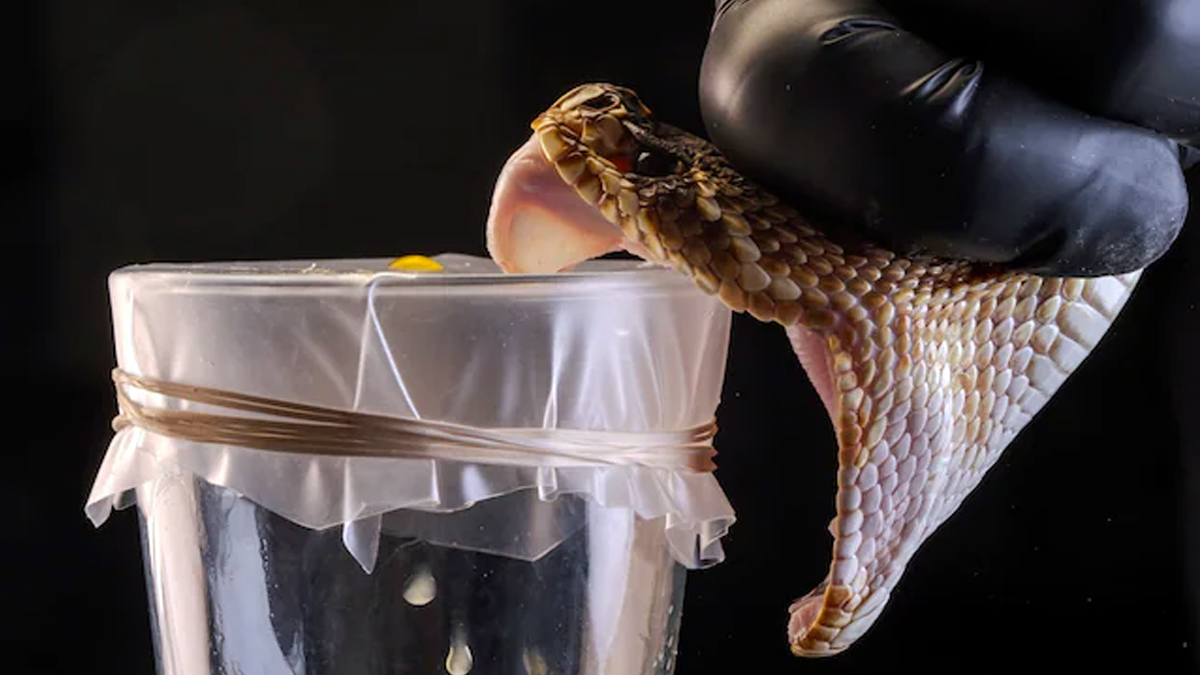
Collected Photo
Government has undertaken a nearly Tk 44 crore project aimed at improving snakebite treatment, producing antivenom domestically, and reducing snakebite fatalities across Bangladesh.
Under the initiative, the Venom Research Centre, Bangladesh (VRC,B) located at Chittagong Medical College will be strengthened and upgraded into a full-fledged National Venom Research Centre (NVRC).
Titled "Strengthening of Venom Research Centre, Bangladesh (VRC,B)," the three-year project is scheduled for implementation from July 2026 to June 2029. The Directorate General of Health Services (DGHS) will execute the project under the Health Services Division of the Ministry of Health and Family Welfare.
According to the Development Project Proposal (DPP), the estimated cost of Tk 43.99 crore will be fully funded by the government. The project aims to establish a modern, well-equipped, and technology-driven national venom research facility by 2029.
At the upgraded centre, snake husbandry, venom extraction, venom profiling, and toxicological research will be conducted in line with international standards.
The project also includes setting up laboratories capable of developing safe, effective, and affordable antivenom, formulating clinical guidelines for snakebite and envenoming treatment, training healthcare workers, and building a disease-specific database to strengthen efforts to cut snakebite deaths nationwide.
According to a 2022 nationwide survey by DGHS, an estimated 400,000 people suffer snakebites every year in Bangladesh, resulting in around 7,500 deaths. Most victims are working-age adults between 30 and 40 years old, leaving many families in severe financial distress.
The World Health Organization (WHO) recognises snakebite envenoming as one of the world's most neglected tropical diseases. The DPP highlights a major limitation of the antivenom currently used in Bangladesh, which is imported from India and formulated primarily against India's four major venomous snake species—commonly known as the "Big Four."
Consequently, imported antivenom is not fully effective against several venomous snake species native to Bangladesh, offering an estimated efficacy of only 40 to 60 per cent. This gap has underscored the urgent need for locally produced antivenom tailored to the venom profiles of indigenous snakes.
VRC,B Principal Investigator Professor Dr Aniruddha Ghose said the centre was originally established at Chittagong Medical College in the 2017–18 fiscal year under a project of the DGHS Non-Communicable Disease Control (NCDC) programme to develop local antivenom.
He noted that when the NCDC programme and its operational plans (OPs) were discontinued in 2024, the centre faced severe uncertainty over continuing its operations.
"However, the newly approved development project to strengthen VRC,B will pave the way for producing antivenom against Bangladesh's own venomous snakes," Dr Aniruddha Ghose said, adding that field activities will begin soon after the appointment of a project director.
Currently, the facility houses a 3,000-square-foot serpentarium, a mouse-breeding room, a snake treatment unit, a quarantine room, and a research laboratory. It holds more than 370 snake specimens collected from nearly all geographical regions of Bangladesh, including cobras, king cobras, kraits, Russell's vipers (Chandrabora), and green pit vipers.
Using scientific methods, researchers at the centre have so far extracted 1,504.78 grams of venom from 11 captive snake species. The centre has also made significant headway in developing antivenom against Russell's viper venom, though funding shortages previously prevented completion of the work.
According to project documents, Chittagong Medical College was chosen as a strategically vital location due to the geographical and ecological diversity of Chittagong division. Snakebite risks are particularly high in the hill districts of Bandarban, Rangamati, and Khagrachhari, as well as coastal, forested, and rural areas.
Proximity to India and Myanmar and the presence of diverse venomous species make the region especially suitable for identifying medically important snakes, collecting and analysing venom, and studying geographical variations in venom composition.
The project plans to collaborate with Chittagong Medical College, the University of Chittagong, the Bangladesh Institute of Tropical and Infectious Diseases (BITID), Chittagong Veterinary and Animal Sciences University (CVASU), and the Protein Laboratory of Rajshahi University, alongside other research and healthcare institutions.
Through these partnerships, joint research, veterinary support, laboratory capacity building, workforce training, and knowledge exchange will be fostered to create an effective inter-institutional research network. Partnerships with domestic and foreign research bodies will also enhance research quality and technical capacity, the DPP states.
Dr Aniruddha Ghose said once implemented, the centre will serve as a specialised laboratory for herpetologists, zoologists, and scientists working on venoms and proteins—infrastructure currently lacking in Bangladesh. Venom collected at the centre will serve as the primary raw material for manufacturing antivenom tailored to national demand.
"Once this centre is established, it will be possible to reduce the need for antivenom imports in the future, and potentially halt imports altogether," he said. The project also aligns with the WHO's global strategy to halve snakebite deaths and disability by 2030.
-SA

Loading...
Loading...
Also read





Editor : Iqbal Sobhan Chowdhury
Published by the Editor on behalf of the Observer Ltd. from Globe Printers, 24/A, New Eskaton Road, Ramna, Dhaka.
Editorial, News and Commercial Offices : Aziz Bhaban (2nd floor), 93, Motijheel C/A, Dhaka-1000.
Phone: PABX- 41053001-06; Advertisement: 41053012; 01793317829, 01550707291, 01550707296
E-mail: [email protected], [email protected]. [email protected], [email protected], [email protected], [email protected], Online-email: [email protected]


