



| HEADLINE |

|

Plastic fishing traps threaten Tanguar Haor’s soil, water
Published : Tuesday, 24 November, 2026 at 2:29 PM
Observer Correspondent


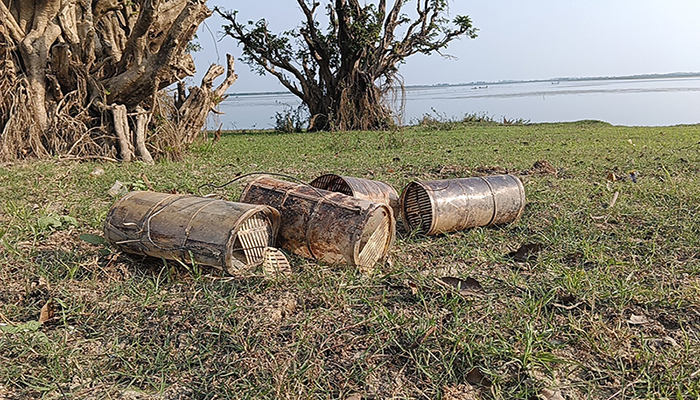
Widespread use and improper disposal of plastic fishing traps in Sunamganj’s ecologically sensitive Tanguar Haor are raising concerns over soil degradation, water pollution and the spread of microplastics through aquatic food chains, environmentalists and agricultural officials warn.
The excessive use of plastic fishing traps, locally known as shaich, in Tanguar Haor and surrounding wetlands is posing a growing threat to the area's fragile ecosystem.
Discarded traps are increasingly accumulating on agricultural land and along the edges of wetlands, raising the risk of declining soil fertility, water contamination and harm to aquatic biodiversity.
A recent field visit to areas surrounding Tanguar Haor found plastic traps scattered extensively across agricultural fields and wetland banks. An estimated four to five discarded traps were found per decimal of land in some areas.
Many of these traps are abandoned after prolonged use, leaving plastic waste to accumulate on farmland and around water bodies.
Environmental concerns are particularly high because discarded plastic can gradually break down into tiny particles when exposed to sunlight, rain and water. These particles may enter aquatic ecosystems, potentially contaminating fish and other aquatic organisms and spreading through the food chain.
Dharmapasha Upazila Agriculture Officer Agriculturist Md Asayad Bin Khalil Rahat said the accumulation of plastic traps in agricultural soil could reduce its fertility and cause pollution.
“When plastic traps become mixed with cultivated soil, they can reduce soil fertility and contaminate the land. There is also a risk that microplastics from these traps will enter water bodies and mix with the food consumed by fish and other aquatic organisms,” he said.
Environmentalist Mehedi Hasan Shawon warned that the traps could also kill aquatic wildlife beyond their intended catch.
“Fish are not the only creatures caught in these plastic traps. Other aquatic animals can also become trapped and die. As plastic traps accumulate in wetlands, they can damage the natural habitats of aquatic plants, fish, birds and other wildlife,” he said.
He added that the spread of plastic waste could pose a long-term threat to the environment and biodiversity, particularly in an ecologically important wetland such as Tanguar Haor.
Against this backdrop, concerned stakeholders are calling for greater public awareness about the environmental consequences of plastic fishing traps, designated collection points for damaged and discarded equipment, and strict measures to prevent plastic waste from being dumped into water bodies.
They also stressed the need for regular monitoring by local administration and the Department of Environment, alongside effective waste removal initiatives to protect the wetland's fragile ecosystem.
The growing accumulation of discarded fishing equipment has highlighted the need to balance fishing activities and local livelihoods with the long-term conservation of Tanguar Haor's natural resources.

Loading...
Loading...
Also read






Editor : Iqbal Sobhan Chowdhury
Published by the Editor on behalf of the Observer Ltd. from Globe Printers, 24/A, New Eskaton Road, Ramna, Dhaka.
Editorial, News and Commercial Offices : Aziz Bhaban (2nd floor), 93, Motijheel C/A, Dhaka-1000.
Phone: PABX- 41053001-06; Advertisement: 41053012; 01793317829, 01550707291, 01550707296
E-mail: [email protected], [email protected]. [email protected], [email protected], [email protected], [email protected], Online-email: [email protected]


