



| HEADLINE |

|

Pirojpur top in production of GI-tagged 'amra'
Published : Tuesday, 24 November, 2026 at 12:35 PM
Observer Correspondent


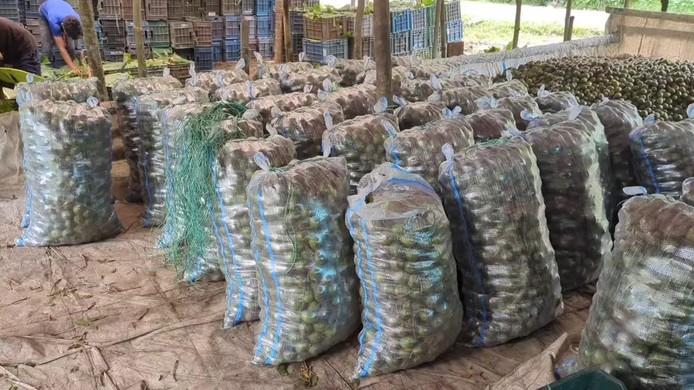
Pirojpur has emerged as Bangladesh's leading producer of hog plum, with the seasonal trade of the GI-recognised fruit generating an estimated Tk 200–250 crore annually and creating fresh opportunities for farmers and traders.
Pirojpur, a southern district long known for its agricultural produce, is gaining further prominence for hog plum cultivation, as demand for the fruit continues to rise across the country following its Geographical Indication (GI) recognition as Barishal's hog plum.
The growing popularity of the fruit is encouraging farmers across several upazilas to expand cultivation, strengthening the district's agriculture-based economy.
Nesarabad upazila, particularly the Atghar-Kuriana area, is traditionally renowned for guava production. However, as the guava season comes to an end, farmers, traders and wholesalers are now turning their attention to the bustling hog plum trade.
Pirojpur leads production of the GI-recognised fruit in Barishal Division, with cultivation expanding in Nesarabad, Bhandaria, Kawkhali and Mathbaria. Nesarabad accounts for the largest share of production within the district.
Farmers who previously focused primarily on guava are increasingly diversifying into hog plum as its popularity spreads across Bangladesh and beyond. The fruit's relatively large size and sweet taste have helped it gain a strong reputation among consumers.
As autumn gives way to late autumn, ripe hog plums develop a brownish hue beneath their green skin, signalling the start of the busy harvesting and wholesale season.
In the canal-lined villages of Nesarabad, boats loaded with freshly harvested hog plums arrive at wholesale markets from early morning. Farmers and traders remain occupied with harvesting, sorting, packaging and transporting the fruit, turning the wholesale hubs of Atghar-Kuriana into centres of intense commercial activity.
Hog plums are currently selling for around Tk 2,000–3,000 per maund, although prices vary depending on quality and market conditions.
Wholesalers purchase the fruit from farmers and small-scale sellers before transporting it by road to markets in Chattogram, Feni, Noakhali, Cumilla, Mymensingh and other parts of the country.
Traders said this year's harvest has been relatively poor due to adverse weather conditions. Nevertheless, the seasonal trade is estimated to generate between Tk 200 crore and Tk 250 crore.
They believe GI recognition has further boosted the fruit's market demand and encouraged farmers to invest more in cultivation, raising expectations of increased production in the coming years.
Sujon Howlader, a wholesale trader in Nesarabad, said the GI recognition had significantly increased demand for the fruit across Bangladesh.
“Demand for hog plum has increased considerably across the country since it received GI recognition. Prices are reasonably good this year. We send 20 to 30 sacks of hog plums from our wholesale market to different parts of the country every day,” he said.
Another trader, Kaiser Ahmed, said hog plums from Nesarabad were particularly popular because of their taste.
“Our hog plums are very delicious. They are supplied to Dhaka, Chattogram, Cumilla, Rangpur and many other regions. Farmers bring the fruit to the wholesale markets early in the morning, and we pack it into sacks for distribution across the country,” he said.
Local seller Nirmal Howlader, who owns around 50 hog plum trees, said he sells several maunds of fruit every year.
“I am selling hog plums this year as well, and the prices are fairly good. We would benefit greatly if the agriculture department provided us with more specialised training,” he said.
Shibu Chandra, a small-scale trader who collects hog plums from different villages, said prices fluctuate depending on market conditions.
“I travel from village to village to purchase hog plums. Prices vary at different times, so I buy according to the prevailing market rate and then transport the fruit by boat to the wholesale market,” he said.
Deputy Director of the Pirojpur Department of Agricultural Extension, Soumitra Sarkar, said the district produced 10,124 tonnes of hog plums on 577 hectares of land, the highest production in Barishal Division.
He said the fruit was being supplied to Dhaka, Chattogram, Cumilla and other parts of the country. Its larger size and sweet taste were helping farmers secure favourable prices.
The agriculture department is also providing farmers with necessary advice and technical support to improve production, he added.
With an annual trade volume estimated at Tk 200–250 crore, hog plum has become an increasingly important source of income for farmers, traders and transport workers in Pirojpur, adding fresh momentum to the district's rural economy.
ZH

Loading...
Loading...
Also read








Editor : Iqbal Sobhan Chowdhury
Published by the Editor on behalf of the Observer Ltd. from Globe Printers, 24/A, New Eskaton Road, Ramna, Dhaka.
Editorial, News and Commercial Offices : Aziz Bhaban (2nd floor), 93, Motijheel C/A, Dhaka-1000.
Phone: PABX- 41053001-06; Advertisement: 41053012; 01793317829, 01550707291, 01550707296
E-mail: [email protected], [email protected]. [email protected], [email protected], [email protected], [email protected], Online-email: [email protected]


