



| HEADLINE |

|

3.58 Tcf of gas discovered from 20 wells in Bangladesh


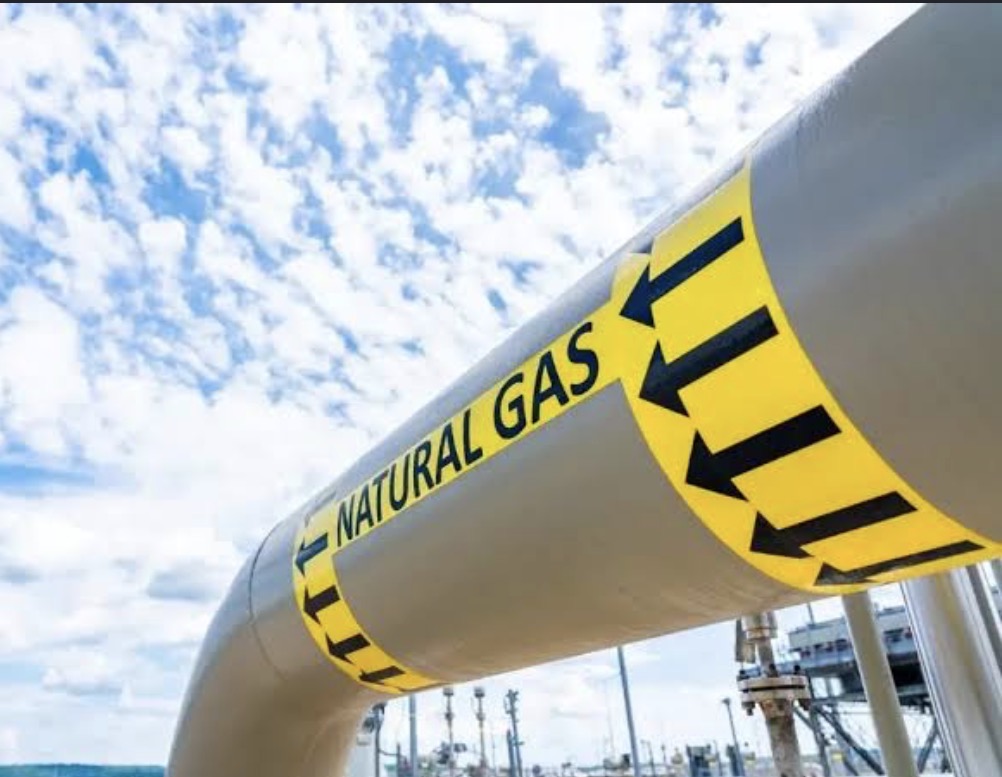
Russian energy company Gazprom has discovered a total of 3,580 billion cubic feet (Bcf), or 3.58 trillion cubic feet (Tcf), of natural gas through drilling 20 wells in Bangladesh, creating fresh opportunities for strengthening the country’s energy security.
Of the 20 wells drilled by Gazprom, 14 are currently producing gas. Around 490 Bcf has already been extracted from these wells, with an estimated government value of Tk 31,309 crore, according to relevant sources. The total discovered gas has an estimated government value of Tk 2,14,617 crore.
Energy experts say Gazprom’s drilling experience and technical capabilities have made a significant contribution to Bangladesh’s gas exploration and production, particularly at a time when domestic reserves are under pressure and demand for energy continues to rise.
Professor Amirul Islam, an energy expert at the Military Institute of Science and Technology (MIST), said Gazprom had successfully completed 20 drilling projects in Bangladesh between 2010 and 2024. “These wells are currently supplying around 283 million standard cubic feet per day (MMSCFD) of gas to the national grid,” he said.
According to the professor, the 20 wells produced a combined 1.45 Tcf of gas between 2010 and 2025, with an estimated value of Tk 1,83,750 crore, calculated at an LNG benchmark price of $10 per million British thermal units (MMBtu).
He further said Gazprom International had identified approximately 6.873 Tcf of gas in place (GIIP) through drilling 18 wells in the GTO, with an estimated value of Tk 8,04,153.87 crore at the same LNG benchmark price.
Meanwhile, Bhola has emerged as a particularly promising area for further exploration. Gazprom has already drilled seven wells in the district and identified locations for another 19 potential wells.
The company’s assessments indicate approximately 3 Tcf of discovered gas in Bhola, alongside the potential for an additional 5 Tcf based on further studies and geological assessments. This suggests that the wider region could hold between 7 Tcf and 8 Tcf of gas resources.
The exploration potential is not limited to Bhola. Char Fasson, Manpura, Subarnachar in Noakhali, Hatiya and surrounding areas have also been identified as promising locations.
To accelerate exploration, Gazprom has proposed a government-to-government (G2G) three-dimensional (3D) seismic survey covering approximately 1,930 square kilometres. Sources said the survey could be conducted at a comparatively lower cost.
Gazprom’s drilling costs have also become a subject of debate amid comparisons with the expenditure incurred by the state-owned Bangladesh Petroleum Exploration and Production Company (BAPEX).
People familiar with the operations argue that the widely cited Tk 80 crore cost of drilling a well by BAPEX does not represent the full expenditure, as it excludes several operational expenses, including salaries and allowances, rig and equipment rentals, workers’ wages, transportation, drivers and fuel.
They said BAPEX’s workover operations alone could cost Tk 80 crore to Tk 90 crore per well, adding that drilling and workover costs should not be compared interchangeably.
A Bangladeshi official working with Gazprom International, requesting anonymity, said drilling costs varied depending on the nature of the project, technology, equipment and materials used. He added that project costs were determined based on Petrobangla’s requirements and the technical specifications of individual wells.
He also argued that comparisons excluding BAPEX’s manpower and rig-related expenses could be misleading. In his view, drilling success and the economic value of gas discovered should be considered alongside the cost of exploration.
Gazprom initially undertook the drilling of 10 gas wells in Bangladesh under a G2G arrangement following a government decision in 2012. Cooperation was subsequently expanded to accelerate the country’s oil and gas exploration and development activities.
Energy sector stakeholders believe that combining domestic expertise with international technology, investment and experience could help Bangladesh unlock its remaining gas potential and reduce dependence on imported liquefied natural gas (LNG).






Published by the Editor on behalf of the Observer Ltd. from Globe Printers, 24/A, New Eskaton Road, Ramna, Dhaka.
Editorial, News and Commercial Offices : Aziz Bhaban (2nd floor), 93, Motijheel C/A, Dhaka-1000.
Phone: PABX- 41053001-06; Advertisement: 41053012; 01793317829, 01550707291, 01550707296
E-mail: [email protected], [email protected]. [email protected], [email protected], [email protected], [email protected], Online-email: [email protected]


