



| HEADLINE |

|

Rice Is Food, Not Pollution
Rice is a crop that contributes to human food production and fixes carbon in the atmosphere
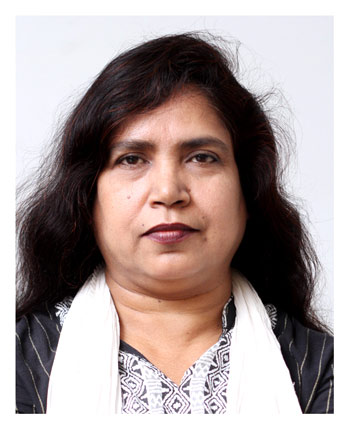


The Daily Observer has recently talked with Dr Jiban Krishna Biswas, PhD, Fellow of the Bangladesh Academy of Agriculture and former Director General of the Bangladesh Rice Research Institute (BRRI), to know about the methene issue in rice and Bangladesh’s journey towards promoting food security while addressing climate change to the global community. Dr Jiban Krishna Biswas focused on Bangladesh’s efforts to balance food security with climate change mitigation, particularly through reducing GHG emissions from rice production. Shahnaj Begum, In-charge of Climate and environment has taken the interview of Dr Krishna. The abstrect of the interview is presented below for our valued readers:
The Daily Observer (DO): Is methane a major problem in Bangladesh’s rice production, and how does it affect the environment?
Jibon Biswas (JB): It has become a salient environmental concern in recent years. My synthesis report for the IFAD Reducing Agricultural Methane Programme (RAMP), GHG Emissions from Agriculture: Bangladesh Perspectives (2023), estimated methane emissions from rice cultivation at 24.15 million tonnes of CO₂ equivalent in 2023. Much of the data underpinning the report was collated by the Bangladesh Rice Research Institute (BRRI) and published in scientific papers and its Annual Report, and was also incorporated into the national greenhouse gas inventory. For Bangladesh�"a flood-prone, drought-prone, and cyclone-affected country with increasing salinity in its coastal belts�"reducing methane emissions from rice cultivation can have significant implications for sustainability, agricultural development, and food security, while sustaining the levels of agricultural productivity required by the country’s predominantly rice-based farming systems. It is important to note that methane is produced in flooded soils through microbial processes and is not a direct product of the rice plant’s photosynthesis. Consequently, with respect to the environmental impact of rice production, the flooded soil conditions are the critical factor.
DO: What measures have the public and private sectors in Bangladesh taken to address the issue?
JB: BRRI initiated research on intermittent irrigation in the late 1970s and 1980s. Later research on improved irrigation practices was undertaken by BRRI, DAE, and other government organisations, and various demonstrations and training programmes were held for farmers to practise improved irrigation. The AWD system developed by IRRI and BRRI�"a modified and improved version of BRRI’s earlier technology�"has recently been included in the Nationally Determined Contributions (NDC 2.0) by the government, and the target has been increased under NDC 3.0. IRRI is providing scientific and technical support on water-saving agriculture. Development partners, NGOs, and private-sector irrigation service providers are supporting water-saving technologies, training, and field demonstrations. Newly emerging carbon-financing initiatives, including those from Japan, can also be explored. CIMMYT conducted research on AWD related to irrigation efficiency, agricultural greenhouse gas mitigation, and adoption barriers in Bangladesh, while IRRI�"the principal international institution for developing and promoting AWD for rice�"worked with several national research programmes, including BRRI.
DO: Is there any proven technology to mitigate methane emissions? How are neighbouring countries addressing the issue?
JB: Yes. Several rice methane management technologies have been subjected to scientific evaluation and have significant methane-reduction potential. In many parts of the world, AWD (Alternate Wetting and Drying) is the most established methane-reducing rice production technology. BRRI and others estimated that, when properly managed, AWD can reduce methane emissions by about 37% while saving about 30% of water with little loss of grain. Work is under way to improve management of crop residues, introduce short-duration and low-methane rice varieties, and implement integrated nutrient management using proper placement of nitrogen. It is important to note that reducing methane emissions under some circumstances can lead to increased emissions of nitrous oxide. Several other Asian rice-growing countries are pursuing rice production with low methane emissions. In India, programmes are in place to promote AWD of rice fields, direct-seeded rice, and improved and efficient irrigation systems. AWD, direct-seeded rice, and efficient irrigation are also being assessed in Nepal with field demonstrations. In Pakistan, Vietnam carbon-credit-based projects for rice methane mitigation have been initiated.
DO: As a scientist, what solution do you envisage for Bangladesh, given that we cannot compromise food security while continuing to pollute the environment?
JB: My recommendation has two tracks. One is to improve rice production by improving water use in irrigation, using nutrients appropriately, managing crop residues better, and adopting higher-yielding, short-duration rice varieties that emit less methane. All of these approaches should be implemented within particular agro-ecological settings. Crop diversification on strategic lands needs equal attention. In our published work, Transforming Bangladesh’s Rice-Based Agriculture: A 4R Framework for Land Reallocation, Diversification, and Long-Term Resilience (Biswas, Barma, & Kabir, 2025), we examined the possibility of transferring about 10% of current rice-cropped lands to suitable non-rice crops and developed a 4R framework for the long-term sustainability of the transformed system while maintaining the required rice production for the country. For higher and medium-high lands with rice-cropped area where dry-season irrigation is costly or groundwater resources are under pressure, suitable rainfed or low-water-requiring crops�"such as wheat, maize, lentils, chickpeas, mungbeans, mustard, sesame, and millets�"should be introduced on an alternate-year basis or as and when feasible. We must not aim for indiscriminate crop diversification. We must protect our most productive rice cultivation areas while increasing productivity in them and carrying out studies on our domestic food requirements. In planning land reallocation for alternative crops, we must also consider their agro-ecological suitability in a particular location.
DO: Is rice the only agricultural product responsible for harmful greenhouse gas emissions, or are there other agricultural products? What are they?
JB: No. Rice is a critical agricultural methane emitter, but there are many others in agriculture that also emit greenhouse gases. Livestock, for example, account for around 33.92 million tonnes of CO₂ equivalent annually�"higher than rice. Cattle and buffalo are major sources of enteric fermentation methane and also manure methane when not managed properly, as well as nitrous oxide. These emissions consist of methane released by cattle and buffalo through enteric fermentation as well as methane and nitrous oxide released from manure that has not been managed properly. Other field crops such as wheat, maize, vegetables, pulses, oilseeds, and sugarcane can also produce greenhouse gases, though methane emissions are significantly less compared with irrigated rice. In these crops, emissions originate from the use of fertilisers, decay of crop residues, soil management practices, and energy use.
DO: BRRI has reported that rice cultivation absorbs more carbon dioxide through photosynthesis than it emits as greenhouse gases. How can this be reconciled with the IPCC’s assessment of rice cultivation as a methane emission source?
JB: This is an important scientific question, as the processes of carbon dioxide absorption, carbon sequestration, and greenhouse gas emissions are separate. Rice plants absorb CO₂ from the atmosphere through photosynthesis and convert it into rice grain, straw, roots, and other parts of the plant. An estimated 110 million tonnes of CO₂ are absorbed annually through photosynthesis by Bangladesh’s rice crops. This is compared with an estimated 106.2 million tonnes of CO₂-equivalent greenhouse gases emitted in the country. These figures show that rice plants absorb a large amount of carbon dioxide during their growth period. But they should not be misunderstood to mean that rice cultivation removes a large amount of carbon dioxide from the atmosphere and thus becomes a sink for greenhouse gases. Rice is not a pollutant. It is a crop that contributes to human food production and fixes carbon in the atmosphere. Thus, the main concern is the greenhouse gas balance of a rice-growing ecosystem, especially one that is continuously flooded.

Loading...
Loading...
Also read




Editor : Iqbal Sobhan Chowdhury
Published by the Editor on behalf of the Observer Ltd. from Globe Printers, 24/A, New Eskaton Road, Ramna, Dhaka.
Editorial, News and Commercial Offices : Aziz Bhaban (2nd floor), 93, Motijheel C/A, Dhaka-1000.
Phone: PABX- 41053001-06; Advertisement: 41053012; 01793317829, 01550707291, 01550707296
E-mail: [email protected], [email protected]. [email protected], [email protected], [email protected], [email protected], Online-email: [email protected]


