



| HEADLINE |

|

Rice, Rain and Rising Heat: Methane Dilemma Beneath Bangladesh's Fields


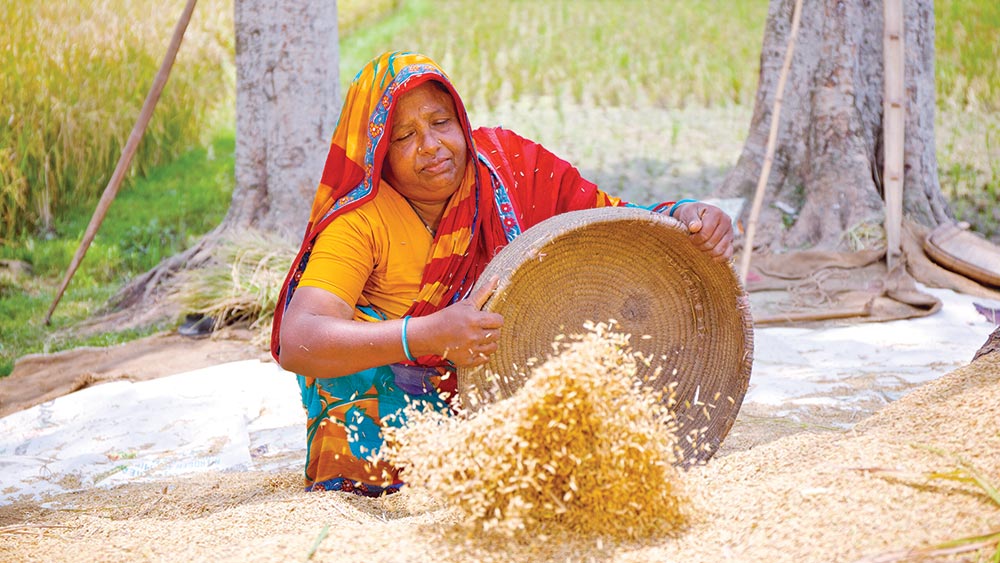
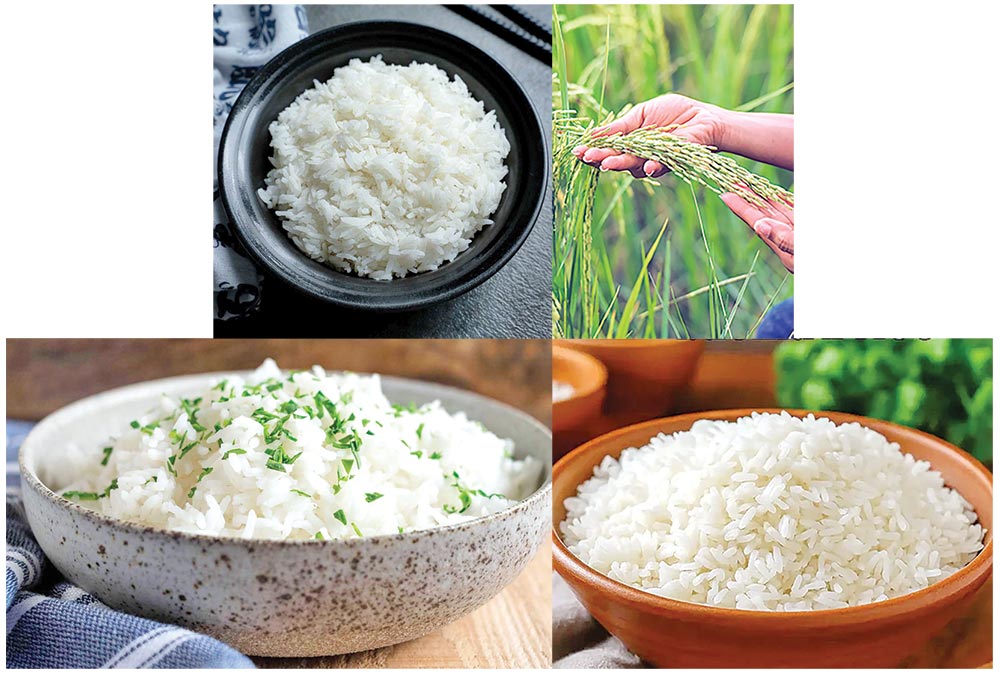 Bangladesh’s rice bowl is also a methane hotspot. South Asia emits the third-highest levels of methane from rice cultivation globally-4,895 Gg CH₄ per year, or 122,368 Gg CO₂ equivalent annually-and Bangladesh stands as the world’s eighth-largest emitter. These are not abstract inventory figures.
According to Bangladesh’s second national communication to the UNFCCC (2012), methane emissions from paddy land in 2004-2005 were estimated at 15.23 Gg CO₂e-or 380.75 Gg CO₂e, as reported-about 23.8 per cent of total estimated methane emissions. That made rice cultivation the country’s third-largest source of methane, after domestic wastewater and livestock, according to the Stockholm Environment Institute (2013).
Methane emissions from Bangladesh, potentially catastrophic to the country's climate resilience, food security and rural livelihoods, can be reduced by implementing effective policy combinations. Bangladesh faces a tough challenge with methane emissions, which significantly contribute to climate change.
The numbers have only grown more sobering. The IFAD Reducing Agricultural Methane Programme (RAMP), GHG Emissions from Agriculture: Bangladesh Perspectives (2023), estimated methane emissions from rice cultivation at 24.15 million tonnes of CO₂ equivalent in 2023. The sources of the data were collated by the Bangladesh Rice Research Institute and published in scientific papers and its Annual Report, and was also incorporated into the national greenhouse gas inventory.
Why does methane matter so much
Why does methane matter so much? It is generated when microorganisms decompose organic matter in low-oxygen environments, such as soils under flooded conditions, and it has a Global Warming Potential roughly 28 times that of carbon dioxide over a 100-year time frame. As a potent greenhouse gas, rising atmospheric methane affects the climate in multiple ways-altering temperature, shifting rainfall distribution, and impacting human health and wildlife.
For Bangladesh-a flood-prone, drought-prone and cyclone-affected country with increasing salinity in its coastal belts-reducing methane emissions from rice cultivation has significant implications for sustainability, agricultural development and food security, while sustaining the levels of agricultural productivity required by the country’s predominantly rice-based farming systems. Crucially, methane is produced in flooded soils through microbial processes and is not a direct product of the rice plant’s photosynthesis. In terms of environmental impact, therefore, the flooded soil conditions are the critical factor.
Yet rice is not the villain
Yet rice is not the villain. It is the staff of life. Bangladesh’s population of 163 million has one of the world’s highest per capita consumption of rice-about 170 kg annually-which provides about 70 per cent of human calorie intake. In 2011 Bangladesh was the world’s fourth-largest producer of paddy rice: roughly 11.8 million hectares, or 75 per cent of agricultural land, is under paddy rice cultivation, and about 60 per cent of the country’s rice area is irrigated. But the country faces serious climate-change challenges:
increasing weather variability, extreme events, prolonged flooding, sea-level rise and saline water intrusion from the sea. In many irrigated areas, groundwater recharge is falling behind the rate of extraction for irrigation. The dilemma is stark: Bangladesh cannot compromise food security while continuing to pollute the environment.
Bangladesh has not been idle. It is a founding member of the Climate and Clean Air Coalition and a lead partner of the CCAC’s Agriculture Initiative. With support from the CCAC National Action Planning Initiative, it has already developed a national action plan for reducing short-lived climate pollutants that identifies paddy rice as a potential area for mitigation of methane emissions. The International Rice Research Institute works closely with the Bangladesh Rice Research Institute.
What the Bangladesh Agricultural Research Council is doing
On the ground, the push for solutions has begun. In recent years Bangladesh promoted Alternate Wetting and Drying through a project coordinated by the Bangladesh Agricultural Research Council, with about US $303,000 in support over three years. The project sought to save irrigation water and fuel while also increasing crop production and environmental amenities. Although activities included 1,632 demonstration farms, field days, training, research and monitoring, the greenhouse-gas mitigation impacts of AWD were not examined.
Identified barriers are a lack of knowledge about technical options among farmers and the need for more successful field demonstrations. Time-based water pricing for irrigation is recommended. The Ministry of Agriculture would now like to apply these lessons to the further optimisation of greenhouse-gas emission targets and mitigation practices.
The Northwest tells the story in human terms. The Rangpur Division in Northwest Bangladesh is one of the country’s most vulnerable areas due to scarce irrigation water and drought, which makes it difficult to produce Boro rice-the dry-season irrigated rice that accounts for over half of the country’s rice production. The rising cost of fuel for pump irrigation aggravates the plight of resource-poor rice farmers. Under the “No-regret” mitigation strategies in rice production project, IRRI has been making progress in introducing AWD in Northwest Bangladesh and promoting its adoption for its co-benefits through the Northwest Focal Area Network.
IRRI’s initiative
As part of its efforts to fight climate change, Bangladesh needs to switch to sustainable agriculture, increase use of biogas and get rid of the messy habit of throwing waste into the environment.
IRRI’s long-standing collaboration with FAN-a rice-based, multi-sectoral network in Northwest Bangladesh comprising farmers’ organisations, academe, development NGOs and government agencies-are working over the issue. The collaboration with FAN is an effective model of how different stakeholders can and should work collectively, contributing what they can and have toward a common goal of helping improve the rice sector and the lives of rice farmers even with limited resources.
The harm from inaction is clear, but so is the danger of a simplistic anti-rice narrative. Rice is not a pollutant; it is a crop that contributes to human food production and fixes carbon in the atmosphere. The main concern is the greenhouse-gas balance of a rice-growing ecosystem, especially one that is continuously flooded.
Challenge to move from pilot projects and policy commitments to sustained outscaling
The challenge is to move from pilot projects and policy commitments to sustained outscaling, farmer training, irrigation control, time-based water pricing and monitoring that rewards farmers for water conservation and lower emissions. Bangladesh cannot choose between food and climate. It must pursue both together-scientifically, institutionally and politically-so that the harvest that feeds the nation does not quietly warm the planet.
However, there are effective policy integration strategies that can help lower these emissions while also boosting climate resilience. Three key dimensions need to be considered when integrating policy relevant to reducing methane emissions: government, local level and international policies and solutions.
The Bangladesh government is working to reduce methane emissions through the promotion of several sustainable agricultural practices. Improved rice cultivation practices, for example, can reduce methane emissions while maintaining crop yields in the face of climate change.

Loading...
Loading...
Also read




Editor : Iqbal Sobhan Chowdhury
Published by the Editor on behalf of the Observer Ltd. from Globe Printers, 24/A, New Eskaton Road, Ramna, Dhaka.
Editorial, News and Commercial Offices : Aziz Bhaban (2nd floor), 93, Motijheel C/A, Dhaka-1000.
Phone: PABX- 41053001-06; Advertisement: 41053012; 01793317829, 01550707291, 01550707296
E-mail: [email protected], [email protected]. [email protected], [email protected], [email protected], [email protected], Online-email: [email protected]


