



| HEADLINE |

|

Between Poetry and Profit: The Philosophy of Understanding People
Published : Saturday, 28 November, 2026 at 12:00 AM
Sayma Sultana


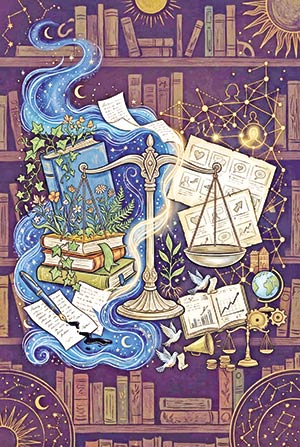 In this universe, there seem to be different paths, each leading towards a different understanding of life. The path of literature, for instance, appears to be one of poetry, aesthetics, emotions, imagination and the exploration of human existence. It is a world where words create meaning and beauty often exists beyond material value. Then there seems to be another path, almost established as its opposite: a world occupied with profit, selling, marketing, brand communication, strategies, business and money. We have grown accustomed to seeing these worlds as fundamentally different, if not incompatible.
People of literature are often seen as dreamers who can write poetry and tell beautiful stories but cannot make money. Meanwhile, those engaged in business and the pursuit of profit are sometimes assumed to have little understanding of poetry or the finer aspects of human expression. Yet, history offers enough examples to challenge these assumptions. Perhaps the problem lies not in the differences between these disciplines, but in the boundaries we have created between them. Nothing in this universe exists entirely in isolation; everything is connected in ways that are not always immediately visible. Literature and marketing may be no exception.
Marketing is generally understood as an activity concerned with products, services, brands and markets, while literature explores human life through emotions, experiences and imagination. Their purposes may differ, but both are deeply concerned with understanding people. Contemporary marketing recognises that people do not simply buy products; they also seek experiences, trust, identity and meaning. A brand's message matters not only for what it says, but for how people interpret it and relate it to their lives. This explains the growing importance of storytelling, emotional connection and audience-centred communication. But are these ideas entirely modern? Seth Godin, in All Marketers Are Liars (2005), explores how people respond to the stories and beliefs associated with products and services, not merely to factual information. Similarly, Donald Miller's Building a StoryBrand (2017) places the customer at the centre of brand communication: the customer is the hero, while the brand acts as a guide. Yet narrative, persuasion and audience psychology have occupied literary thought for centuries.
Aristotle's Poetics examines how human experiences become meaningful narratives. He considers plot, or mythos, central to literary composition: a compelling story is not a collection of disconnected events, but a coherent whole in which each element contributes to the meaning. Brand storytelling follows a similar principle. A brand narrative needs coherence between its message, experiences and promises; attractive visuals or emotional slogans alone cannot make it convincing. In Rhetoric, Aristotle identifies three modes of persuasion: ethos, pathos and logos-credibility, emotion and reason. Their relevance to marketing is clear: a brand must earn trust, connect with its audience and support its claims with evidence. Horace, in Ars Poetica, also reflects on the relationship between a writer's emotions and the reader's response. The idea that a writer must understand an emotion to evoke it meaningfully has an equivalent in brand communication. When organisations speak about people's lives, struggles or aspirations, their messages must be consistent with their actions. Emotional campaigns without genuine commitment rarely create lasting trust.
The role of narrative in human understanding has also been explored by psychologist Jerome Bruner. In his 1991 essay, The Narrative Construction of Reality, he examines how people make sense of experience through stories. We organise memories and events into narratives to construct meaning; brands, too, become meaningful when the experiences associated with them connect with people's values and memories. Philip Kotler's work on customer-centred marketing and long-term relationships reflects a related shift away from a purely product-centred approach. Literature also depends on the reader's experiences, values and emotions; a text is not simply received but interpreted. The connection between literature and marketing, however, goes beyond storytelling. It raises questions of voice, representation and ethics. This is particularly important in development communication, where people's experiences become part of institutional narratives and campaigns. Who tells the story? Is the person represented given a voice? Are their dignity and agency preserved? Literature has long explored identity and representation. John Milton's Areopagitica (1644), though not a theory of storytelling, makes a powerful case for freedom of expression and intellectual inquiry, offering a broader perspective on the ethics of communication.
Still, literature and marketing should not be treated as identical. Literature can leave questions unanswered, unsettle assumptions and invite disagreement. Marketing usually has a communicative or commercial objective and must often translate its understanding of people into a strategic outcome.
Yet literature can offer marketing more than storytelling techniques: it can deepen its understanding of human complexity. A character is rarely defined by one desire; people are shaped by contradictions, memories, circumstances and relationships. Communication that recognises this complexity can move beyond generic messages and superficial emotional appeals. It can also represent people with greater sensitivity, rather than reducing their experiences to convenient promotional narratives. Modern marketing has not discovered storytelling anew; it has adapted an ancient form of human communication to contemporary markets and technologies. Literature seeks to interpret human experience, while marketing seeks to communicate with people through an understanding of their needs, choices and aspirations. Their purposes may differ, but their concerns intersect. Throughout this discussion, I have tried to explore how two seemingly different disciplines share a common foundation in the ways human beings experience, interpret and communicate their world. Perhaps literary critic Barbara Hardy expressed this connection more eloquently in her essay Towards a Poetics of Fiction (1968), when she observed, “We dream in narrative, day-dream in narrative, remember, anticipate, hope, despair, believe, doubt, plan, revise, criticise, construct, gossip, learn, hate and love by narrative.”
The writer is a development communication professional

Loading...
Loading...



Editor : Iqbal Sobhan Chowdhury
Published by the Editor on behalf of the Observer Ltd. from Globe Printers, 24/A, New Eskaton Road, Ramna, Dhaka.
Editorial, News and Commercial Offices : Aziz Bhaban (2nd floor), 93, Motijheel C/A, Dhaka-1000.
Phone: PABX- 41053001-06; Advertisement: 41053012; 01793317829, 01550707291, 01550707296
E-mail: [email protected], [email protected]. [email protected], [email protected], [email protected], [email protected], Online-email: [email protected]


