Our times call for drastic changes in the social and political structures of national and international communities. The market system of capitalism and its policy of neo-liberal globalization have miserably failed the world because instead of uplifting the welfare of humankind, they have continuously exploited the productive classes of societies and have caused extensive devastations to the environment.
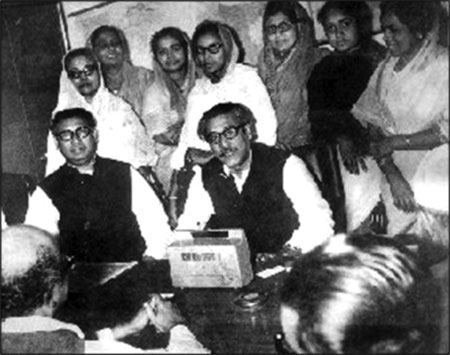
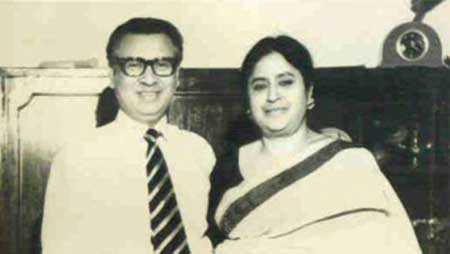
Bangladesh is not out of this circle and many of its leaders are part of that syndicate. But once there was Tajuddin Ahmed, the first prime minister, indeed socialist also, who led the war of independence in other way the war of defeating the system of inequality developed with the Pakistani capitalist system. Well, there is question of his success in long term but no denial of his actions.
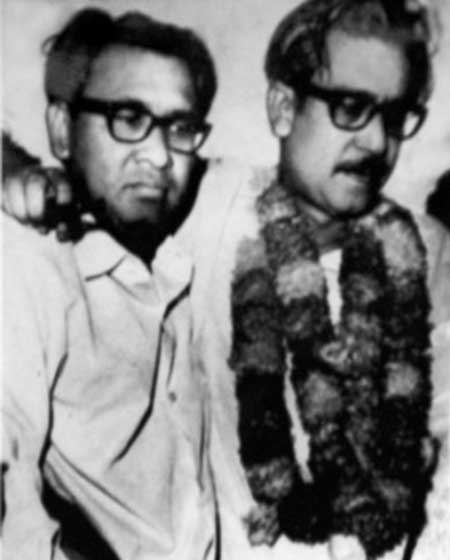
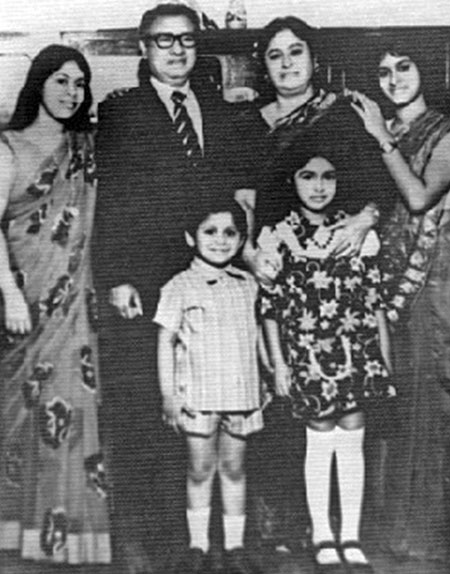
In the night of 25 March 1971, the repressive system of Pakistan state carried on the brutal rampage in Dhaka to stop a movement the community who were systematically deprived from the share of its production. Bangabandhu Sheikh Mujibur Rahman, the leader, was imprisoned and had taken to West Pakistan and kept isolated from all information. For that community the question was that, who could take the responsibility of leadership in that context? Well, none but Tajuddin Ahmad who became the key political actor in the absence of Bangabandhu to lead the liberation war.
In theory, Tajuddin Ahmed led the war of liberation on behalf of Bangabandhu Sheikh Mujibur Rahman, then in Pakistani jail. In reality, the whole of the Bengali nation remained united and was able to fight because it was led by Tajuddin and his able comrades.
Tajuddin never let other feel that he was leading the war all by himself. He presented it as everything he did was on behalf of Bangabandhu. That was modesty, but the role of historian is to bring the fact out of illusion. And the fact is Tajuddin was the de-facto in the entire period of Liberation War.
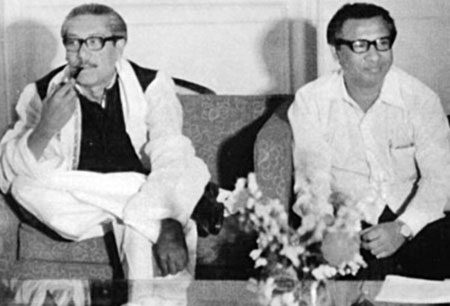
Therefore, it would be no wrong to call Tajuddin the de-facto architect of this country. He was directly involved and led the process of preparing and presenting the proclamation of independence on April 10, 1971. At the same day the government of People's Republic of Bangladesh was formed under his direct leadership.
The first Bengali government in history, administered by Bengalis and for Bengalis took shape in the grey region between the sinister and the illuminating. The sinister was the planned genocide launched with unparalleled cruelty by the Pakistan occupation army; and the illuminating was the truth that such a violent assault on human dignity, indeed on the traditions of a people, could not go unconcealed and triumphant.
Tajuddin was wise enough to understand. During the war, Pakistan authorities anticipated the war as a battle of "Islamic" Pakistan versus Bengali "miscreants" and Indian "chancers". For them, they were the rightly-guided Muslims hoping to silence the "rebellious" "gaddar" (traitor) Bengalis led astray by pagan Indians and "save" Pakistan in the process. And if this silencing meant killing them then so be it. They were happy and willing to do that freely.
But beyond Pakistani propaganda of saving Islam through killing enemy, Tajuddin presented an alternative notion of that war which he claimed as fight for saving people from the greater inequality developed within the state. On April 11, 1971, he told the fighting nation: "Let there be a new world for the hungry and suffering millions of Bangladesh where there will be no scope of exploitation. Let us pledge for freedom from hunger, disease, unemployment, and illiteracy. Let 75 millions of brothers and sisters of Bangladesh engage themselves to realise their goals through their collective will and strength. Let there be a newly democratic society out of the blood and sweat of martyrs of new citizens of free Bangladesh."
Tajuddin was fully confident about the outcome of the 1971 war. While it became clear that Bengalis were winning the war, he immediately started speaking about peace. On December 8, 1971, he said: "After winning the war, we will have to win peace as well. Shonar Bangla has to be erected on the ashes of a war-ravaged economy. All the sons and daughters of Bangladesh have to engage themselves in the joyous efforts of reconstruction and development."
And he did not wait a minute after returning to Bangladesh to reconstruct the countryside and to wage a diplomatic war for the early release of Bangabandhu, the Father of the Nation. He started this diplomatic war even before coming to Dhaka from his Calcutta office.
He also made it clear that Bangladesh would follow a self-reliant economic policy and avoid US aid. He then quickly moved into establishing bilateral economic and diplomatic ties with countries that recognised Bangladesh.
The cabinet came to Dhaka on December 22. On December 23, Prime Minister Tajuddin, in his first cabinet meeting in Dhaka made Bangla the state language. He also passed government decisions to nationalisation of jute, textile mills, and tea gardens with an aim to free people from poverty, inequality, hunger, and foreign dependence, which was a 'nationally owned pro-poor' development strategy.
In post independence period while he got the responsibility of finance minister he proposed three budgets which are better testimonies of his pro-poor development thinking. His emphasis on improving the life of the working class while formulating land and industrial policies was also very straight-forward.
But time was against him. His enemies, however, were able to create a distance between him and Bangabandhu under the pretext of events like price-hike, food insecurity, and economic "mismanagement" that were essentially by-products of a very unstable global economy following oil crisis and beyond the capacity of a minister.
Tajuddin resigned on October 26, 1974. It was a time when the country was facing difficulties including a famine and Henry Kissinger, prime architect of the Nixonian policy of backing Pakistan in its repression of Bengalis in 1971, was calling Bangabandhu for a state visit. That visit was a sign that Bangladesh was ready to pass into the American orbit.
However, before resigning, he was able to present his third budget and first Five-Year Plan. His thoughts of self-reliant development were adequately reflected in this plan. This plan envisaged the exercise of voluntary mobilisation of resources including the educated youths and students for poverty eradication through development of physical and human infrastructures.
His was an era of national assertion for self-development and poverty reduction. Destiny did not allow him to pursue this development policy of pro-poor growth. Today once again we are talking about "pro-poor growth" and "poverty reduction strategy". The difference is that this time it is being pushed by outsiders. Even, our recent slogan of "nationally owned" development policy has not originated from within. In this context, Tajuddin Ahmad's life and actions can indeed be inspiring for the policy makers who are genuinely committed to establishing the Shonar Bangla we all dream for.
The writer is a post-graduate in Sociology from
South Asian University, New Delhi
Photo: File photos





