



| HEADLINE |

|
Law Opinion
Law against workplace sexual harassment is a crying need
Published : Saturday, 14 December, 2019 at 12:00 AM
Mahmuda Amir Eva


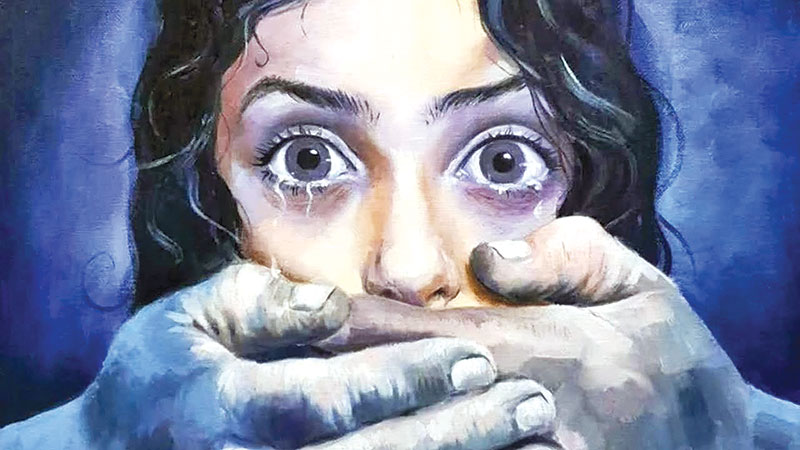 It is important for women to work. They need to keep their independence and be challenged. Yes, women need to be "challenged" to retain their rights of working and earning.
For a women worker, a number of challenges begin from her very starting of the daily journey, in the road, at any public place, public transport and even in her own workplace.
Sexual harassment in workplaces is a common phenomenon in Bangladesh, but women in most cases cannot even complain or take any action against the offender in fear of securing the job or professional reputation and here the "challenge" lies. This harassment actually degrades the self-esteem and confidence which may lead to depression and finally quitting the job, the carrier, and the passion.
The Constitution of Bangladesh has left no loophole in ensuring the rights of women. It ensures women participation in all spheres of life, equal opportunity in respect of employment.
But, are steps being taken for proper implementation of these constitutional rights and to tackle the sexual harassment at the workplace?
The answer can be given in these ways: under Section 509 of the Penal Code, 1860 any insult to the modesty, word, sound or gesture which intrudes the privacy of woman is a punishable offence. To sexually harass women, make gestures that may be construed as obscene is also a punishable offence under Section 10 (2) of the Women and Children Repression Prevention Act, 2000.
These enactments and provisions cover the area of combating sexual harassment of a woman in general like eve-teasing or other uncomfortable gestures etc.
But sexual harassment at the workplace is not general harassment. It is neither eve-teasing nor violence. It influences a woman worker in the form of "silent killer" for sake of superiority, job security, professional reputation and so on. It does not remain confined only between harasser and victim rather it contributes to the deterioration of productivity in the workplace.
Sexual harassment at workplace can take the form of a power display, intimidation or abuse from superiors or colleagues. Therefore a woman worker must have the right to deny any group project or work with any particular male colleague if she feels uncomfortable, must have the freedom to file a complaint against any such person before proper authority under the specific provision.
Labour law can play a vital role in this regard but the Bangladesh Labour Act 2006 has a provision stating that a worker can be dismissed for misconduct which can be brought under sexual harassment and in the culture of "superiority" or "power" domination this provision bearing threat of dismissing is just a legal consolation.
Apparently, there is no specific enactment for workplace sexual harassment in Bangladesh whereas there is a number of international obligations to take stand against this issue. For example, CEDAW directs States Parties to take appropriate measures to eliminate discrimination against women in all fields, specifically in governance and politics, the workplace, education, healthcare etc. UDHR and ICCPR speak about equality in dignity, rights and freedoms and equal protection against any discrimination and states must take measures to ensure those. The ILO Committee of Experts on the Application of Conventions and Recommendations has confirmed that sexual harassment is a form of sex discrimination and The ILO's Indigenous and Tribal Peoples Convention (No. 169) specifically prohibits sexual harassment in the workplace.
However, a High Court directive was provided in 2009 in Bangladesh National Women Lawyers Association (BNWLA) v the Government of Bangladesh. This directive in the form of guidelines offers some legal provisions to be treated as law in educational institutions and the workplace. For example, it mandates a provision for workplaces to form a five-member harassment complaint committee, headed by a woman in their respective organizations to investigate allegations of sexual harassment.
Hereby the discussion again validates some questions that how many offices or organizations have such committees? How many committees are active? and most importantly are the workplaces eager to abide by the HC directives?
The guideline alone is not sufficient to deal with sexual harassment cases. If we give a comparative look on our neighbouring country India, the "Vishaka Guidelines" was their first-ever legal action with a broad framework for preventing and addressing cases of sexual harassment of women within the workplace but to tackle the increasing incidents of sexual harassment and violence "the Sexual Harassment of Women (Prevention, Prohibition and Redressal) Act, 2013" was enacted to provide protection, handle complaint against sexual harassment at workplace. The Act recognizes that sexual harassment results in the violation of a woman's fundamental right to equality under the Indian Constitution.
Now it is high time for Bangladesh government also to work for the formulation of law in this regard which will have direction, category of offences, and punishment.
If there is a law, it can help protect employees and prevent workplace harassment of women and of course, women will be more willing to complain if the law is in place.
Also, the law can ensure the subsequent job security of both victim and offender through specific provision. We already have our HC directives and it is not too late to have specific enactment for addressing workplace sexual harassment, because it is better late than never.
Mahmuda Amir Eva is pursuing LL.M. at Jagannath University
Loading...
Loading...
Also read







Editor : Iqbal Sobhan Chowdhury
Published by the Editor on behalf of the Observer Ltd. from Globe Printers, 24/A, New Eskaton Road, Ramna, Dhaka.
Editorial, News and Commercial Offices : Aziz Bhaban (2nd floor), 93, Motijheel C/A, Dhaka-1000.
Phone: PABX- 41053001-06; Advertisement: 41053012; 01793317829, 01550707291, E-mail: [email protected], [email protected] Online: email: [email protected] 41053014; 01550707297 Advertisement: 01550707296
Published by the Editor on behalf of the Observer Ltd. from Globe Printers, 24/A, New Eskaton Road, Ramna, Dhaka.
Editorial, News and Commercial Offices : Aziz Bhaban (2nd floor), 93, Motijheel C/A, Dhaka-1000.
Phone: PABX- 41053001-06; Advertisement: 41053012; 01793317829, 01550707291, E-mail: [email protected], [email protected] Online: email: [email protected] 41053014; 01550707297 Advertisement: 01550707296


