



| HEADLINE |

|
Law Thoughts
Mob Lynching and A Citizen’s Power to Combat Crime
Published : Saturday, 28 December, 2019 at 12:00 AM
Ibnul Bashar


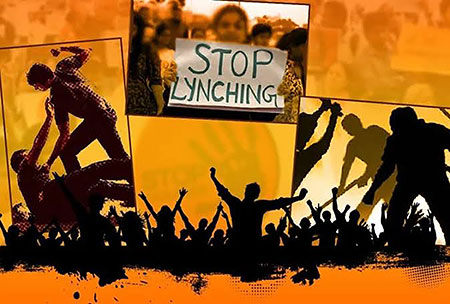 Recently, Bangladesh has observed a horrid rise in mob lynching incidences. It resembles a disturbing trend gaining momentum in the Sub-continent, East Africa and many other South American countries.
Mob lynching perpetuates a vicious cycle of violence where the accused suffers injuries or even death on account of mere suspicion.
Although poverty, inequality, weak law enforcement and lack of faith in the formal justice system are the primary reasons for the growth in such incidents, shortage of knowledge and misconceptions regarding a citizen's power to combat crime also contributes in the occurrence of mob lynching.
It is the common conception among people that the only way a citizen can help in combatting crime is by informing the police or making a complaint to the magistrate regarding the occurrence of any offence.
Although this is the safest and most reasonable way for a citizen to aid in combatting crime, at times when the commission of a crime is already underway, it may not be the most efficacious way to stop the crime. That's why the right to private defence and citizen's arrest provides a viable alternative for citizens to fight crime.
The most essential power attributed to a citizen to combat crime is the right to private defence. Section 96 to 106 of Penal Code, 1860 has codified the right to private defence. Supreme Court of India stated in Munney Khan vs State AIR 1971 SC 1491, that the intention of the authors of Penal Code, 1860 in enacting these sections was to except penal clauses, acts done in good faith for the purpose of repelling unlawful aggression. The right of private defence is inherent in every man but the extent and commencement of the force are regulated by the provisions of the Penal Code, 1860.
As section 96 states that exercise of the right of private defence is not an offence, section 97 further adds that such right may be exercised to defend one's own body or property, both moveable and immoveable and also of that of any other person. Again, Section 99 prohibits the right of private defence in cases where there is time to have recourse to the protection of public authorities and in no case such right could be extended to inflict more harm than it is necessary to inflict for such purpose. When the use of the right to private defence falls outside the ambit of these provisions, it amounts to an offence like any other unlawful acts.
Thus, killing a person under mere suspicion, without any actual threat to body or property of any individual is not a private defence but rather murder. But killing a person under the apprehension of death or harm due to that person's actions shall not amount to any offence; rather exercise of the right to private defence.
It is a common notion among people that only a police officer can arrest a person. But in fact under Section 59 of the Code of Criminal Procedure, 1898; a private person has been authorized to arrest any person who in his view commits a non-bailable offence and cognizable offence or is a proclaimed offender. After the arrest, such person shall be handed over to a police-officer or taken to the custody of the nearest police station without any necessary delay.
Such arrest made by a private person, who is not a law-enforcement official, is known as Citizen's arrest and the practice dates back to 1285 when the Statute of Winchester in medieval England conferred such rights on citizens.
Although the cooperation of the general public is essential for fighting crime, any power exercised by citizens should always be within the ambit of the law.
Mob lynching committed in the name of justice initiates a cycle of violence, creates a culture of fear, and generates more distrust in law.
Creating awareness among citizens regarding their power to combat crime and also familiarizing them with an accused's rights will help eradicate mob lynching and stop people from taking law into their own hands.
Arafat Ibnul Bashar is a law graduate
Loading...
Loading...
Also read









Editor : Iqbal Sobhan Chowdhury
Published by the Editor on behalf of the Observer Ltd. from Globe Printers, 24/A, New Eskaton Road, Ramna, Dhaka.
Editorial, News and Commercial Offices : Aziz Bhaban (2nd floor), 93, Motijheel C/A, Dhaka-1000.
Phone: PABX- 41053001-06; Advertisement: 41053012; 01793317829, 01550707291, E-mail: [email protected], [email protected] Online: email: [email protected] 41053014; 01550707297 Advertisement: 01550707296
Published by the Editor on behalf of the Observer Ltd. from Globe Printers, 24/A, New Eskaton Road, Ramna, Dhaka.
Editorial, News and Commercial Offices : Aziz Bhaban (2nd floor), 93, Motijheel C/A, Dhaka-1000.
Phone: PABX- 41053001-06; Advertisement: 41053012; 01793317829, 01550707291, E-mail: [email protected], [email protected] Online: email: [email protected] 41053014; 01550707297 Advertisement: 01550707296


